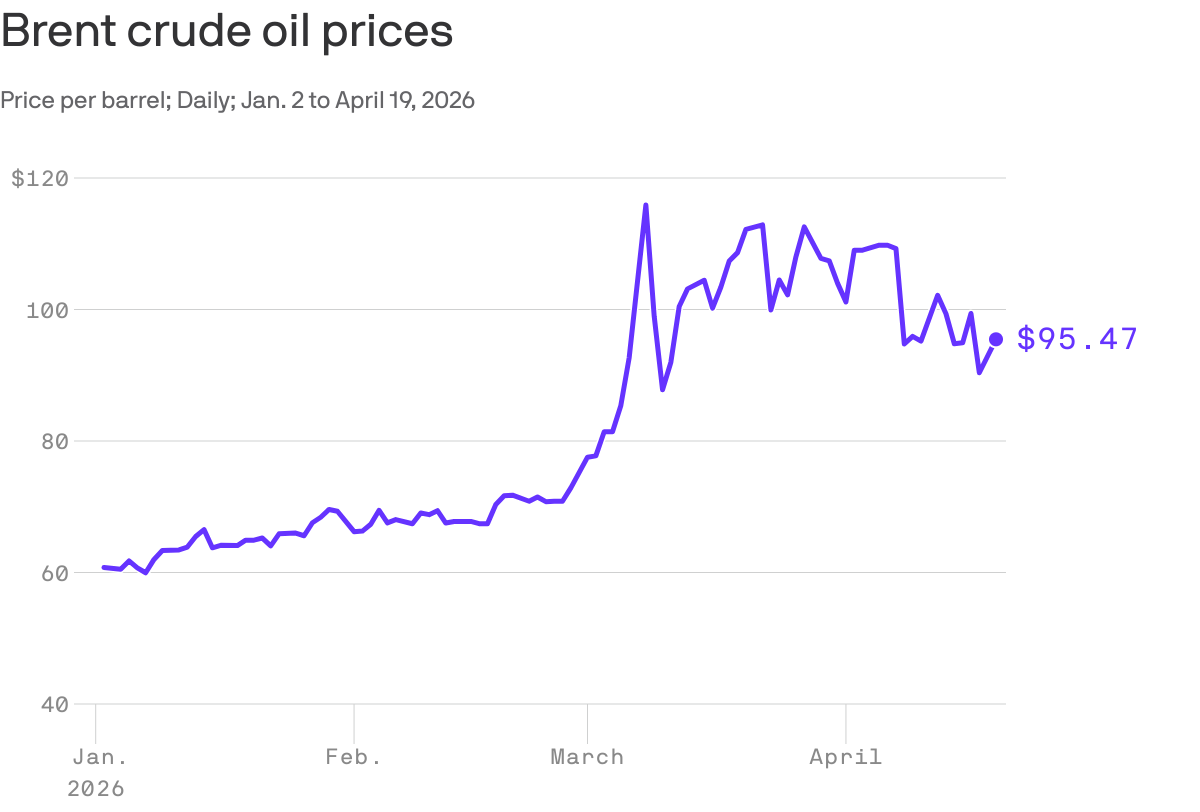
Oil Prices Jump After Strait of Hormuz Setbacks
Companies Mentioned
Why It Matters
The price jump reverses recent declines and signals that prolonged Strait disruptions could keep global oil and U.S. gasoline costs elevated, affecting inflation and consumer spending.
Key Takeaways
- •Brent crude rose to $95.42 per barrel after Strait tensions.
- •WTI climbed to $89.77 per barrel, reflecting supply concerns.
- •Iranian ship seizure marks first U.S. blockade enforcement since Sunday.
- •Gasoline prices sit at $4.05/gal, still above pre‑war levels.
- •Diplomatic talks in Islamabad aim to extend ceasefire before Tuesday.
Pulse Analysis
The weekend escalation between the United States and Iran sent oil markets into overdrive, pushing the global benchmark Brent crude to $95.42 a barrel and U.S. West Texas Intermediate to $89.77. The catalyst was a renewed closure of the Strait of Hormuz, a chokepoint that handles roughly a fifth of the world’s petroleum shipments. When tanker traffic is throttled, even modest supply disruptions can trigger outsized price moves, underscoring the strategic vulnerability of global energy flows to geopolitical flashpoints.
U.S. consumers feel the ripple effect at the pump, where gasoline averages $4.05 per gallon, still well above the pre‑conflict $3 threshold. Energy Secretary Chris Wright warned that sub‑$3 prices may not return until next year, despite recent peaks being $1 lower than the 2022 Biden‑era high of $5.02. The administration credits its blockade strategy with limiting the price surge, but analysts caution that any prolonged disruption in Hormuz could keep retail fuel costs elevated, pressuring inflation‑sensitive households.
Meanwhile, diplomatic channels remain open as Vice President JD Vance leads a U.S. delegation to Islamabad for a final round of talks before the cease‑fire expires on Tuesday. If Iran agrees to extend the pause, even a temporary de‑escalation could restore confidence among tanker operators and shave a few dollars off futures prices. Conversely, a breakdown would likely reignite supply fears, reinforcing the market’s risk‑off bias. Investors are therefore watching both the geopolitical narrative and inventory data, betting on whether the Hormuz bottleneck will tighten or ease in the weeks ahead.
Oil prices jump after Strait of Hormuz setbacks
Comments
Want to join the conversation?
Loading comments...