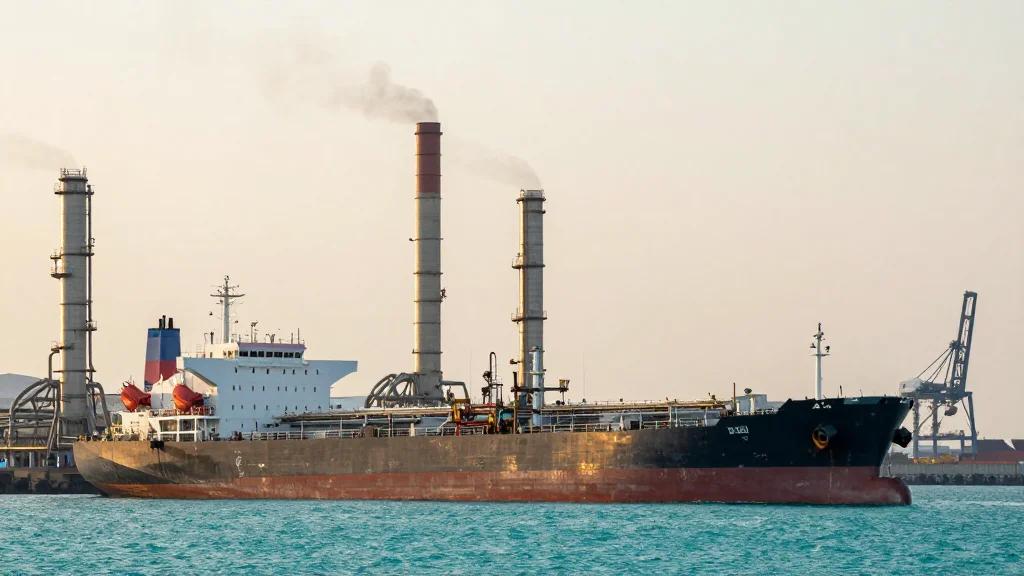
Russia’s Urals No Longer Cheap: India’s Refiners Face a Margin Squeeze
Why It Matters
The margin squeeze threatens the profitability of India’s largest refiners and could raise fuel costs, underscoring the strategic risk of a narrow crude supply base.
Key Takeaways
- •Russian Urals now 47‑50% of India’s crude imports
- •Discounts narrowed to $4‑5/bbl premium, removing margin buffer
- •Higher freight and processing penalties cut GRMs by $2‑5/bbl
- •Inland refineries face extra routing and blending complexities
- •Blending complexes and debottlenecking proposed to regain margin stability
Pulse Analysis
The abrupt decline in Middle‑East crude shipments through the Strait of Hormuz forced India’s state‑run refineries to lean heavily on Russian Urals, which now accounts for nearly half of the nation’s total imports. Prior to 2022, Urals was a marginal feedstock, purchased at deep discounts that offset its modest yield mismatches. Today, the discount has evaporated, turning into a premium of $4‑5 per barrel over Brent, and the shift coincides with a surge in freight costs as smaller Aframax and Suezmax vessels replace VLCCs for Russian cargoes. The combined effect is a direct hit to gross refining margins, estimated at $2‑5 per barrel, tightening profit pools for major players such as IOCL, BPCL and HPCL.
Technical nuances amplify the financial strain. Urals’ lighter distillation curve produces excess naphtha and gasoline at the expense of higher‑value diesel and jet fuel, while its lower sulfur content hides refractory thiophenic compounds that demand more hydrogen and catalyst regeneration. Metals like vanadium and nickel further accelerate catalyst deactivation, adding $0.4‑0.9 per barrel in processing costs. When layered with higher energy consumption for hydro‑treating and the added freight premium of $1‑3 per barrel, the cumulative penalty erodes margins across the refinery complex. Inland assets, which rely on pipeline transport, also contend with viscosity and density constraints, increasing blending complexity and inventory management burdens.
To safeguard margins and national energy security, industry leaders are calling for a strategic overhaul. Building dedicated crude‑blending hubs at coastal terminals would allow pre‑conditioning of spot cargoes, stabilising API, sulfur and distillation profiles before inland distribution. Parallel investments in debottlenecking, coking, hydrocracking and hydrogen generation can expand the crude envelope, reducing reliance on any single grade. Digital twins and real‑time assay optimisation promise finer feedstock matching, while streamlined regulatory approvals could accelerate capital deployment. Together, these measures aim to restore a flexible, resilient supply chain that can absorb geopolitical shocks without sacrificing profitability.
Russia’s Urals no longer cheap: India’s refiners face a margin squeeze
Comments
Want to join the conversation?
Loading comments...