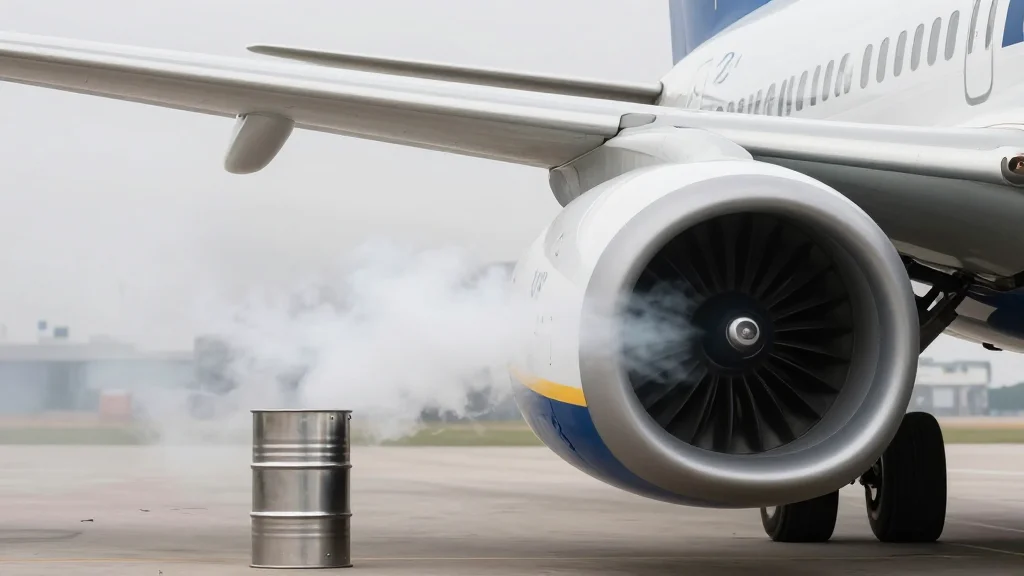
Ryanair's 2025 Emissions Jump 50% Since 2019 as Jet Fuel Use Soars

Companies Mentioned
Why It Matters
The 50% emissions rise signals that Europe’s low‑cost carrier boom is reshaping the continent’s energy demand profile. Jet fuel, a commodity that already accounts for a sizable share of global oil consumption, is now being burned at unprecedented rates on short‑haul routes, tightening supply chains and amplifying price volatility. If the EU does not broaden its carbon‑pricing scope, airlines like Ryanair will face little financial incentive to curb fuel use, undermining EU climate targets and potentially prompting stricter national regulations. Moreover, the surge highlights a strategic divergence within the aviation sector: legacy carriers are still constrained by slower recovery and lower fuel burn, while ultra‑low‑cost airlines are scaling up quickly, leveraging aggressive pricing and extensive hedging. This dynamic could reshape competitive dynamics, with fuel‑intensive growth rewarding carriers that can lock in low‑cost fuel contracts, while others may be forced to trim capacity or raise fares.
Key Takeaways
- •Ryanair’s 2025 CO₂ emissions are 16.6 Mt, 50% higher than 2019 – the steepest rise among top 20 airlines.
- •Low‑cost carriers drove European aviation emissions back to pre‑COVID levels, while legacy airlines lag behind.
- •Ryanair has hedged 80% of its jet fuel to March 2027 at $67 per barrel, shielding it from spot‑price spikes.
- •EU ETS covers only intra‑European short‑haul flights, leaving two‑thirds of aviation emissions untaxed.
- •Extending the carbon market could generate €17 billion annually by 2030 for SAF and climate projects.
Pulse Analysis
Ryanair’s emissions spike is less a surprise than a symptom of a structural shift in European air travel. The low‑cost model thrives on high aircraft utilisation, dense route networks and thin margins – all of which drive fuel burn per passenger mile upward. By contrast, legacy carriers have been slower to restore long‑haul capacity, keeping their overall emissions below pre‑pandemic baselines. The net effect is a reallocation of emissions from a few large, long‑haul operators to a multitude of short‑haul flights, a pattern that the current ETS design fails to capture.
The airline’s aggressive fuel‑hedging strategy illustrates how carriers can insulate themselves from price shocks, but it also locks in demand for a fossil‑fuel‑intensive product at a time when policymakers are urging a transition to sustainable aviation fuel. If the EU moves to price all departures, Ryanair’s cost base could rise sharply, eroding its price‑lead advantage. Conversely, a well‑designed revenue‑recycling mechanism could fund SAF subsidies, allowing the carrier to meet demand without sacrificing its low‑fare proposition.
Looking ahead, the key question is whether regulators will act quickly enough to close the ETS loophole before the next fuel price surge. The combination of geopolitical risk – exemplified by the Iran‑related oil market shock – and the sector’s rapid growth creates a perfect storm for higher jet‑fuel prices and, consequently, higher emissions. Stakeholders from airlines to environmental NGOs will be watching the EU’s legislative agenda closely, as the outcome will determine whether Europe’s aviation boom fuels economic recovery or accelerates climate overshoot.
Ryanair's 2025 Emissions Jump 50% Since 2019 as Jet Fuel Use Soars
Comments
Want to join the conversation?
Loading comments...