Sheep Shorn and Wool Clip Shrinking to Historic Lows
Why It Matters
The shrinking wool clip tightens global supply, pressuring prices and profitability for both Australian producers and downstream textile manufacturers. It also signals broader climate and market stresses that could reshape the wool value chain.
Key Takeaways
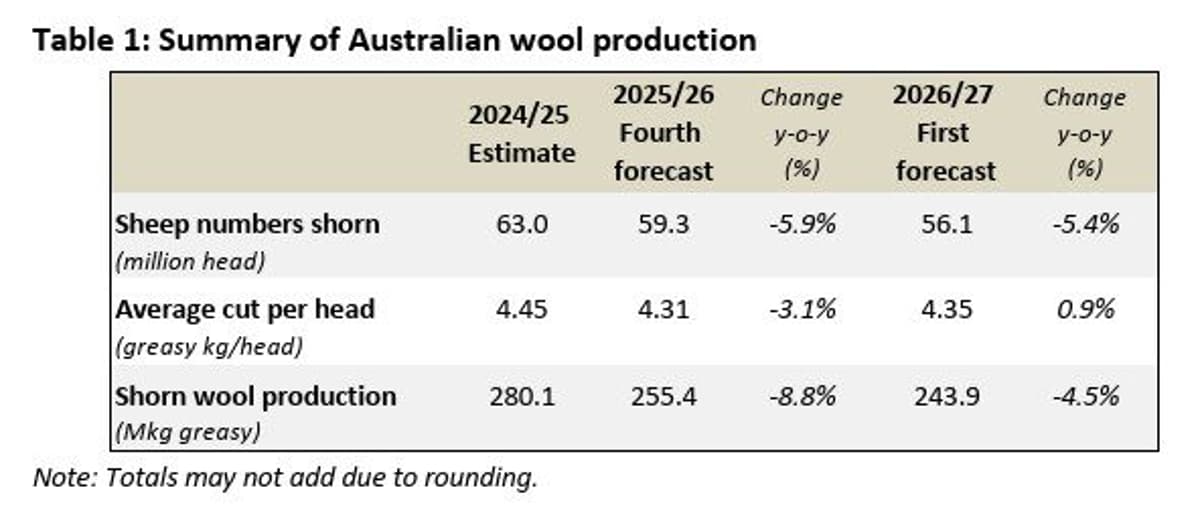
- •2025/26 clip forecast 255.4 Mkg, 8.8% below 2024/25
- •Sheep shorn expected 59.3 M, near 1905 low
- •Average cut per head drops to 4.31 kg, down 3.1%
- •High meat prices and low ewe numbers drive reduced shearing
- •Wool test data show longer staple, weaker strength, slight yield dip
Pulse Analysis
Australia remains the world’s leading wool producer, but the latest forecasts from the Australian Wool Production Forecasting Committee reveal a steep contraction. Seasonal drought across New South Wales, Tasmania and southern Queensland has limited water availability, curbing flock sizes and reducing average fleece yields. Coupled with soaring sheep‑meat and skin prices, producers are trimming breeding programs, resulting in a projected 59.3 million head shorn—just above the 1905 low. These environmental and economic pressures are reflected in the 2025/26 wool test data, which show a modest increase in staple length but a measurable dip in fibre strength and overall yield.
The supply squeeze has immediate ramifications for the global wool market. With Australia accounting for roughly 30% of world wool output, a near‑10% reduction in greased wool volume tightens inventories, nudging spot prices upward. Textile manufacturers, especially those in high‑end fashion and performance apparel, may face higher raw‑material costs, prompting a reassessment of sourcing strategies. Some buyers could accelerate diversification into alternative fibres such as recycled polyester or plant‑based blends, while others may lock in longer‑term contracts to hedge against volatility.
Looking ahead, the industry’s resilience will hinge on adaptive breeding and water‑management practices. Investment in drought‑tolerant ewe genetics and precision irrigation could stabilize flock numbers despite climate uncertainty. Policy support—through subsidies for water infrastructure and incentives for sustainable breeding—may also mitigate the downturn. Meanwhile, market participants are watching global demand trends closely; if premium wool segments remain robust, they could offset volume losses with higher price points, preserving profitability for Australian growers.
Sheep shorn and wool clip shrinking to historic lows
Comments
Want to join the conversation?
Loading comments...