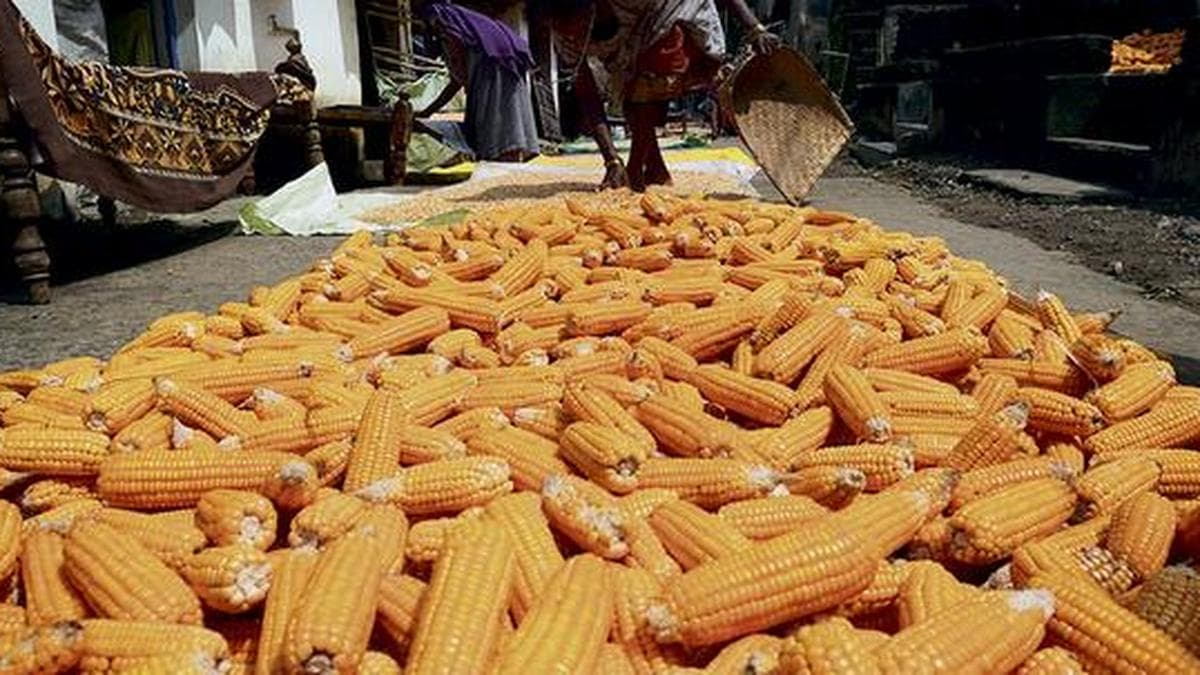
Telangana to Procure 15 Lakh Tonne of Maize
Why It Matters
The intervention aims to stabilize farm incomes, protect rural purchasing power, and prevent a broader market slump in India’s key grain sector.
Key Takeaways
- •Telangana plans to buy 14.9 lakh tonnes of maize at MSP.
- •Procurement cost ₹4,173 crore (~$502 million) funded by state guarantee.
- •Current market price ₹1,600 per quintal, ₹800 below MSP.
- •State already purchased 2.42 lakh tonnes, spending ₹580.80 crore.
- •Initiative seeks to curb farmer distress and support domestic grain supply.
Pulse Analysis
India’s maize market has been under pressure as global commodity trends pushed farm‑gate prices down to roughly ₹1,600 per quintal, well beneath the ₹2,400 minimum support price (MSP) set by the government. The price gap translates to an ₹800 loss per quintal for growers, eroding margins and prompting protests in key producing districts such as Khammam. This divergence between MSP and market rates highlights the volatility that Indian farmers face, especially in rain‑fed regions where input costs are high and price signals can shift rapidly.
In response, Telangana announced a massive procurement drive, earmarking ₹4,173 crore (approximately $502 million) to purchase 14.9 lakh tonnes of maize—about one‑third of the state’s projected 43.2 lakh‑tonne harvest. The scheme builds on an initial purchase of 2.42 lakh tonnes, which already cost the state ₹580.80 crore ($70 million). By providing a guaranteed outlet at MSP, the government hopes to cushion farmer incomes, reduce distress sales, and maintain a stable domestic supply chain. The financial guarantee to TS MARKFED also signals confidence in the cooperative model as a conduit for large‑scale grain procurement.
Beyond immediate relief, the Telangana initiative could set a precedent for other grain‑producing states grappling with similar price squeezes. A coordinated procurement strategy can help balance regional price disparities, support rural credit flows, and mitigate the risk of excess stockpiling that can depress future prices. However, the fiscal outlay underscores the need for careful budget management and potential central‑government support to sustain such interventions. As India seeks to bolster food security while navigating global commodity fluctuations, state‑level procurement programs like this may become a critical tool in the broader agricultural policy toolkit.
Telangana to procure 15 lakh tonne of maize
Comments
Want to join the conversation?
Loading comments...