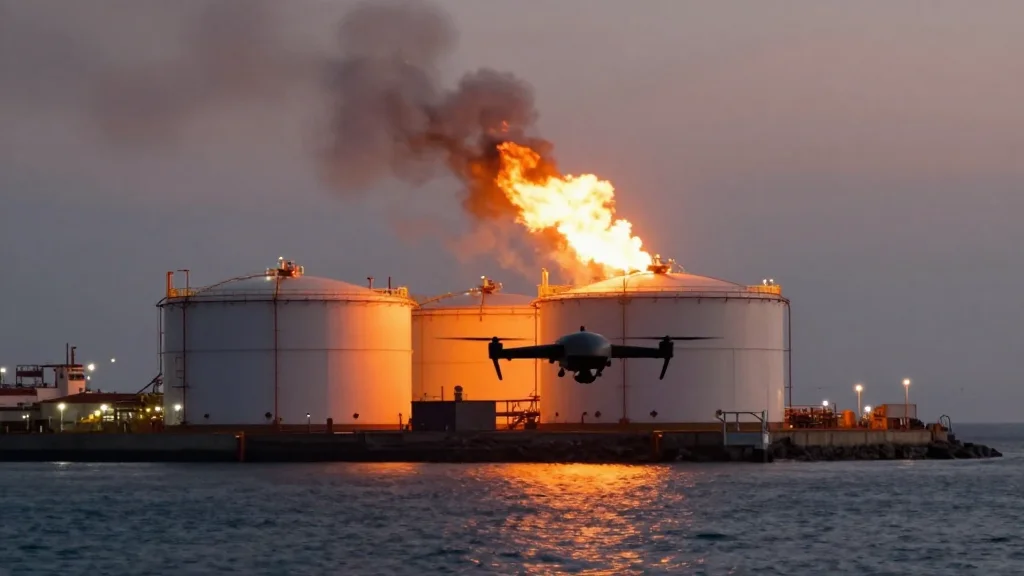
Ukrainian Drones Hit St. Petersburg Oil Terminal Ahead of Putin's Economic Forum

Companies Mentioned
Why It Matters
The attack on St. Petersburg’s oil terminal demonstrates how Ukraine is weaponising its drone fleet to strike at the financial lifelines of the Russian war machine. By targeting fuel storage and export facilities, Kyiv aims to choke off revenue streams that fund military operations, a strategy that could force Russia to divert resources from the front to domestic defence. The incident also underscores the growing importance of unmanned systems in modern commodity warfare, where physical proximity is no longer required to affect global energy markets. For investors and policymakers, the strike signals heightened volatility in Russian oil supplies. Any sustained disruption to the Baltic‑Sea export corridor could tighten global oil markets, raise prices, and reshape trade flows, especially as Europe seeks to reduce dependence on Russian energy. The episode may accelerate Western efforts to bolster Ukraine’s long‑range strike capabilities while prompting Russia to reinforce its air‑defence architecture around critical energy assets.
Key Takeaways
- •Ukrainian drones struck a St. Petersburg oil terminal handling 12.5 million tonnes of fuel annually.
- •President Zelenskyy called the strike a "fair" response and warned of scaling up mass strikes.
- •Kremlin spokesman Dmitry Peskov labeled Russia’s own deep‑strike campaign "systematic".
- •Mark Rutte said the U.S. is "doing what it can" to keep Patriot missiles flowing to Ukraine.
- •Brent crude fell 0.8 % and ICE U.S. oil index dropped 1.2 % after the attack.
Pulse Analysis
The St. Petersburg oil terminal strike marks a turning point in the commoditised dimension of the Russia‑Ukraine war. Historically, sanctions and price caps have been the primary levers used by the West to choke Russian revenues. Now, Ukraine is directly targeting the physical infrastructure that generates those revenues, turning the conflict into a high‑tech, long‑range attrition campaign. This shift mirrors the broader trend of asymmetric warfare, where relatively inexpensive UAVs can inflict outsized economic damage on a superpower.
From a market perspective, the incident injects a new risk premium into Russian energy exports. Traders will now price in not just geopolitical risk but also the probability of operational interruptions at key terminals. If Kyiv can sustain a cadence of strikes that force Russia to reroute shipments or shut facilities for repairs, the cumulative effect could be a measurable dent in Russia’s annual oil export earnings—potentially eroding the fiscal space needed to fund its military.
Looking ahead, the Kremlin faces a strategic dilemma: allocate scarce air‑defence assets to protect inland energy hubs, thereby weakening front‑line coverage, or accept continued vulnerability of its export infrastructure. Ukraine, buoyed by recent successes, is likely to expand its drone programme, seeking longer ranges and higher payloads. The next phase of this contest will be defined not by tank battles but by who can better integrate unmanned technology into a broader economic warfare strategy, reshaping the commodities landscape for years to come.
Ukrainian Drones Hit St. Petersburg Oil Terminal Ahead of Putin's Economic Forum
Comments
Want to join the conversation?
Loading comments...