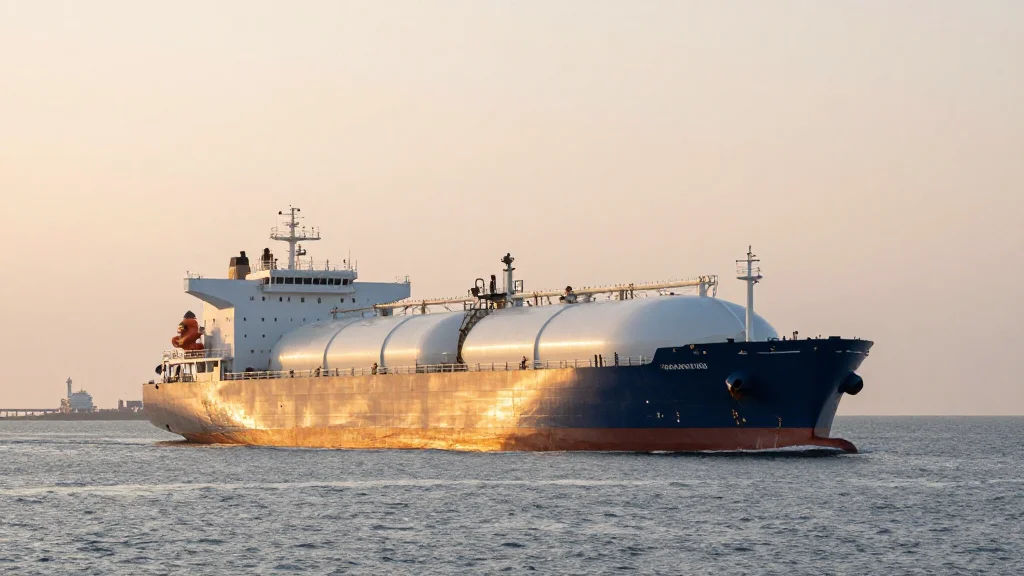
US, Canadian Exports Helping Fill LNG Gap, But for How Long?
Why It Matters
North American LNG is now a critical stop‑gap for global markets, but its durability hinges on expanding export infrastructure and stable geopolitics.
Key Takeaways
- •US Gulf Coast LNG exports hit record 12.5 bcfd
- •Canadian LNG shipments rose 20% year‑over‑year
- •Qatar and UAE volumes dropped near‑zero due to conflict
- •Europe's supply gap narrowed but remains vulnerable
- •New export projects face regulatory and financing delays
Pulse Analysis
The global liquefied natural gas market has entered a period of turbulence as the Mideast war effectively shut down Qatar and the United Arab Emirates—traditionally the world’s largest LNG suppliers. Their combined output, which once covered roughly 30% of Europe’s demand, fell to near‑zero, prompting buyers to scramble for alternative sources. This sudden vacuum amplified price volatility and forced utilities to re‑evaluate long‑term contracts, highlighting the fragility of a supply chain heavily weighted toward a few geopolitically sensitive producers.
In response, the Atlantic Basin stepped forward. U.S. Gulf Coast facilities, bolstered by recent expansions at Sabine Pass and Corpus Christi, pushed annualized exports to an unprecedented 12.5 bcf/d, while Canada’s newer projects in Newfoundland and Labrador added a 20% year‑over‑year lift. These volumes have been absorbed by European import terminals under spot‑market contracts, temporarily stabilizing supply and tempering price spikes. However, the surge relies on existing liquefaction capacity and short‑term charter agreements; the pipeline and regasification infrastructure in Europe remains stretched, and the price differential between Atlantic and Asian markets continues to influence cargo allocations.
Looking ahead, the sustainability of this stop‑gap depends on accelerating new export projects and resolving regulatory bottlenecks. Both the United States and Canada face permitting delays, financing hurdles, and community opposition that could slow the rollout of additional liquefaction trains slated for the late 2020s. For Europe, diversifying away from Middle‑East LNG toward longer‑term contracts with North America and emerging suppliers will be essential to mitigate future geopolitical shocks. Meanwhile, Asian buyers, attracted by higher spot prices, may pull capacity away from Europe, reigniting the supply gap that the Atlantic Basin has only temporarily patched.
US, Canadian Exports Helping Fill LNG Gap, But for How Long?
Comments
Want to join the conversation?
Loading comments...