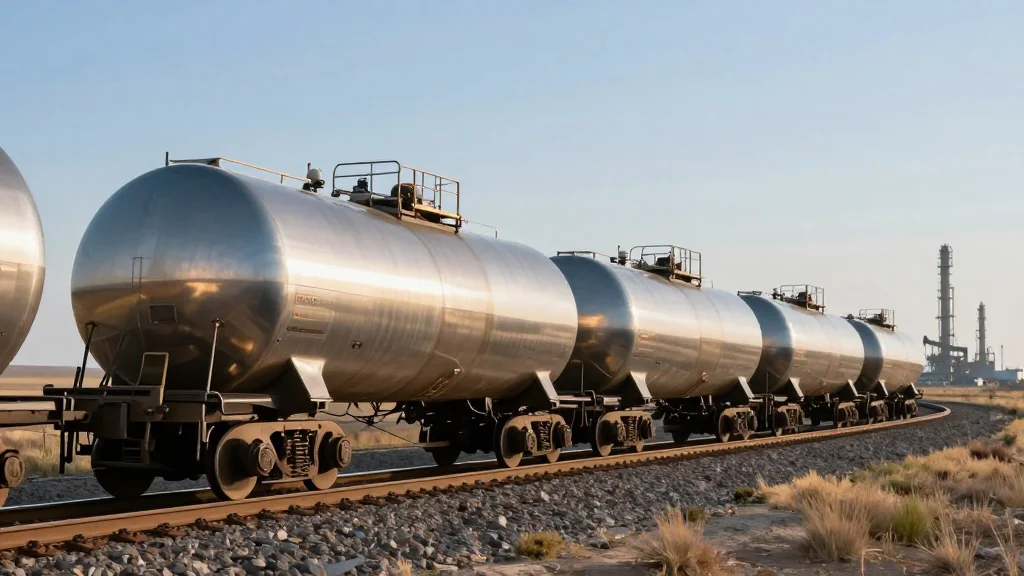
US Diesel Traders Turn to Rail as War Scrambles Fuel Flows
Companies Mentioned
Why It Matters
The shift to rail underscores how geopolitical disruptions can reshape domestic logistics, raising transport costs and influencing U.S. diesel export volumes, while offering profit opportunities for Midwestern refiners amid regional price spreads.
Key Takeaways
- •9,112 railcars delivered in March, up ~10% YoY
- •Storage requests with rail links rose to 250k barrels in March
- •Gulf Coast diesel inventories near lowest since July, tightening supply
- •Midwest diesel price 26¢ below futures, enabling export arbitrage
- •ONEOK reversed Magellan pipeline flow southward to Texas
Pulse Analysis
The war in Iran and the virtual closure of the Strait of Hormuz have sent shockwaves through global energy markets, cutting off hundreds of millions of barrels of crude and refined products. As the Middle East’s output falters, demand for U.S. diesel has surged, positioning the United States as a key supplier to fill the gap. This geopolitical strain has not only lifted global diesel prices but also forced traders to re‑evaluate traditional supply chains, prompting a rapid pivot toward alternative transport modes that can bypass bottlenecked maritime routes.
Rail has emerged as the unexpected workhorse for diesel logistics. In March, 9,112 railcars—almost 10% more than a year earlier—arrived at storage terminals, while requests for rail‑connected storage leapt from 30,000 barrels in February to 250,000 barrels. Though rail transport is costlier than pipelines, the urgency to move product to export hubs on the East and Gulf Coasts outweighs the premium. Operators like ONEOK have even reversed flow on the Magellan pipeline, sending fuel southward to Texas to meet dwindling regional stockpiles, illustrating how infrastructure is being repurposed in real time.
The market impact is twofold. First, regional price spreads have widened: Chicago diesel trades 26 cents below futures, while Gulf Coast prices sit at a premium, creating clear arbitrage incentives for Midwestern refiners to load railcars or barges for overseas shipment. Second, sustained disruptions could cement rail as a semi‑permanent component of the diesel export chain, potentially reshaping cost structures and influencing future investment in rail‑compatible storage. Stakeholders should monitor the duration of the Strait of Hormuz closure and evolving price differentials, as they will dictate whether this rail‑driven surge is a temporary fix or a lasting shift in U.S. energy logistics.
US Diesel Traders Turn to Rail as War Scrambles Fuel Flows
Comments
Want to join the conversation?
Loading comments...