Commodities News and Headlines
  • All Technology
  • AI
  • Autonomy
  • B2B Growth
  • Big Data
  • BioTech
  • ClimateTech
  • Consumer Tech
  • Crypto
  • Cybersecurity
  • DevOps
  • Digital Marketing
  • Ecommerce
  • EdTech
  • Enterprise
  • FinTech
  • GovTech
  • Hardware
  • HealthTech
  • HRTech
  • LegalTech
  • Nanotech
  • PropTech
  • Quantum
  • Robotics
  • SaaS
  • SpaceTech
AllNewsDealsSocialBlogsVideosPodcastsDigests

Commodities Pulse

EMAIL DIGESTS

Daily

Every morning

Weekly

Sunday recap

NewsDealsSocialBlogsVideosPodcasts
CommoditiesNewsUS to Exempt some Bangladeshi Clothes From Tariffs
US to Exempt some Bangladeshi Clothes From Tariffs
Commodities

US to Exempt some Bangladeshi Clothes From Tariffs

•February 10, 2026
0
BBC Business
BBC Business•Feb 10, 2026

Why It Matters

The pact deepens economic ties, giving U.S. producers preferential access to a fast‑growing apparel hub while helping Bangladesh maintain competitive export margins against regional rivals like India.

Key Takeaways

  • •US cuts Bangladesh apparel tariff from 20% to 19%
  • •Certain Bangladesh garments made with US materials become tariff‑free
  • •Bangladesh grants US preferential access to chemicals, medical devices, soy
  • •Bangladesh must recognize US safety standards and labor rights

Pulse Analysis

The United States’ decision to trim tariffs on Bangladeshi clothing reflects a strategic shift from the broad punitive measures imposed during the Trump era toward targeted, reciprocal trade incentives. By reducing the duty to 19% and carving out a tariff‑free lane for products that incorporate American cotton or synthetic fibers, Washington aims to encourage deeper integration of its agricultural outputs into Bangladesh’s massive garment supply chain. This nuanced approach not only mitigates the risk of supply‑chain disruptions for U.S. textile growers but also signals a willingness to reward partners that align with American standards.

Bangladesh, which accounts for over 80% of its export earnings from apparel, gains a valuable foothold in the U.S. market while agreeing to open its doors to a suite of American goods. The agreement promises preferential entry for chemicals, medical devices, soy, meat, and other industrial products, effectively diversifying Dhaka’s import basket. Moreover, the commitment to adopt U.S. food, drug, and vehicle safety regulations, alongside enhanced labor‑rights enforcement, is designed to raise production standards and address longstanding concerns about worker conditions. These concessions are likely to smooth the path for U.S. firms seeking to expand their footprint in South Asia.

Regionally, the deal narrows the tariff gap between Bangladesh and India, whose U.S. levy sits at 18%, intensifying competition for apparel contracts and ancillary supply‑chain services. As both nations vie for the same buyer base, manufacturers may prioritize cost‑effective sourcing, quality compliance, and political stability. The timing—just before Bangladesh’s national elections—adds a geopolitical layer, suggesting that trade policy is being leveraged to reinforce democratic legitimacy and economic resilience. For investors and industry watchers, the pact underscores a broader trend of selective de‑tariffing that balances market access with strategic standards enforcement.

US to exempt some Bangladeshi clothes from tariffs

22 hours ago · Osmond Chia · Business reporter

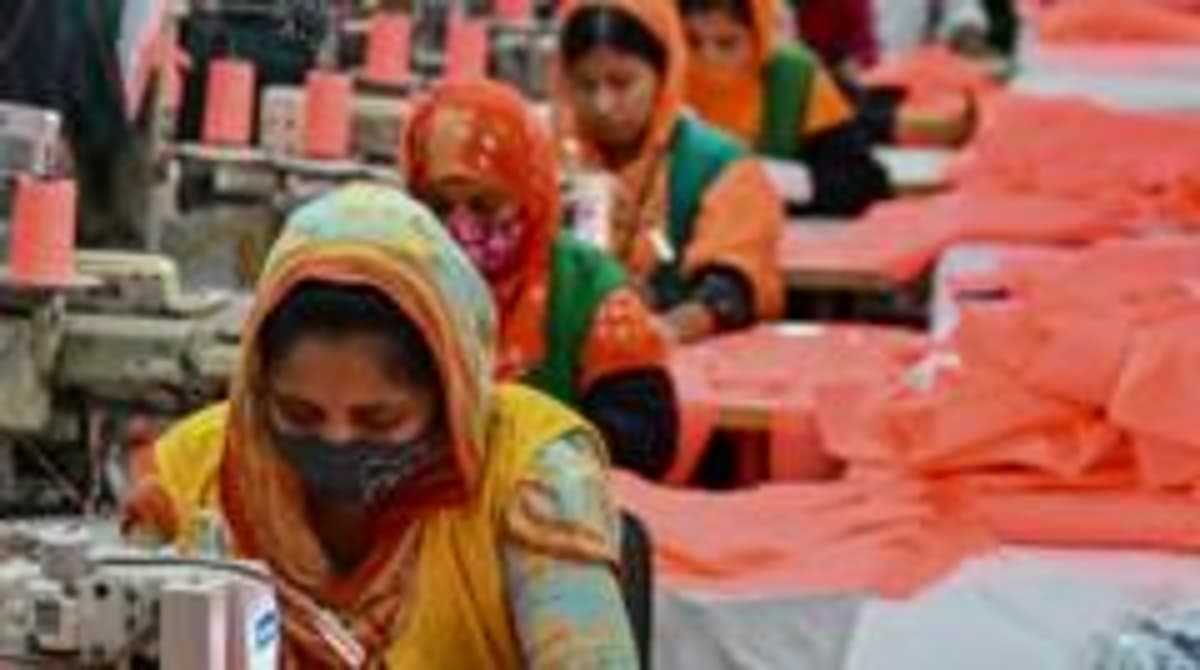
Image 1: Getty Images – A picture of women making clothes in an assembly line in Bangladesh. The women are pictured in a row with their heads down as they use sewing machines

Bangladesh is a major producer of clothes

Bangladesh has secured exemptions for some clothes and textiles that are made with US‑produced materials, as part of a new agreement announced on Monday.

As part of the deal, Washington will also cut its tariffs on Bangladesh from 20 % to 19 %, in exchange for Dhaka to open its markets to a wider range of American goods.

The apparel industry forms the backbone of Bangladesh, which is the world’s second‑largest exporter of clothes after China.

The South Asian country has been in long‑drawn talks with the White House after President Donald Trump imposed sweeping tariffs on global trading partners in April last year.

The White House said in a joint statement between the sides that the agreement will strengthen the countries’ economic ties and offer both “unprecedented access” to each market.

It said the US will lower its tariff rate on Bangladesh and will also identify certain clothing and textile goods from the country to enter the US free of tariffs.

The goods include those produced with American cotton and man‑made textiles, the statement said. The volume of these will be determined by how much textiles the US exports to Bangladesh.

The clothing sector accounts for more than 80 % of Bangladesh’s total export revenue and employs around four million workers.

In exchange, Bangladesh has agreed to provide “significant preferential market access” to a host of American agricultural and industrial goods. These include opening up its markets to more US chemicals, medical devices, car parts, soy products and meat, said the White House.

The BBC has contacted the Bangladeshi government for comment.

As part of the agreement announced on Monday, Dhaka will recognise American food and drug and vehicle safety and emission rules, making it easier for US goods to enter the country.

Bangladesh also committed to observe internationally recognised labour rights, ramp up its environmental protection efforts, and uphold its agreement to buy billions of dollars of American agriculture, aircraft and energy products, according to the statement.

Bangladesh is set to head to the polls on Thursday for general elections.

The country has been led by an interim government since 2024, when former Prime Minister Sheikh Hasina fled to India after being ousted over the fatal crackdown on student‑led protests.

The US’s newly announced tariff cut puts Bangladesh nearly level with its neighbour and regional competitor India, which faces an 18 % levy from the US.

Both South Asian countries compete to export clothes, footwear, along with agricultural goods.

India was initially hit with 25 % US levies when Trump announced his first round of reciprocal tariffs in April 2025. Bangladesh, on the other hand, was given a 37 % tariff.

Read Original Article
0

Comments

Want to join the conversation?

Loading comments...