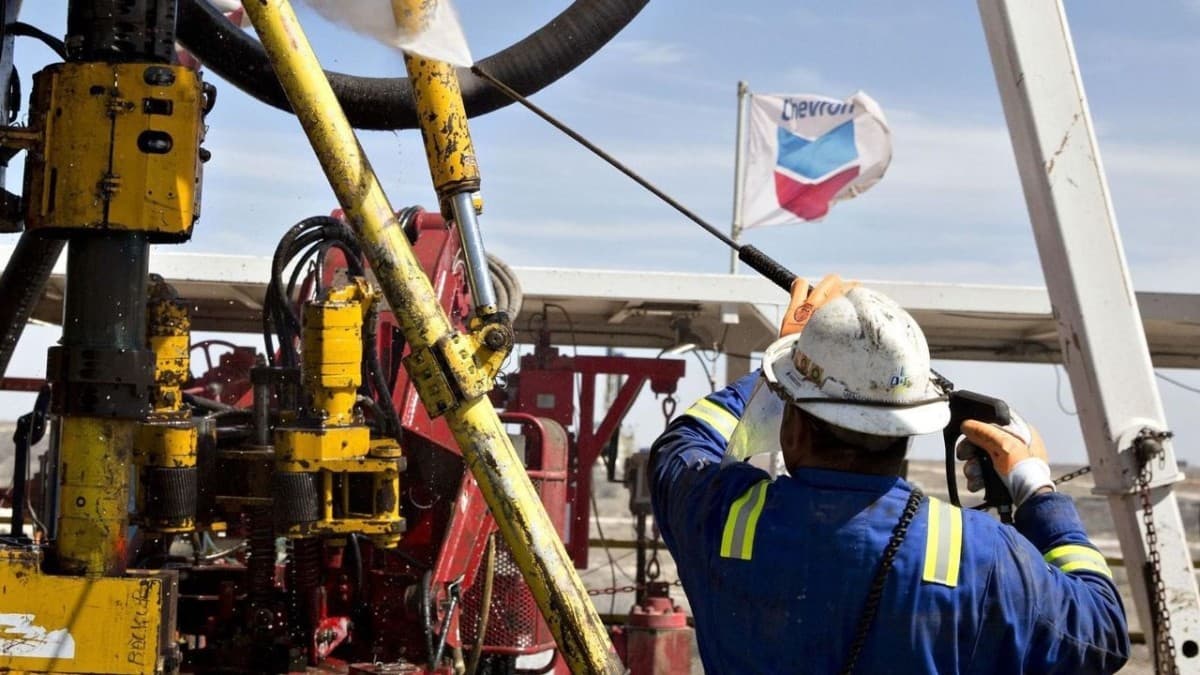
Venezuelan Crude Will Eventually Lower US Gas Prices: Chevron Exec
Companies Mentioned

Why It Matters
Chevrolet’s access to Venezuelan oil offers a new supply source that can temper U.S. fuel costs amid volatile global markets, while Venezuela’s production ramp‑up could reshape North American crude dynamics.
Key Takeaways
- •Chevron imports 250k bpd Venezuelan crude, easing US pump prices.
- •Planned 50% increase could raise imports to 350‑400k bpd by 2028.
- •Venezuela aims to lift production to 1.2 m bpd, needing $100‑$183 bn investment.
- •US sanctions relief enables new supply, but price impact remains modest now.
- •Oil price up 56% since Iran conflict, driving US gas to $4.17/gal.
Pulse Analysis
U.S. gasoline prices have surged to $4.17 a gallon, a level that reflects both domestic demand and the broader shock to crude markets after the Iran conflict. Crude oil now accounts for up to 70% of pump prices, and the Brent benchmark’s 56% rise to roughly $110 per barrel has amplified cost pressures for consumers. While the United States remains insulated from outright supply shortages thanks to its own production capacity, the price of imported crude continues to be a decisive factor in retail fuel costs.
Chevron’s strategic move to import Venezuelan heavy crude marks a notable shift in the U.S. supply chain. By delivering 250,000 barrels per day to the Pascagoula refinery, the company has introduced a lower‑cost feedstock that tempers the margin on gasoline pricing. Executives say a planned 50% increase in Venezuelan imports—potentially reaching 350,000‑400,000 barrels daily—could further ease price pressures as the Orinoco Belt output expands. The easing of selective sanctions by the Trump administration has been critical, allowing U.S. firms to tap a historically restricted resource and diversify their crude sources.
Venezuela’s broader ambition to raise production from roughly 1 million to 1.2 million barrels per day by 2026 hinges on massive capital inflows, estimated between $100 billion and $183 billion. If the country succeeds, it will re‑enter the global oil arena with a sizable exportable surplus, offering North American refiners a new, potentially cheaper supply line. This development could reshape regional crude pricing dynamics, lower the premium on imported oil, and ultimately translate into more stable, lower gasoline prices for American motorists. The timeline remains uncertain, but the trajectory suggests a gradual but meaningful impact on the U.S. energy market.
Venezuelan Crude Will Eventually Lower US Gas Prices: Chevron Exec
Comments
Want to join the conversation?
Loading comments...