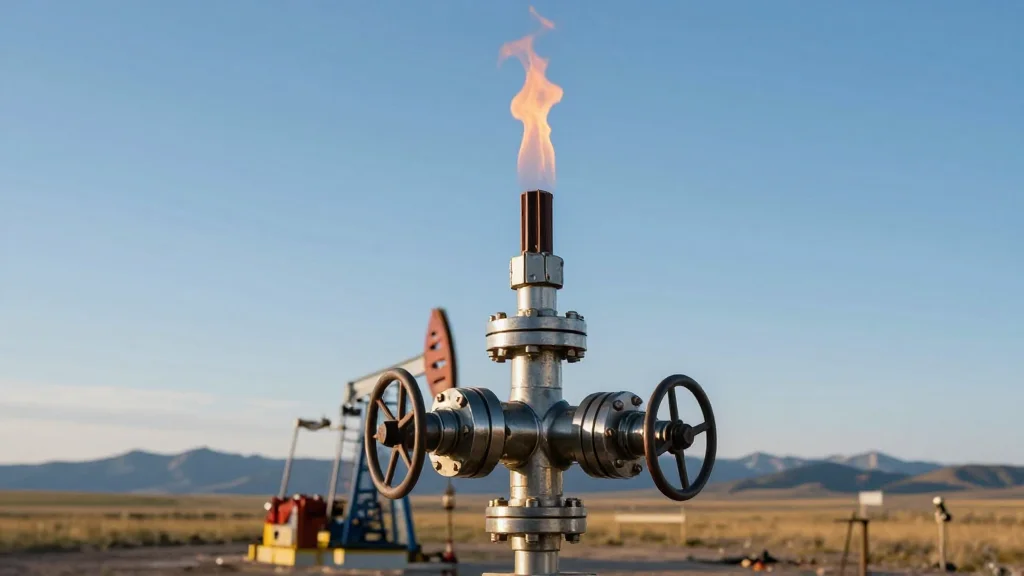
Vermilion Energy Beats Q1 Production Forecast, Hits 125,000 Boe/D

Why It Matters
Vermilion’s production beat signals that disciplined execution in high‑impact basins can offset broader market volatility, offering a template for mid‑size upstream firms seeking growth without over‑leveraging. The European gas price uplift highlights how geopolitical shocks can quickly reshape commodity revenue streams, reinforcing the importance of geographic diversification for energy companies. For investors and commodity traders, Vermilion’s results provide a data point on near‑term supply trends in North America and Europe, potentially influencing short‑term oil and gas price expectations. The company’s ability to bring Montney wells online faster than planned also suggests that Canadian shale productivity may be higher than consensus forecasts, which could modestly increase upstream supply forecasts for the second half of 2026. Conversely, the temporary Australian disruptions remind market participants that weather risk remains a non‑trivial factor in global supply balance calculations.
Key Takeaways
- •Vermilion posted average Q1 production of ~125,000 Boe/d, topping guidance.
- •Montney well tie‑ins accelerated, delivering a key volume boost.
- •European gas prices surged in March, lifting realized revenues.
- •Australian weather disruptions offset some gains but were short‑lived.
- •Additional German production expected by mid‑2026 to support growth.
Pulse Analysis
Vermilion’s Q1 performance underscores a broader shift among independent producers toward tighter integration of operational efficiency and market timing. By front‑loading well completions in the Montney, the company not only captured higher output but also positioned itself to benefit from any upside in oil prices later in the year. This approach mirrors a trend seen in peers like Canadian Natural and Cenovus, where early‑season drilling vigor is used to lock in cash flow before potential price corrections.
The European gas price premium, while beneficial this quarter, is inherently volatile. Geopolitical drivers that lifted prices in March could reverse quickly if supply routes stabilize or if alternative LNG sources expand. Vermilion’s exposure to this market is a double‑edged sword: it offers upside in a tight market but also adds earnings sensitivity to political risk. Investors should therefore weigh the durability of the pricing tailwind against the likelihood of a re‑balancing in European gas markets.
Looking forward, the firm’s guidance hinges on two variables: the continued success of its accelerated Montney schedule and the persistence of favorable European gas pricing. If both hold, Vermilion could outpace its peers in earnings growth, potentially prompting a re‑rating by analysts. However, any setback—whether a weather event in Australia or a softening of European gas prices—could compress margins and test the company’s cost discipline. The upcoming Q2 results will be a litmus test for whether Vermilion can sustain its production momentum and translate it into lasting financial performance.
Vermilion Energy Beats Q1 Production Forecast, Hits 125,000 Boe/d
Comments
Want to join the conversation?
Loading comments...