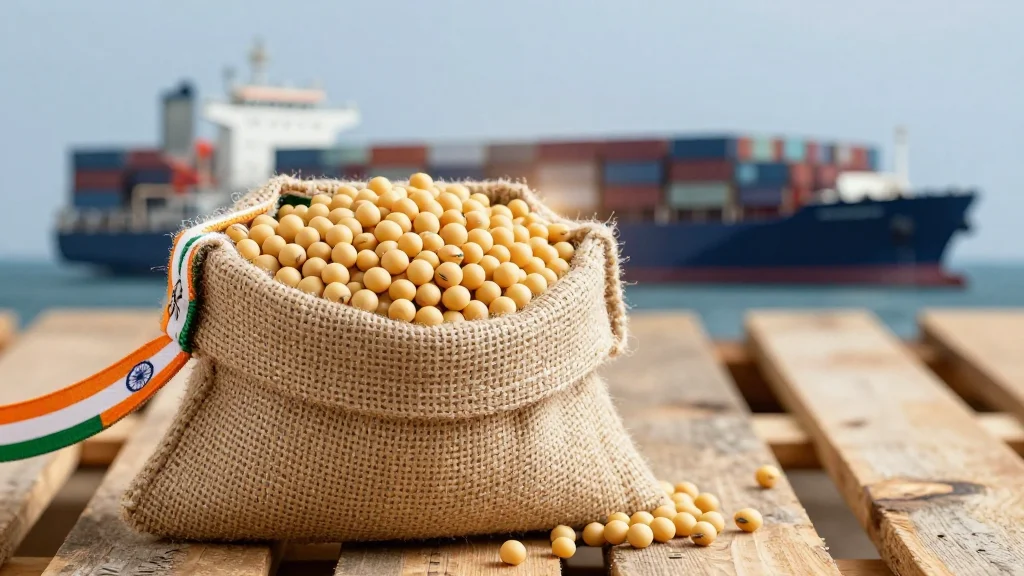
West Asia Conflict: India's Soybean Meal Exports Fall 63%
Why It Matters
The export slump trims India’s share in the global feed‑protein market and highlights the sector’s exposure to geopolitical shocks, potentially reshaping trade balances and pricing dynamics.
Key Takeaways
- •Exports dropped 63% to 60,000 tonnes in March 2026.
- •Domestic consumption rose to 600,000 tonnes, up 20% month‑on‑month.
- •West‑Asia conflict disrupted shipments to Iran, UAE, Kuwait, Oman.
- •Higher local prices pressured exporters, tightening global soybean meal supply.
Pulse Analysis
India remains the world’s second‑largest producer of soybean meal, a high‑protein feed ingredient derived from oil extraction. In 2025‑26 the country exported roughly 1.6 million tonnes, catering to livestock sectors in the Middle East and North Africa. The commodity’s low cost relative to South American alternatives has made it a staple for poultry, aquaculture and dairy farms seeking to curb feed expenses. Rising domestic soybean prices, driven by strong oil demand and limited harvests, have begun to erode export margins, prompting processors to prioritize the burgeoning home market.
The escalation of the West‑Asia conflict after the February 2025 US‑Israel strikes on Iran has snarled maritime logistics across the Persian Gulf and Red Sea corridors. Shipping delays, heightened insurance premiums, and port closures in Iran, the United Arab Emirates, Kuwait and Oman have directly curtailed Indian soybean meal shipments, as reflected by the 63 percent export plunge to 60,000 tonnes in March 2026. Traders cite the risk‑averse stance of regional importers, who now favor alternative suppliers from Brazil or the United States, tightening global supply and nudging prices upward.
Despite the export setback, India’s internal demand surged to six lakh tonnes in March, a 20 percent month‑on‑month increase fueled by expanding animal‑feed production and government incentives for domestic livestock growth. This shift suggests a rebalancing where Indian processors may channel more output to meet local needs, potentially stabilizing farm‑gate prices. Looking ahead, analysts expect export recovery only if geopolitical tensions ease and shipping lanes normalize. In the interim, market participants are likely to hedge against volatility through forward contracts and explore diversified routes such as the Cape of Good Hope to maintain supply continuity.
West Asia conflict: India's soybean meal exports fall 63%
Comments
Want to join the conversation?
Loading comments...