
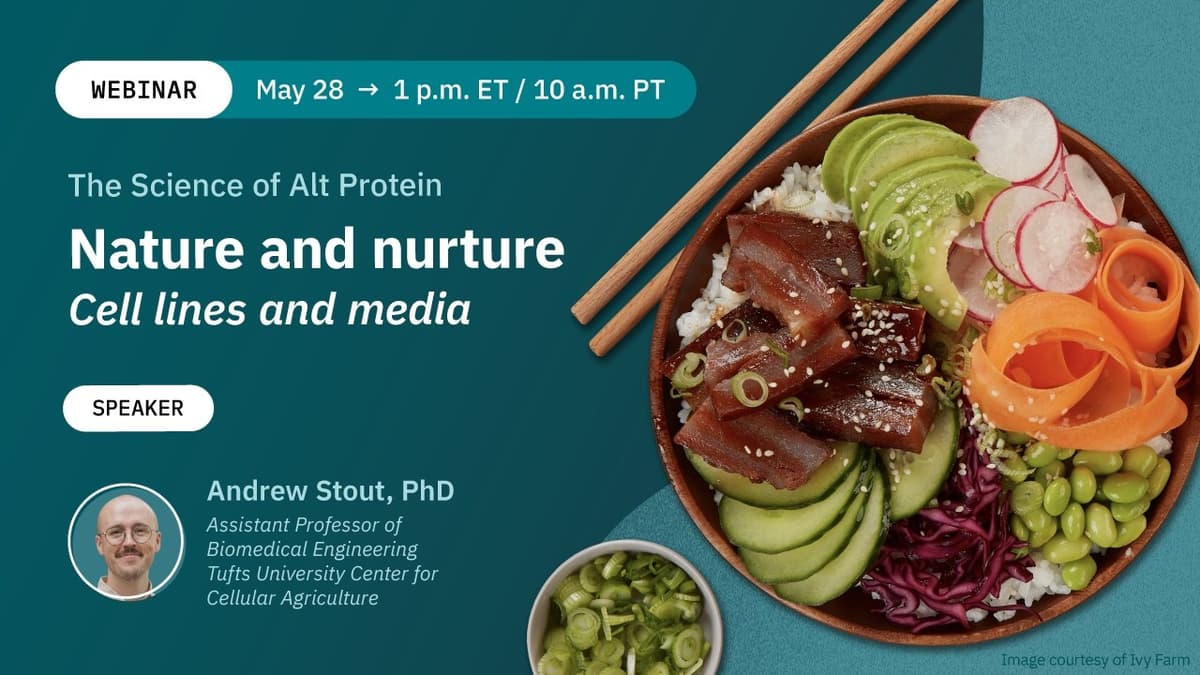
Dr. Andrew Stout: Nature and Nurture—Cell Lines and Media
The seminar, led by Dr. Andrew Stout of the Good Food Institute, examined the intertwined evolution of cell lines and culture media for cultivated meat. He traced the lineage back to Warren and Margaret Lewis, whose early‑1900s work on an optically clear, food‑grade medium laid the groundwork for today’s cell‑based protein systems. Stout highlighted how media composition directly reshapes cellular phenotype, noting that fibroblasts—originally observed by the Lewises—tend to outgrow muscle progenitors but can be coaxed into fat or muscle cells through simple protocols or MyoD overexpression. He contrasted two development pathways: “wrangling” existing, fast‑growing cells like fibroblasts, and “domesticating” muscle or adipose cells to endow them with desirable traits. Concrete examples included Believer Meats’ use of chicken fibroblasts to achieve stable, single‑cell suspensions without extensive genetic manipulation, and recent genetic engineering that converts fibroblasts into functional muscle fibers. Stout also referenced historical observations of media‑induced size and nuclear changes, underscoring that media‑cell interactions have long been a driver of phenotype. The talk concluded that scalable, animal‑free, low‑cost media paired with purpose‑built cell lines are the twin pillars needed to transition cultivated meat from niche labs to mass‑market products, influencing cost structures, regulatory pathways, and consumer acceptance.
Business of Alt Protein: M&A for Mission Driven Companies Mp4
The Good Food Institute hosted a webinar focused on mergers and acquisitions for mission‑driven alternative‑protein companies, featuring James Marciano and Lisa Bowers of Tuck Advisers. They outlined why founders consider selling—unsolicited flattering offers, competitive pressure, resource constraints, and personal burnout—and...
2026 State of the Industry: Cultivated Meat, Seafood, and Ingredients
The Good Food Institute’s 2026 State of the Industry video reviews cultivated meat, seafood and ingredient developments, combining commercial, scientific and policy perspectives. It outlines 2025 milestones such as the first cultivated meat appearing on US retail shelves, the debut...
2026 State of the Industry: Fermentation for Meat, Seafood, Eggs, Dairy, and Ingredients
The Good Food Institute’s 2026 State of the Industry video maps the rapid expansion of biomass and precision fermentation across meat, seafood, eggs, dairy and ingredient markets. It outlines the technology’s two main pathways—high‑growth microbial protein production and targeted ingredient...
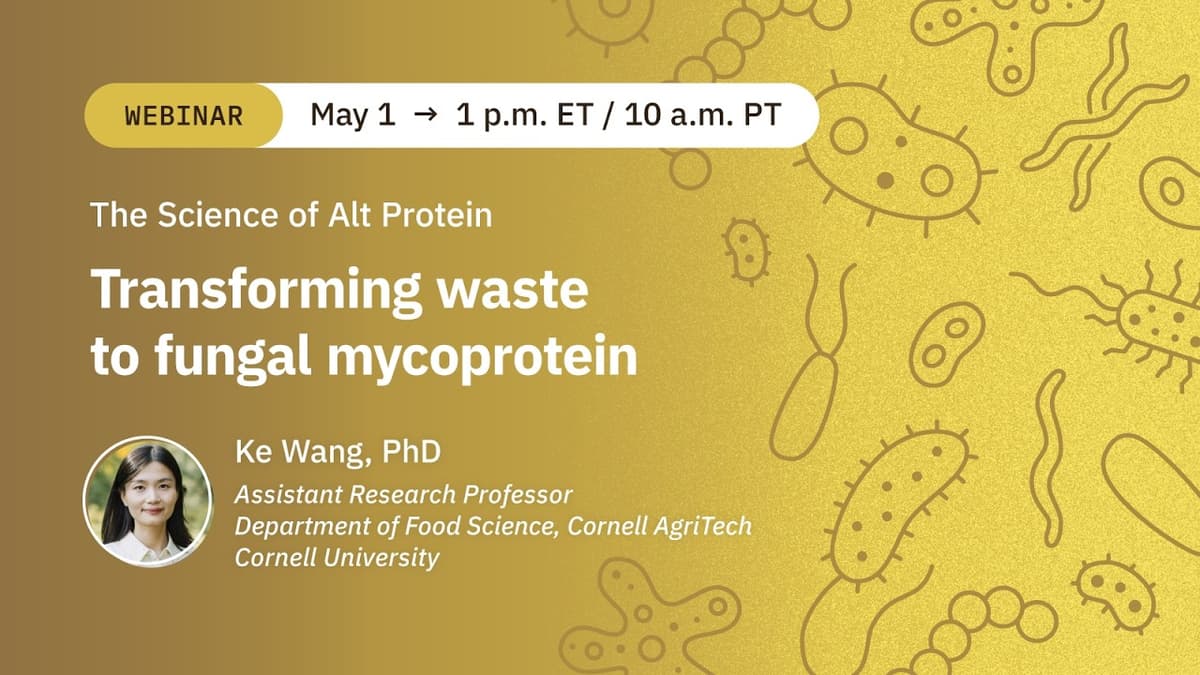
The Science of Alt Protein: Transforming Waste to Fungal Mycoprotein
The webinar, hosted by the Good Food Institute, featured Cornell researcher Dr. Kay Wong discussing how fungal mycoprotein can turn abundant food‑waste streams into a sustainable protein source. Wong highlighted that roughly 500 million tonnes of food waste are generated each year,...
Business of Alt Protein: Consumer Taste Preferences in Dairy Free Products
Alt‑protein market researcher NECTAR released its Taste of the Industry 2026 report, analyzing 98 dairy‑free products across ten categories through blind sensory testing with more than 2,100 consumers. The study reveals that plant‑based milks and yogurts score highest on taste,...

Building Your Alt Protein Career: Gastronomic Science
The Good Food Institute hosted its quarterly “Building Your Alt‑Protein Career” webinar, introducing its mission and showcasing resources for anyone interested in entering the fast‑growing alternative‑protein sector. Academic community specialist Asia Shihob outlined the agenda before handing the stage to...

Business of Alt Protein Messaging to Drive Consumer Adoption of Plant Based Foods
The Good Food Institute’s webinar highlighted how strategic messaging can accelerate consumer adoption of plant‑based foods. Hosted by Emily Fitch of People for Better Food and GFI associate director Jodie Kchner, the session unpacked research on why consumers choose—or avoid—plant‑based...