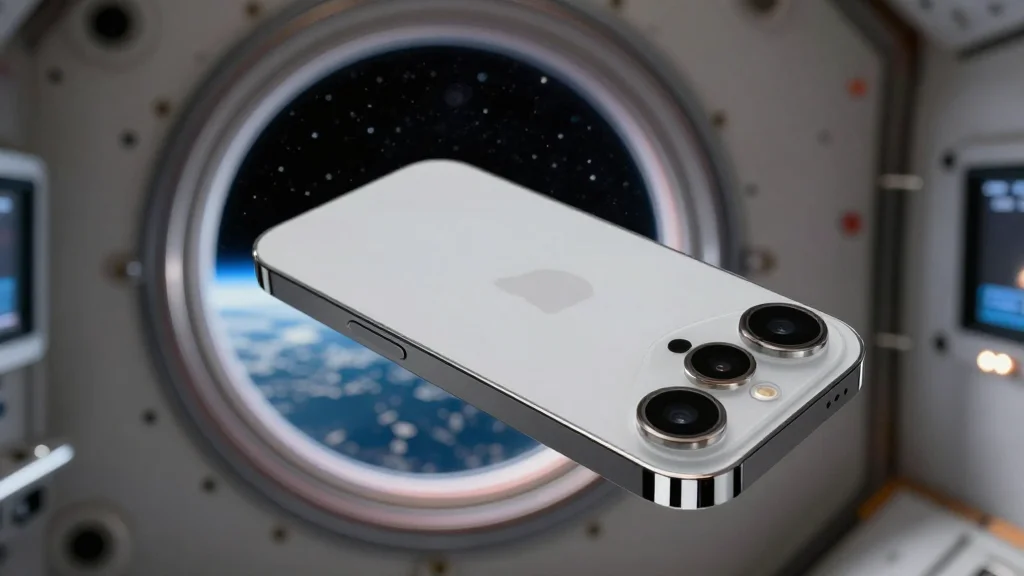
Apple, GoPro, Microsoft Gadgets Ride Orion on Artemis II Mission

Companies Mentioned

Why It Matters
The deployment of consumer‑grade devices on Artemis II demonstrates that everyday technology can meet the rigorous demands of spaceflight, potentially lowering barriers for future private and government missions. By proving that smartphones, tablets and action cameras function reliably in micro‑gravity, NASA opens the door for broader commercial participation and faster hardware iteration cycles. For the consumer tech industry, the mission offers a high‑visibility endorsement that can translate into sales growth and brand loyalty. The public’s fascination with seeing familiar gadgets in an extraterrestrial setting reinforces the narrative that these products are not just luxury items but tools capable of supporting humanity’s next frontier.
Key Takeaways
- •Astronauts carried Apple’s iPhone 17 Pro Max, GoPro HERO11 Black and MAX 1 360° cameras, Nikon D5 DSLRs and Microsoft Surface Pro tablets aboard Orion.
- •Artemis II traveled 248,655 miles, setting a record for a crewed lunar fly‑by.
- •GoPro’s HERO11 cameras were used both inside the cabin and mounted on Orion’s solar arrays for exterior footage.
- •Microsoft Surface Pro tablets served as personal computing devices for scientific data analysis and crew communications.
- •NASA plans to feature the mission’s consumer‑tech footage in a Disney/NatGeo documentary, boosting public engagement.
Pulse Analysis
The Artemis II payload marks a strategic pivot toward leveraging the economies of scale inherent in consumer electronics. Historically, space agencies have relied on bespoke, aerospace‑grade hardware that commands premium prices and long development timelines. By integrating Apple, Microsoft and GoPro products, NASA not only trims procurement costs but also taps into a rapid innovation cycle driven by consumer demand. This approach could accelerate the readiness of future deep‑space missions, where hardware upgrades need to keep pace with evolving scientific objectives.
From a market perspective, the mission functions as a live product demonstration on a global stage. The iPhone 17 Pro Max’s performance in micro‑gravity offers a compelling narrative for Apple’s durability claims, while the Surface Pro’s adaptability underscores Microsoft’s push into the enterprise‑class tablet segment. GoPro’s involvement reinforces its brand identity as the go‑to camera for extreme environments, a positioning that could translate into heightened sales among adventure‑seeking consumers.
Looking ahead, the success of consumer devices in Artemis II may inspire a new class of “space‑ready” consumer products, with manufacturers offering hardened variants certified for orbital use. This could spawn a niche market where hobbyists, private spaceflight participants and even scientific researchers purchase off‑the‑shelf gear for sub‑orbital flights, democratizing access to space‑based data collection. The ripple effects could reshape supply chains, regulatory frameworks, and the very definition of what constitutes mission‑critical hardware.
Apple, GoPro, Microsoft Gadgets Ride Orion on Artemis II Mission
Comments
Want to join the conversation?
Loading comments...