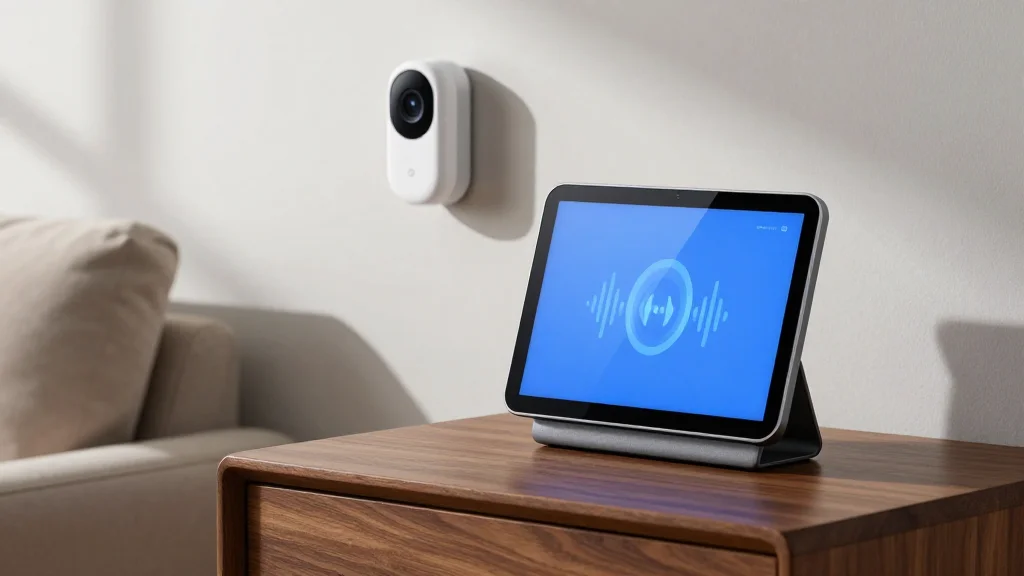
Google Rolls Out Gemini 3.1 Upgrade for Home, Adding Deeper Automations and Revamped Camera Controls

Companies Mentioned
Why It Matters
The Gemini 3.1 upgrade signals Google’s intent to make its smart‑home platform the most versatile AI assistant on the market. Multi‑step voice commands lower the barrier for non‑technical users to orchestrate sophisticated routines, while the expanded automation catalog gives developers and hobbyists a broader canvas for custom scenes. The camera UI overhaul addresses long‑standing complaints about sluggish video navigation, making Nest cameras more competitive against Ring and Arlo. If the new features prove reliable, Google could see higher engagement metrics across its Home app, potentially boosting subscription uptake for Google Home Premium and reinforcing data collection that fuels its broader AI services. The move also pressures rivals to accelerate their own AI‑driven updates, tightening the race for the dominant smart‑home assistant.
Key Takeaways
- •Gemini 3.1 enables multi‑step voice commands across Google Home devices
- •New automation triggers include security system arm/disarm, door‑lock monitoring, and appliance state control
- •Nest Cam UI gets zoomed‑in previews, faster scrubbing and event‑filtering options
- •Public previews for Ask Home on Web and quick‑action notifications launch this month
- •Older pre‑2021 Nest cameras receive Gemini‑generated event descriptions
Pulse Analysis
Google’s Gemini 3.1 rollout is more than a feature dump; it’s a strategic push to deepen user reliance on the Google Home ecosystem. By unifying voice, automation and camera management under a single AI model, Google reduces the cognitive load that typically fragments smart‑home experiences. Historically, fragmented ecosystems have hampered adoption—users juggle separate apps for voice assistants, security cameras and routine builders. Gemini 3.1’s ability to parse natural language chains and trigger a cascade of actions directly addresses that friction point.
From a competitive standpoint, Amazon’s Alexa has long boasted extensive skill libraries, but its voice model still struggles with nuanced, multi‑step requests. Apple’s HomeKit, while secure, lags in AI sophistication. Google’s bet on a more capable large‑language model could tip the scales, especially as the company leverages its massive data pipeline to continuously refine Gemini. The camera UI overhaul also matters: Nest’s previous UI was often criticized for clunky navigation, a weakness that Ring and Arlo have exploited. By delivering a smoother, more intuitive experience, Google not only retains existing Nest customers but also makes the platform more attractive to new adopters.
The rollout’s success will hinge on reliability. Early reports of Gemini misidentifying animals or mishandling activity summaries underscore the challenge of scaling AI in noisy home environments. If Google can iron out these edge cases, the combined AI‑automation‑camera suite could become a lock‑in mechanism that drives premium subscription growth and fuels the data engine behind Google’s broader AI ambitions. Conversely, persistent bugs could erode trust and open a window for competitors to capitalize on user dissatisfaction.
Google rolls out Gemini 3.1 upgrade for Home, adding deeper automations and revamped camera controls
Comments
Want to join the conversation?
Loading comments...