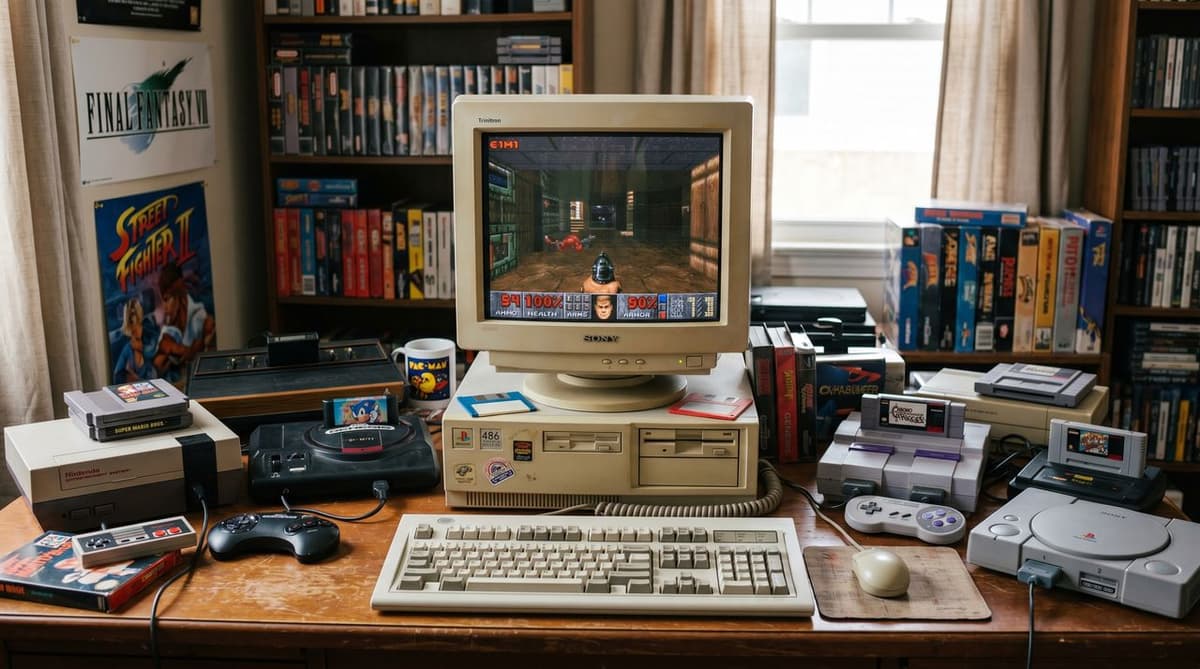
I Built a Retro Gaming PC for Less than $500 — Complete Guide to Hardware, Software, and How to Start Gaming without Spending Anything
Companies Mentioned
Why It Matters
As modern PC components become increasingly expensive, a sub‑$500 retro build lowers the barrier to entry for hobbyists and preserves interest in classic titles, expanding the retro‑gaming market.
Key Takeaways
- •Ryzen 5600GT APU provides sufficient integrated graphics for most emulators
- •Complete parts list totals $490.42, staying under $500 budget
- •8‑GB DDR4 RAM ensures smooth performance for 32‑bit titles
- •Free Linux distros like RetroPie and Lakka power the system
- •Legal ROM use requires ownership of original game copies
Pulse Analysis
The surge in retro‑gaming searches reflects a broader consumer shift toward nostalgia‑driven entertainment, especially as flagship PC hardware prices climb above $1,500. Budget‑conscious gamers are seeking dedicated machines that can run classic consoles without sacrificing modern convenience. By targeting a $500 price point, the build taps into a sizable segment that values cost efficiency while still delivering a reliable emulation experience, reinforcing the viability of niche, purpose‑built PCs in today’s market.
Technically, the Ryzen 5 5600GT APU is a strategic choice: its integrated Radeon graphics handle 8‑bit, 16‑bit, and most 32‑bit emulators at frame‑perfect speeds, eliminating the need for a discrete GPU. Pairing it with an 8 GB DDR4‑3200 stick balances memory demands of titles like PlayStation 1 and Nintendo 64, while the B550M‑K motherboard offers future upgrade paths without inflating the initial outlay. The selected 240 GB SSD ensures rapid load times for ROM libraries, and the modest 500 W PSU provides headroom for potential GPU additions, making the platform both scalable and energy‑efficient.
Software selection further differentiates the build. Open‑source distributions such as RetroPie and Lakka transform the PC into a plug‑and‑play console, leveraging RetroArch’s unified interface for thousands of cores. Legal considerations remain paramount; users must retain physical copies of games to stay within copyright bounds, a nuance often overlooked by newcomers. Services like GOG.com complement the ecosystem by offering DRM‑free classics at low cost, bridging the gap between legal acquisition and nostalgic play. Together, affordable hardware and robust, free software create a compelling proposition that could stimulate growth in the retro‑gaming accessory market and inspire similar budget‑focused builds across the hobbyist community.
I built a retro gaming PC for less than $500 — Complete guide to hardware, software, and how to start gaming without spending anything
Comments
Want to join the conversation?
Loading comments...