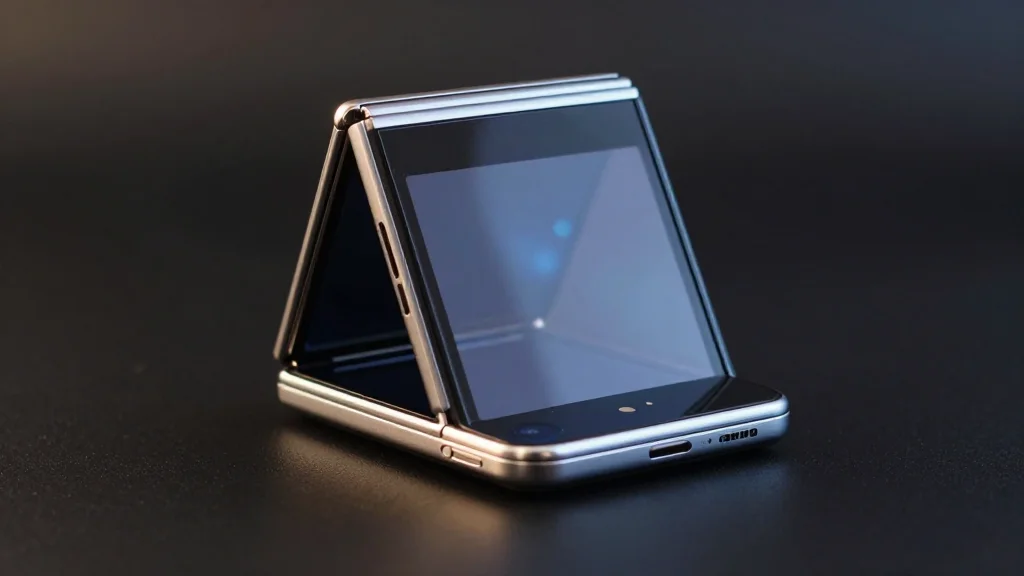
Motorola Razr 2026 Series Launches with $800 Base Model and Ultra Flagship Upgrade

Companies Mentioned

Why It Matters
The Razr 2026 launch signals a renewed focus on affordable foldables, a segment that has struggled to gain mainstream traction. By keeping the base price below $1,000, Motorola aims to broaden the appeal of flip phones beyond niche enthusiasts, potentially reshaping the price dynamics of the foldable market. The Ultra’s battery and sensor upgrades also illustrate how manufacturers are seeking incremental hardware wins to justify premium pricing without radically redesigning the form factor. For carriers, the addition of a competitively priced flip phone could attract customers seeking a novelty device without the expense of flagship foldables. Motorola’s limited carrier rollout and trade‑in promotions suggest a test‑and‑learn approach that could influence future distribution strategies across the industry.
Key Takeaways
- •Base Razr 2026 priced at $799.99 for 256 GB model
- •4,800 mAh battery with 30 W wired and 15 W wireless charging
- •Dual 50 MP cameras (primary + ultrawide) with OIS on primary lens
- •Razr Ultra upgrades to 5,000 mAh battery and LOFIC sensor
- •Available through Verizon, Google Fi, Best Buy, Amazon; AT&T absent
Pulse Analysis
Motorola’s decision to anchor the Razr 2026 series around a sub‑$1,000 price point reflects a strategic pivot from the premium‑only foldable narrative that has dominated the segment since 2020. The $100 price increase over the 2025 model is modest, but it underscores the cost pressures of component shortages and the need to fund incremental hardware upgrades such as a larger battery and higher‑resolution ultrawide sensor. By bundling accessories and trade‑in credits, Motorola is attempting to sweeten the deal for price‑sensitive consumers while still extracting margin from the higher‑end Ultra variant.
The Ultra’s 5,000 mAh battery places it on par with Samsung’s flagship foldable, suggesting Motorola is willing to compete on endurance as a differentiator. However, the lack of a stylus and the reuse of the same processor as the lower‑tier models may limit its appeal to power users who expect a clear performance gap between flagship and budget offerings. The limited carrier footprint—especially the omission of AT&T—could hinder adoption in the United States, where carrier subsidies often drive high‑ticket device sales.
In the broader context, the Razr 2026 series may catalyze a shift toward a more tiered foldable ecosystem, where manufacturers offer a clear value ladder rather than a single flagship. If consumers respond positively to the budget flip, other OEMs could follow suit, expanding the market beyond early adopters and potentially driving down costs through economies of scale. Motorola’s gamble will be judged by sales velocity and whether the Ultra can command a premium price without alienating the price‑conscious base that the Razr 2026 aims to capture.
Motorola Razr 2026 Series Launches with $800 Base Model and Ultra Flagship Upgrade
Comments
Want to join the conversation?
Loading comments...