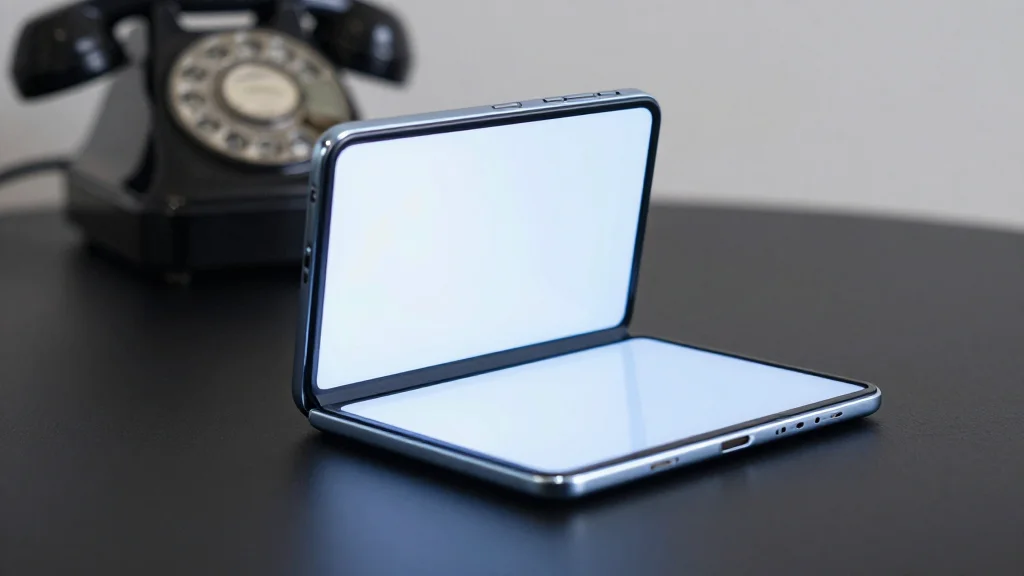
The Foldable Future or Familiar Past of Mobile Phones?
Why It Matters
The strategy redefines smartphone differentiation, shifting value from specs to emotional resonance, which could reshape branding tactics across saturated tech categories. If successful, Motorola may prove that legacy nostalgia can command premium margins in a hardware‑mature market.
Key Takeaways
- •Motorola positions Razr 2026 as lifestyle, not tech leader
- •Prices range $799‑$1,899, targeting premium Indian market
- •Design elements like fabric backs create emotional brand differentiation
- •Foldable market shifts from hardware race to experiential value
- •Success could inspire legacy brands to leverage nostalgia for growth
Pulse Analysis
Motorola’s Razr 2026 arrives at a moment when the smartphone hardware race has largely plateaued. While Apple deepens its ecosystem lock‑in and Samsung pushes engineering limits, Motorola bets on a different kind of moat: emotional attachment. By reviving the iconic flip form factor and layering it with premium textures—fabric, wood‑inspired panels, Pantone colours—the company turns a functional device into a personal statement. This approach aligns with a broader consumer shift toward products that signal identity, especially among urban Indian buyers who now allocate roughly $960‑$1,800 for premium phones, viewing them as status symbols rather than mere tools.
The pricing strategy underscores this narrative. At $799 to $1,899, the Razr line targets the upper‑mid tier, deliberately avoiding volume‑driven competition. Instead, Motorola leverages nostalgia and ritual—the satisfying flip motion—to create perceived value that transcends specifications. This mirrors a growing trend where brands across sectors, from fashion to automotive, embed heritage cues into modern offerings to command higher margins. The Razr’s incremental hardware upgrades—Dimensity‑class processors, up to 16 GB RAM, and a near‑5,000 mAh battery—meet baseline expectations, allowing design and experience to become the primary differentiators.
If the Razr 2026 gains traction, it could provide a playbook for legacy brands stuck in saturated markets. Rather than pouring capital into breakthrough technology that rivals Apple or Samsung, companies might focus on reinterpreting existing assets—iconic designs, cultural touchstones—to forge deeper consumer connections. However, the model carries risk: design cues are easier to replicate, and the window for distinctiveness may be narrow. Still, Motorola’s gamble highlights a potential pivot in tech branding: moving from "what's next" to "what feels right," a shift that could reverberate across the industry.
The Foldable Future or Familiar Past of mobile phones?
Comments
Want to join the conversation?
Loading comments...