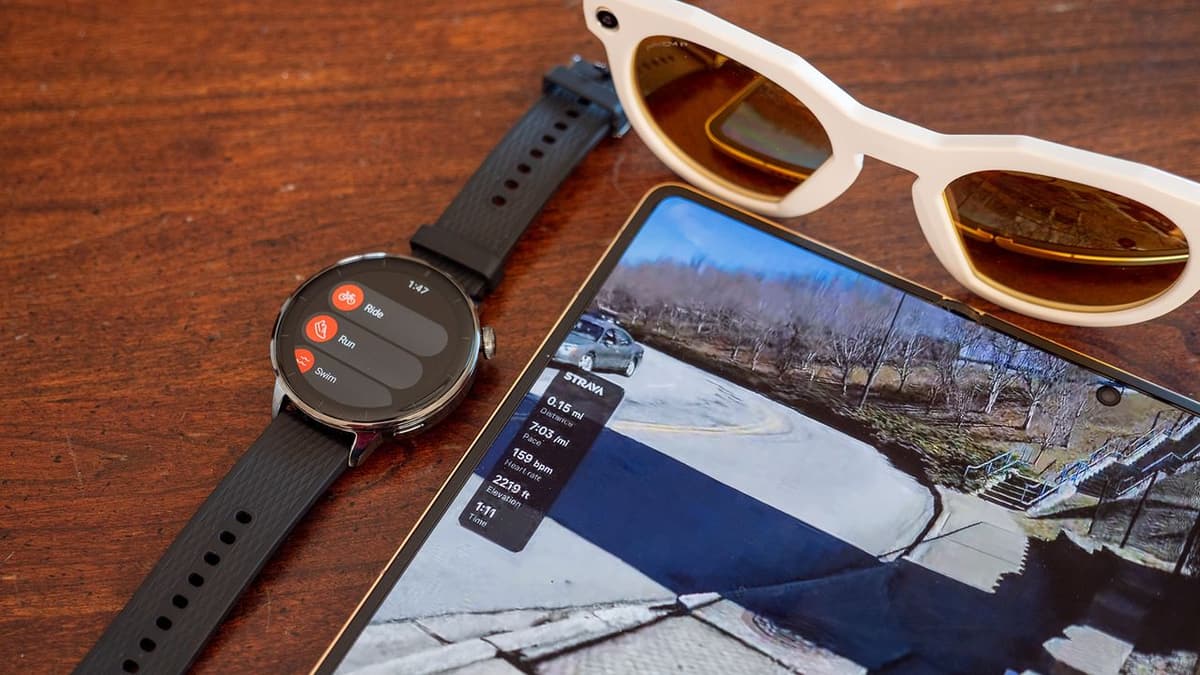
This One Feature Helped Me Turn My Meta AI Glasses Into a Garmin for Video Workouts
Companies Mentioned


Why It Matters
The integration expands the utility of AR glasses for fitness enthusiasts, bridging wearable data and immersive video content without extra hardware costs. It signals a broader trend of cross‑platform partnerships enhancing consumer wearables.
Key Takeaways
- •Meta AI glasses now overlay Strava stats on workout videos.
- •Must start workout from Strava app; otherwise no overlay.
- •Only videos, not photos, receive stat overlays.
- •Select up to five stats; view real-time or summary.
- •Wear OS watch adds heart-rate data for richer stats.
Pulse Analysis
The recent Meta‑Strava partnership transforms AR glasses from a novelty into a practical fitness companion. By linking Strava’s robust activity tracking with Meta’s AI glasses, users can embed real‑time performance metrics directly onto video footage, creating a compelling visual narrative of their workouts. This capability eliminates the need for a dedicated Garmin device, lowering the entry barrier for athletes who already own compatible smart glasses and a Wear OS watch. The seamless overlay also enhances content sharing, allowing athletes to showcase precise data alongside their training environments on social platforms.
From a technical standpoint, the integration hinges on initiating workouts within the Strava app, which streams live telemetry to the glasses during recording. Wear OS devices, such as the OnePlus Watch 3, feed heart‑rate and other biometric data, enriching the overlay beyond basic distance and pace. Users can customize up to five stats and toggle between a real‑time scrub view and a concise summary, offering flexibility for both detailed analysis and quick highlights. However, the system’s limitation to video—excluding still images—and its inability to retroactively apply stats to existing footage underscore the importance of workflow planning for content creators.
Strategically, this move reflects a growing ecosystem where hardware manufacturers collaborate to amplify value propositions without launching new products. For Meta, leveraging Strava’s established user base accelerates adoption of its AI glasses in the health and wellness segment. For Strava, the partnership extends its data reach into immersive media, potentially opening new revenue streams through premium analytics or branded content. As AR wearables mature, similar cross‑brand integrations are likely to become standard, driving a more interconnected fitness tech landscape.
This one feature helped me turn my Meta AI glasses into a Garmin for video workouts
Comments
Want to join the conversation?
Loading comments...