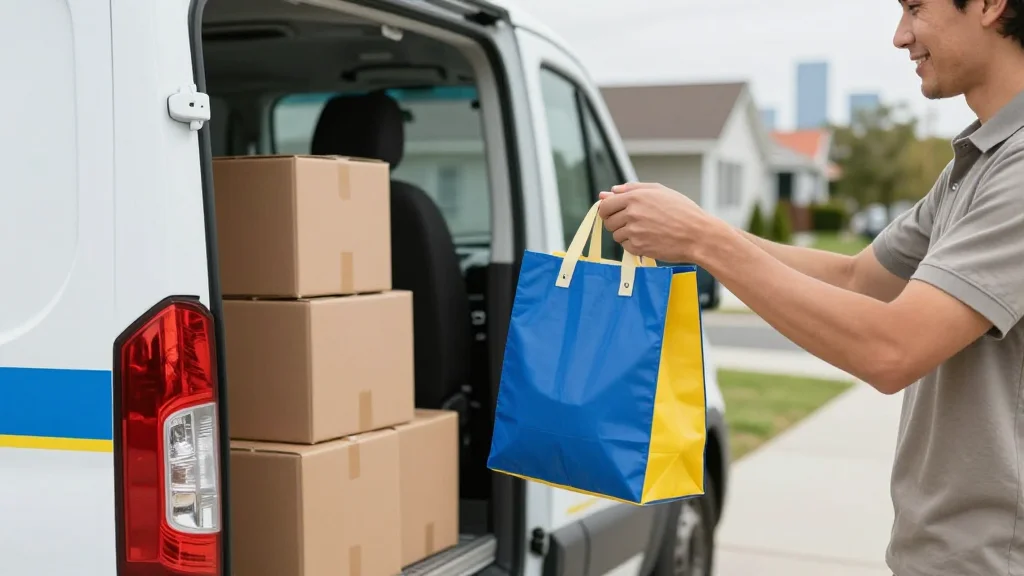
Walmart Rolls Out 30‑Minute Grocery Delivery in 33 U.S. Cities

Companies Mentioned
Why It Matters
The launch marks a decisive step in the retail industry's pivot toward ultra‑fast delivery, a capability once reserved for niche urban markets. By leveraging its brick‑and‑mortar footprint, Walmart demonstrates that scale can be turned into speed, challenging the narrative that only pure‑play e‑commerce firms can dominate same‑day logistics. For consumers, the service promises greater convenience for urgent needs, potentially reshaping shopping routines and reducing in‑store foot traffic. For the broader consumer‑tech ecosystem, Walmart’s move intensifies competition for the same pool of delivery drivers, technology platforms and real‑time inventory systems. It also raises the bar for mobile app experiences, as shoppers expect seamless ordering, accurate ETAs and transparent pricing. The ripple effects will likely accelerate innovation in route‑optimization AI, micro‑fulfillment automation and subscription‑based delivery models across the sector.
Key Takeaways
- •Walmart expands 30‑minute delivery to 33 U.S. markets, covering 100,000+ items
- •Service costs $10 for Walmart+ members and is powered by store proximity and AI routing
- •26% of Express deliveries already meet the sub‑30‑minute target; millions delivered in Q1
- •Grocery e‑commerce sales hit $11.2 billion in Aug 2025, up 14% YoY; delivery sales up 30%
- •Competition intensifies with Amazon Now, Target, Instacart as retailers chase ‘need‑it‑now’ shoppers
Pulse Analysis
Walmart’s rapid‑delivery expansion is less about a single product launch and more about cementing a logistics advantage that could redefine the retailer’s value proposition. Historically, Walmart’s strength lay in low prices and massive inventory; now it is adding speed to that equation, effectively turning its physical stores into a distributed network of fulfillment centers. This hybrid model blurs the line between traditional brick‑and‑mortar and pure‑play e‑commerce, offering a template that other large retailers may emulate.
The $10 fee for Walmart+ members is a strategic lever to boost subscription uptake while offsetting the higher cost structure of ultra‑fast delivery. If the service captures a meaningful share of the 19.3% of households already dabbling in online grocery, Walmart could see a measurable lift in basket size and frequency, especially for high‑margin “need‑it‑now” categories. However, scaling the model will test the elasticity of its driver pool and the robustness of its routing algorithms, especially in less densely populated regions.
From a market perspective, the move pressures competitors to accelerate their own micro‑fulfillment investments or forge deeper partnerships with third‑party logistics providers. The race for speed is likely to spur further consolidation among delivery platforms and technology vendors specializing in AI‑driven dispatch. In the long run, consumers may come to expect sub‑30‑minute delivery as the norm, reshaping expectations not just for groceries but for a broader array of consumer goods.
Walmart Rolls Out 30‑Minute Grocery Delivery in 33 U.S. Cities
Comments
Want to join the conversation?
Loading comments...