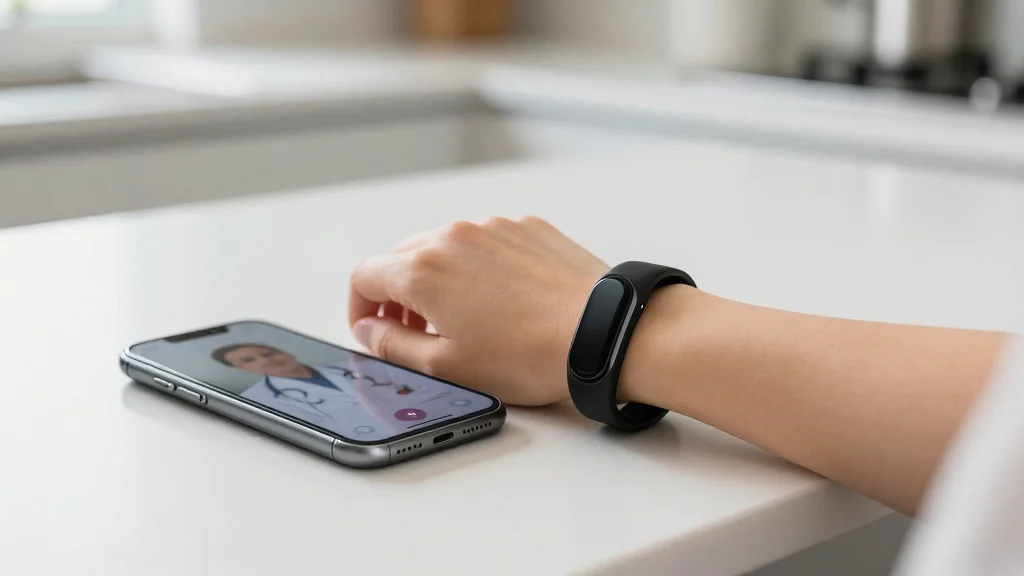
Whoop Launches Paid Video Clinician Access and Health Record Integration for U.S. Users

Why It Matters
Whoop's entry into paid tele‑health signals a broader shift among consumer wearables from pure fitness tracking to comprehensive health platforms. By leveraging its massive biometric dataset, Whoop can offer clinicians richer context, potentially improving diagnosis accuracy and patient engagement. The move also tests the regulatory waters; successful navigation could set a precedent for other wearables seeking to monetize health services. If users embrace the clinician access and health‑record features, Whoop could unlock new revenue streams beyond its subscription base, attracting insurers and employers interested in preventive health analytics. Conversely, missteps could reignite regulatory scrutiny and erode consumer trust, especially given the recent FDA warning.
Key Takeaways
- •Whoop adds on‑demand video clinician access for U.S. members, billed as a paid add‑on.
- •HealthEx partnership enables users to store diagnoses, medications and procedures within the Whoop app.
- •Company has over 2.5 million global users and recently closed a $575 million funding round, valuing it at $10.1 billion.
- •Launch follows an FDA warning letter over the company's Blood Pressure Insights feature.
- •Pricing and full rollout are slated for summer 2026, with health‑record integration later in the year.
Pulse Analysis
Whoop's strategic pivot reflects a maturation of the consumer‑tech wearables market, where differentiation now hinges on health‑service integration rather than sensor accuracy alone. The $575 million capital infusion underscores investor confidence that data‑driven health services can generate sustainable margins, especially as subscription fatigue pushes companies to bundle higher‑value offerings.
Regulatory risk remains the elephant in the room. The FDA's recent guidance softens the path for optical blood‑pressure measurements, but the agency's earlier warning illustrates the fine line between wellness and medical claims. Whoop's decision to keep prescribing off the table and position video calls as supplemental suggests a cautious approach designed to avoid another compliance breach.
From a competitive standpoint, Whoop is chasing Apple, Google and Fitbit, all of which have introduced tele‑health or health‑record features. Whoop's advantage lies in its deep, continuous data capture, which could enable more proactive, AI‑guided interventions. If the company can prove that its clinician‑access model improves health outcomes—say, by reducing emergency visits or chronic‑disease exacerbations—it could attract partnerships with health insurers and corporate wellness programs, turning its data advantage into a defensible moat.
Overall, the success of Whoop's new services will depend on user willingness to pay for clinician time, the quality of the medical network, and the company's ability to stay within regulatory boundaries while delivering measurable health benefits.
Whoop Launches Paid Video Clinician Access and Health Record Integration for U.S. Users
Comments
Want to join the conversation?
Loading comments...