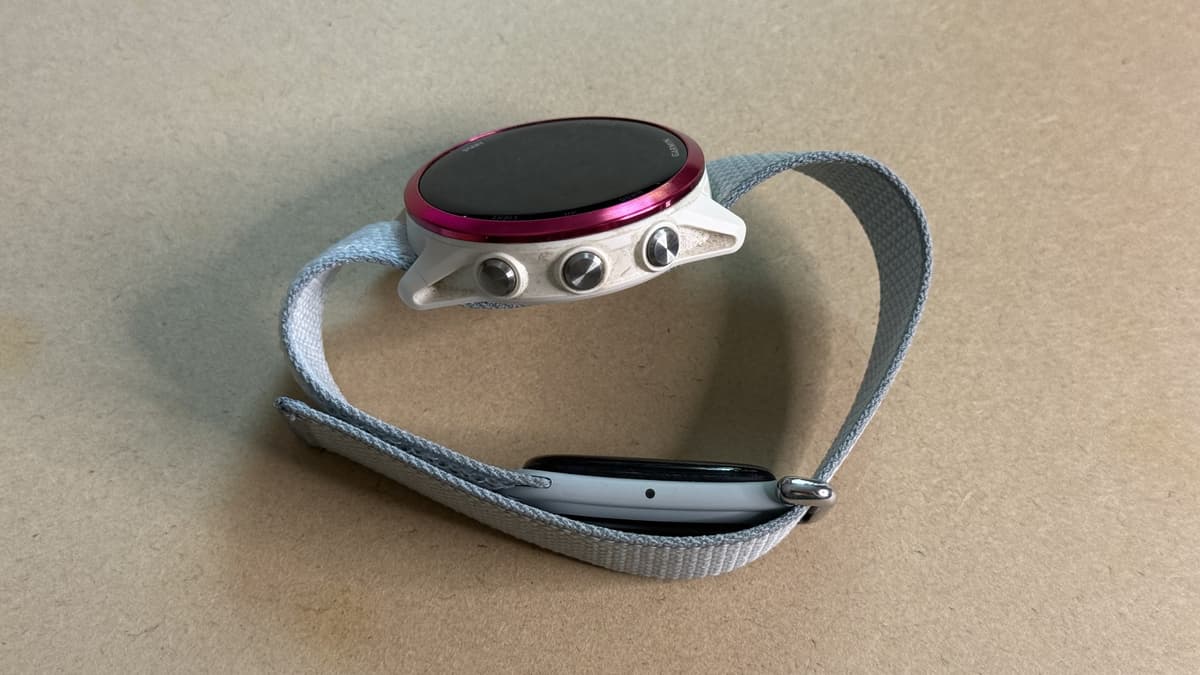
Yes, You Can Put Your Watch and Fitbit Air on the Same Band (but You May Not Want To)
Companies Mentioned
Why It Matters
The hack highlights growing consumer demand for wearable customization and could spur accessory makers to design more versatile straps, influencing the broader wearables market.
Key Takeaways
- •Fitbit Air can share its 18 mm nylon strap with watches
- •Requires watch lugs spaced at least 18 mm and spring pins
- •Comfort issues arise on small wrists and bottom‑wrist placement
- •Heart‑rate accuracy may drop when sensor sits on wrist underside
- •Third‑party adapters exist but add bulk and visual clutter
Pulse Analysis
Wearable enthusiasts increasingly treat smart trackers as modular accessories rather than fixed devices, a shift that mirrors the broader personalization trend in consumer electronics. The Fitbit Air, priced around $100, offers a slim, screenless profile that many users pair with traditional analog watches to avoid the visual clutter of two separate wristbands. By exploiting the Air’s standard 18 mm nylon strap, hobbyists can thread the tracker through a watch’s lugs, provided the watch’s lug width matches or exceeds the strap’s dimensions. This DIY approach underscores a market gap: manufacturers have yet to produce truly universal straps that accommodate both classic horology and modern fitness tech.
The practical execution, however, reveals several trade‑offs. Users must source spring pins that correspond to their watch’s pin size, and the combined stack can create a loose flap on the strap, especially on smaller wrists. Moreover, positioning the Fitbit on the underside of the wrist—away from the typical sensor location—may compromise optical heart‑rate readings, a critical metric for many fitness applications. Third‑party adapters can mitigate spacing issues but introduce additional bulk, potentially detracting from the sleek aesthetic that both watch collectors and fitness fans prize.
For manufacturers, the popularity of such hacks signals an opportunity to develop hybrid bands that seamlessly integrate multiple devices without sacrificing comfort or data fidelity. Accessory makers could explore adjustable, multi‑layered straps or modular connector systems that retain sensor alignment while offering a unified look. As consumers continue to blend analog style with digital health monitoring, the accessory ecosystem will likely evolve to support more flexible, cross‑compatible solutions, driving innovation across both the watch and wearable tracker segments.
Yes, You Can Put Your Watch and Fitbit Air on the Same Band (but You May Not Want To)
Comments
Want to join the conversation?
Loading comments...