

Integrating the Ethical and Societal Impacts of GenAI in the Classroom
The ACM webinar explored how educators can weave ethical and societal considerations of generative AI into curricula. Dean Enrio Pontelli and Professor Judith Galazer described their institutions’ approaches, emphasizing that AI literacy should be introduced as early as primary school, mirroring the rollout of digital literacy. Key insights included the need for students to understand prompting, critical evaluation, data privacy, and human‑AI collaboration. Galazer argued that traditional, static degree programs cannot keep pace with rapid AI advances, proposing a modular "learnity" unit that bundles knowledge, skills, industry experience, and ethics. These learnities are linked in a "learnity graph," a personalized map of competencies that evolves with each learner. Examples illustrated the concept: a second‑year student named Maya’s graph combined foundational CS courses with industry testing experience, while Galazer’s daughter Sadar’s graph spanned undergraduate study, a startup stint, and a master’s in technology education. Galazer also shared her own experiment using AI tools to draft presentation slides, highlighting both the convenience and the loss of personal voice. The proposed shift promises flexible pathways, early certification, and continuous recognition of achievements, enabling graduates to enter the workforce with demonstrable, up‑to‑date skills. For institutions, it means rethinking curriculum design, fostering tighter academia‑industry loops, and embedding lifelong learning as a core outcome.

Inside an LLM Agent: A From-Scratch Walkthrough
The ACM Tech Talk walked through the internals of a large‑language‑model (LLM) agent, previewing content from Dr. Andre Fajardo’s forthcoming book *Build a Multi‑Agent System from Scratch*. Using a Lightning AI Studio notebook and Ollama’s open‑source models, the presenter demonstrated...

Robert M. Metcalfe, 2022 ACM Turing Award Recipient
The Computer History Museum’s oral history captures Bob Metcalfe’s journey from a Brooklyn‑born son of a gyroscope technician to the 2022 ACM Turing Award laureate. The interview, recorded in Boston on Nov. 29, 2006, traces the personal and technical milestones that shaped...

Software Verification in the Age of Artificial Intelligence
The webcast, presented by Bertrand Meyer, examined how artificial intelligence reshapes software verification and the broader engineering workflow, arguing that AI must serve as an assistant rather than a replacement for human programmers. Meyer outlined an ecosystem of specialized AI agents—handling...
May 2026 CACM: Are We Actually There? Assessing RPKI Maturity
The May 2026 Communications of the ACM paper "Are We Actually There? Assessing RPKI Maturity" examines whether the Resource Public Key Infrastructure (RPKI) has reached the maturity level touted by the White House in 2024. While RPKI now protects more...

KDD 2026 - Communication-Efficient Federated Graph Classification via Generative Diffusion Modeling
The paper presented at KDD 2026 tackles the problem of graph classification in a federated setting, where multiple clients must collaboratively train a model without sharing raw graph data. Current federated graph neural networks (GNNs) suffer from two major issues: frequent,...
KDD2026 - Retain to Refine: Adaptive Online QuestionAnswering via Query Routing and Long-ShortMemory
The paper introduces “Retain to Refine,” an adaptive online question‑answering framework that tailors its reasoning pipeline to each query’s difficulty. A lightweight critic agent first predicts whether a query is simple or complex. Simple factoid questions are answered directly, while hard...
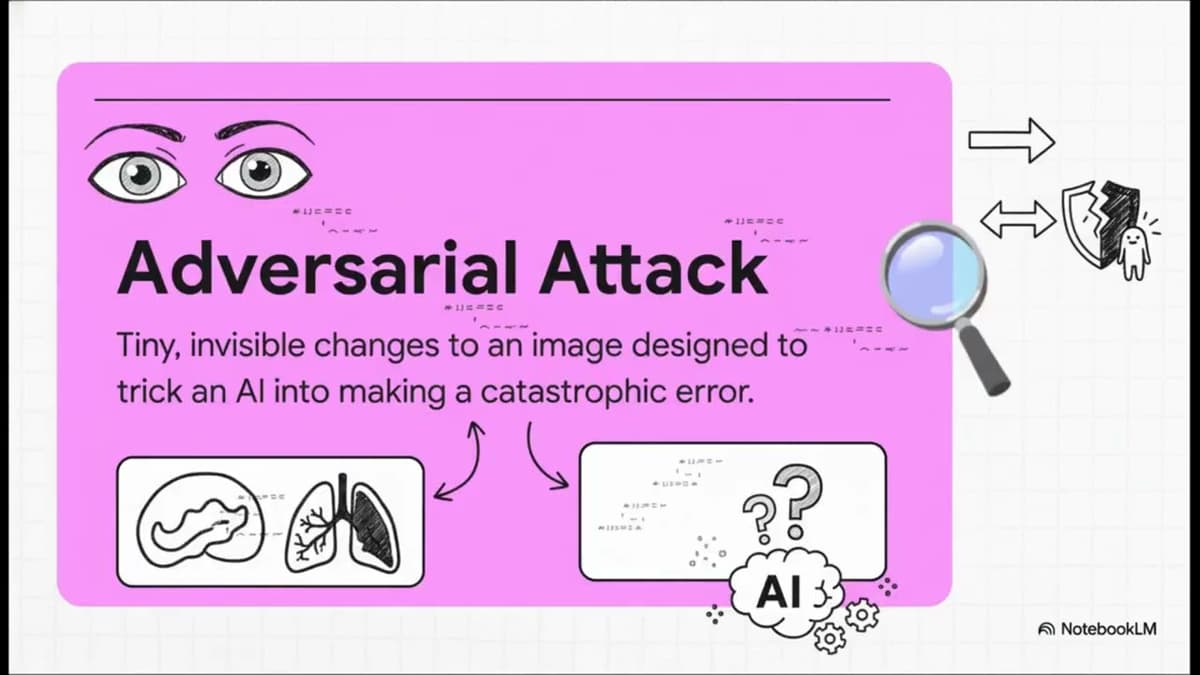
KDD 2026 - Effective and Robust Multimodal Medical Image Analysis
The KDD 2026 presentation introduced MALe (Multi‑Attention Integration Learning), a new framework for multimodal medical image analysis that emphasizes efficiency, adaptability, and robustness. Unlike traditional cascaded‑fusion models that process modalities sequentially, MALe employs parallel fusion, preserving full contextual information across MRIs, CTs,...

ByteCast Ep84: Peter Stone
In this ACM Bitecast episode, Peter Stone—professor at UT Austin, chief scientist at Sony AI, and a leading figure in RoboCup—discusses his lifelong quest to understand intelligence by building autonomous agents that can operate in messy, physical environments. He traces his...

Toward a Quantum-Native Internet From Architecture to Protocol Organization
The talk argues that the next‑generation Internet must be re‑engineered around entanglement, a non‑local quantum resource, rather than the classical packet‑centric model. Entanglement’s stateful, volatile nature forces a fundamental redesign of architecture, control, and protocol organization. Key insights include the mandatory...

April 2026 CACM: Where Are the City Trees? Monitoring Urban Trees Across the U.S. Using GenerativeAI
Urban planners and researchers unveiled a generative‑AI system that leverages monthly satellite imagery to inventory every tree across U.S. cities. The approach replaces labor‑intensive field surveys with a three‑phase workflow: (1) capture twelve monthly images to track phenological changes, (2)...
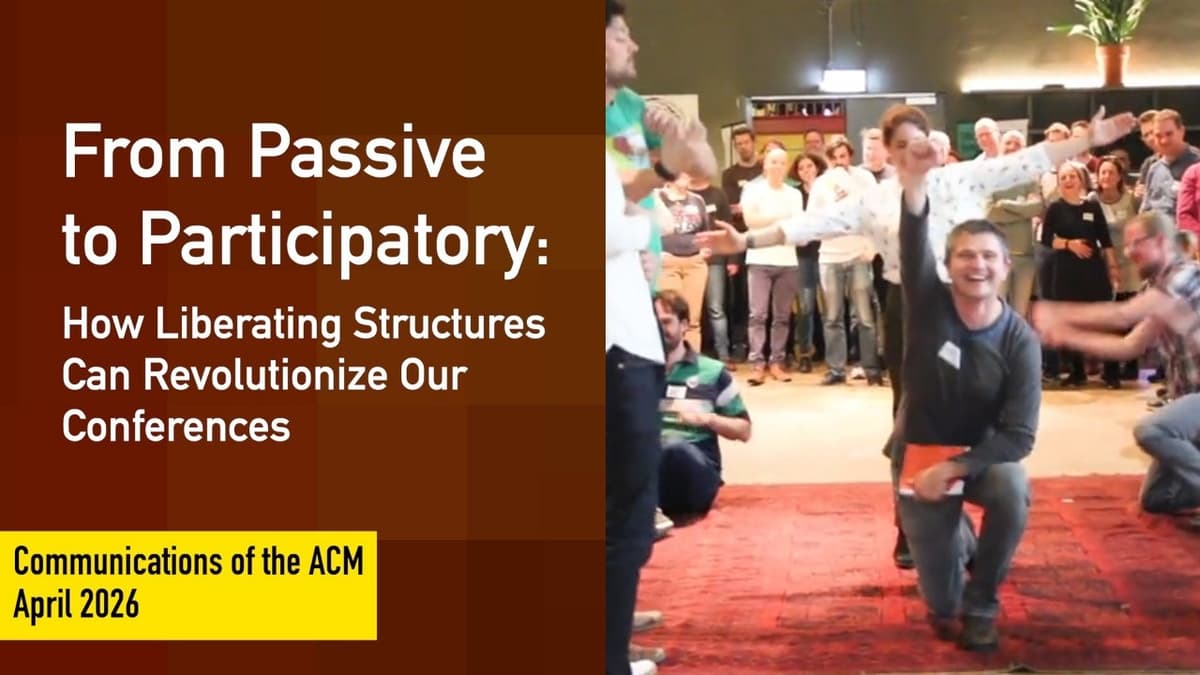
April 2026 CACM: From Passive to Participatory: How Liberating Structures Revolutionize Conferences
The video argues that the traditional conference model has become unsustainable, with exponential growth in paper submissions and travel costs, and that AI is reshaping publishing economics, prompting a fundamental rethink. It proposes replacing passive listening with Liberating Structures, introducing a...

Europe's Digital Omnibus: A New Digital Regime or Simplification
The European Commission’s Digital Omnibus is a sweeping package of amendments intended to untangle the EU’s growing maze of digital rules—from the GDPR to the AI Act and cybersecurity directives. Organized by ACM’s Europe Technology Policy Committee, the panel...

A Practical Introduction to Agentic Coding
The ACM Tech Talk introduced “agentic coding,” a new paradigm where AI agents act as autonomous programmers within a developer’s environment. Hosted by Abigail Misy Dobe and presented by Microsoft senior developer advocate Marlene, the session highlighted how open‑source communities...