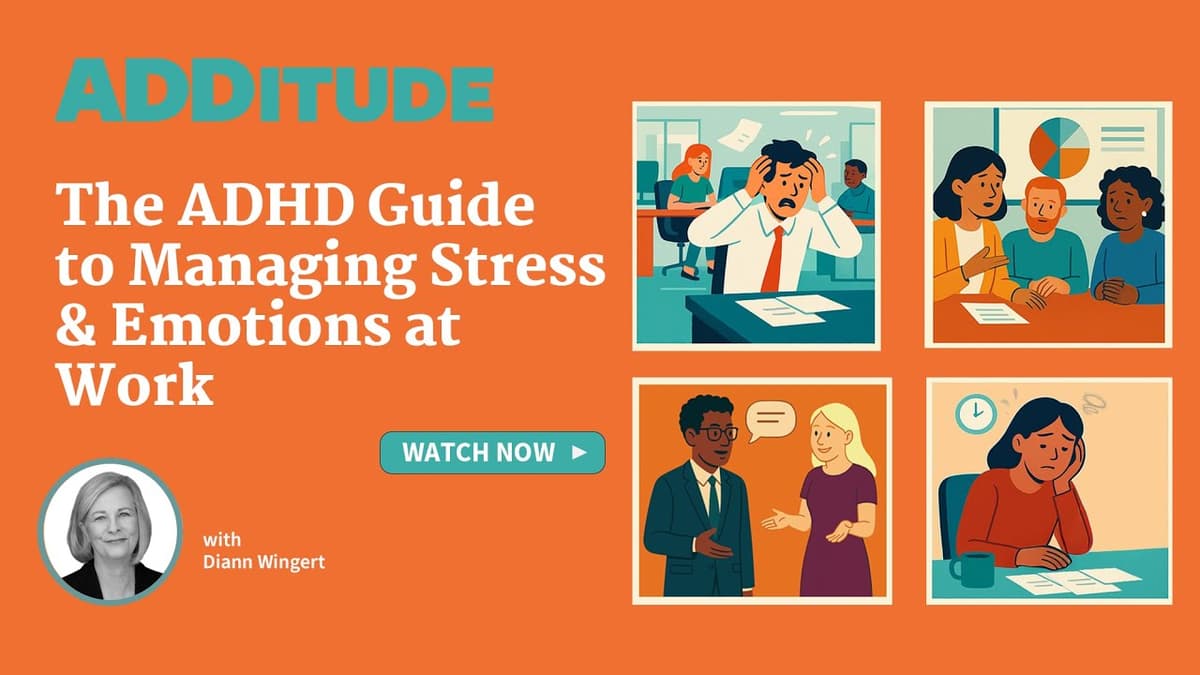
The ADHD Guide to Managing Stress and Emotions at Work (with Diann Wingert)
The webinar, led by ADHD coach Diann Wingert, tackled the unique challenges neurodivergent professionals face when stress and emotions collide at work. Wingert highlighted that ADHD brains process emotions roughly 30% more intensely, making routine workplace interactions—meetings, criticism, tight deadlines—potential flashpoints for dysregulation. Key insights included the neuroscience behind the “short fuse”: the amygdala hijacks attention while the prefrontal cortex shuts down, rendering typical calming advice ineffective. Wingert introduced the SPACE acronym—Spot patterns, Pause escalation, Act in the moment, Clear the air, Evolve systems—as a practical, step‑by‑step toolkit for recognizing triggers, buying time, and restoring composure. She illustrated the framework with concrete examples: noticing shoulder tension or a higher‑pitched voice as early warning signs, using professional stall tactics like “I’ll follow up by 2 p.m.” to interrupt escalation, and reshaping physical workspaces to mitigate sensory overload. Wingert also emphasized that emotional incidents ripple into career trajectories, fueling shame spirals, masking, and missed advancement opportunities. The broader implication is clear: organizations that understand and accommodate ADHD‑related emotional regulation can retain talent, improve productivity, and foster healthier workplace cultures. Individuals equipped with the SPACE method can transform reactive moments into opportunities for growth, reducing burnout and enhancing professional relationships.
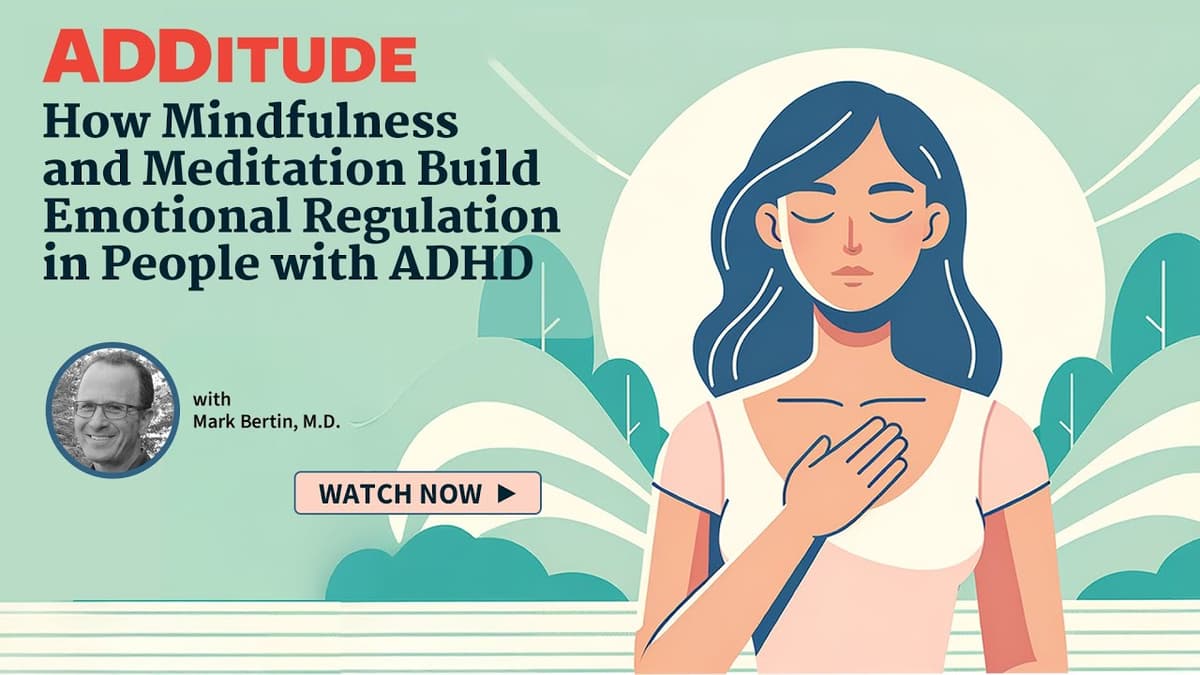
How Mindfulness Builds Emotional Regulation in People with ADHD (with Mark Bertin, M.D.)
The webinar, hosted by Attitude and led by developmental pediatrician Dr. Mark Burton, explored how mindfulness and contemplative practices can strengthen emotional regulation for people with ADHD. Burton framed ADHD as a disorder of executive function, emphasizing that emotional dysregulation...
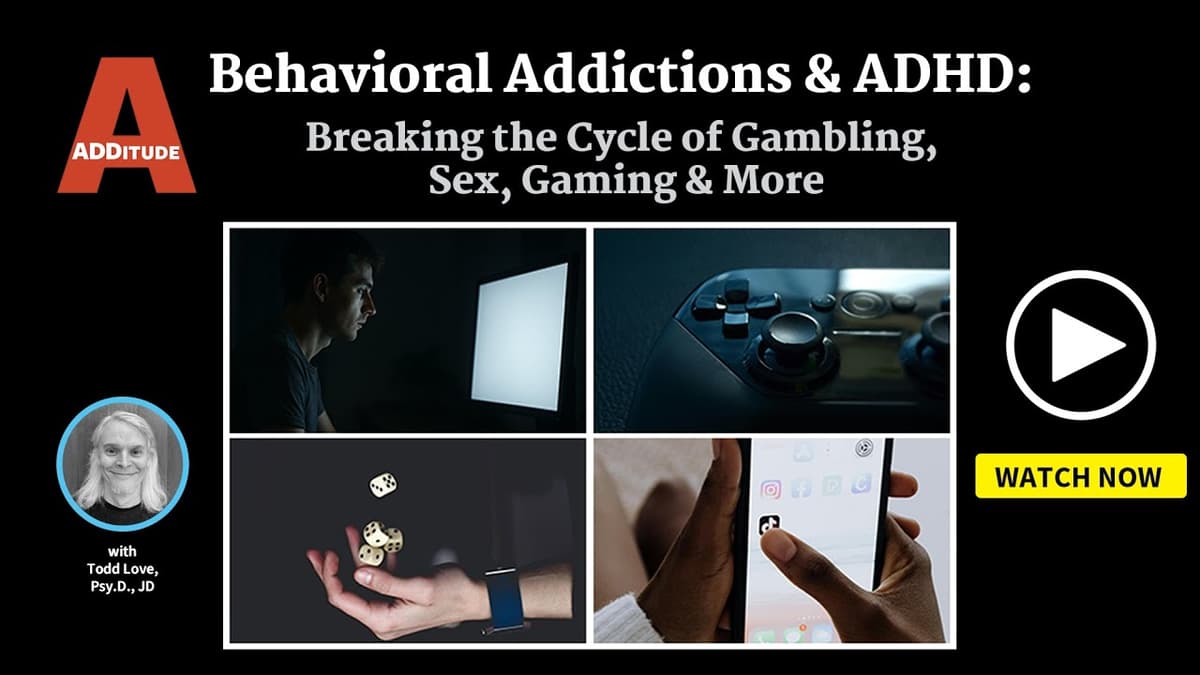
Addictions and ADHD: Breaking the Cycle of Gambling, Sex, Gaming & More (W/ Todd Love, Psy.D.)
The webinar hosted by Attitude Magazine featured Dr. Todd Love, a licensed therapist specializing in adult ADHD and behavioral addictions. He outlined how ADHD frequently co‑occurs with non‑substance addictions—gambling, sex, internet use, gaming and social media—affecting roughly one‑quarter to two‑fifths...
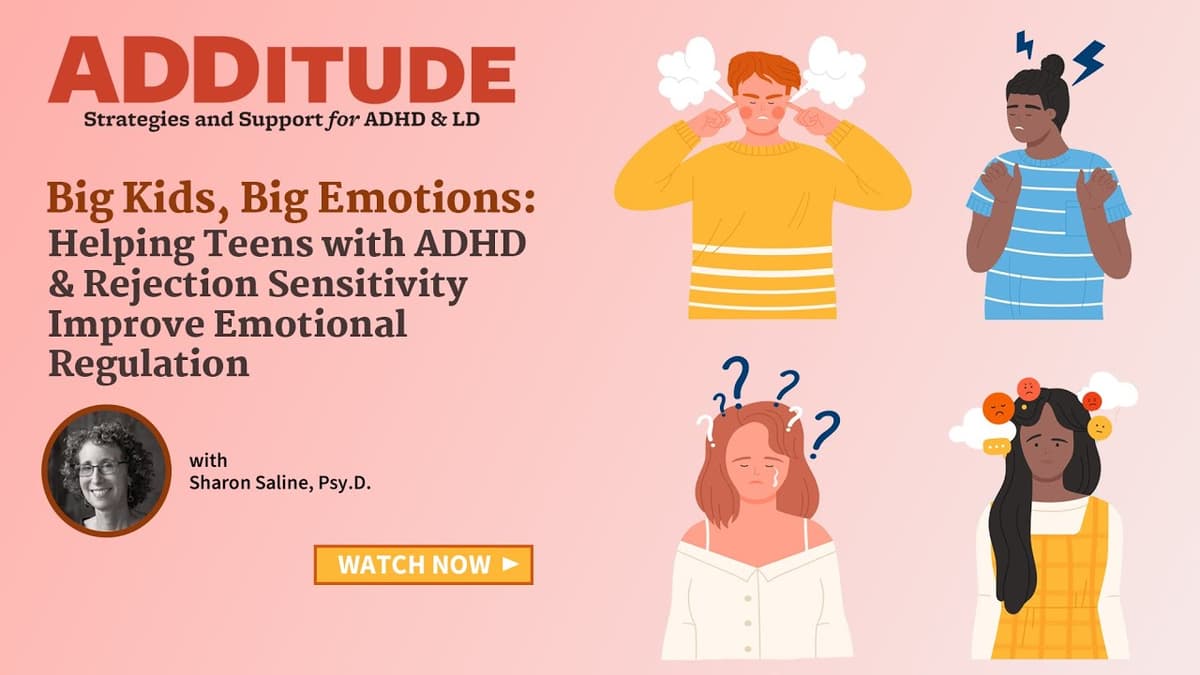
Helping Teens with ADHD and RSD Improve Emotional Regulation (W/ Sharon Saline, Psy.D.)
The webinar, titled “Big Kids, Big Emotions,” featured clinical psychologist Dr. Sharon Selene discussing how teens with ADHD experience heightened emotional volatility, especially when faced with rejection sensitive dysphoria (RSD).\n\nSelene explained that the pre‑frontal cortex, the brain region responsible for...

Some Kind of Wonderful: How Music Affects the ADHD Brain (W/ Roberto Olivardia, Ph.D.)
The webinar titled “Some Kind of Wonderful: How Music Affects the ADHD Brain,” hosted by Attitude and featuring Harvard‑trained clinical psychologist Dr. Roberto Olivardia, explored the intersection of music and attention‑deficit hyperactivity disorder. Olivardia, who lives with ADHD himself, framed...