
Recent Posts

Video•Feb 23, 2026
The Worst Data Platform Ever?
The video spotlights a deliberately terrible data architecture built around electric‑vehicle charging stations, using a single PostgreSQL instance as the backbone for every function—from charger telemetry to customer‑facing applications. By routing each charger through a VPN tunnel straight to the central database, the design creates a massive scalability bottleneck and a single point of failure. Analysts, support staff, and the web and mobile front‑ends all share the same read‑write workload, eroding performance and exposing sensitive data to unnecessary risk. The presenter calls it “maybe the worst platform use case ever,” noting that the API gateway and web server connect directly to the database without any service layer, and that the VPN‑based connectivity forces every station to depend on the same network path. Such an architecture would cripple any growing EV network; modern best practices demand decoupled services, event‑driven ingestion, read‑replicas, and strict access controls. Redesigning the platform can lower latency, improve reliability, and meet regulatory data‑handling standards.
By Andreas Kretz (Learn Data Engineering)
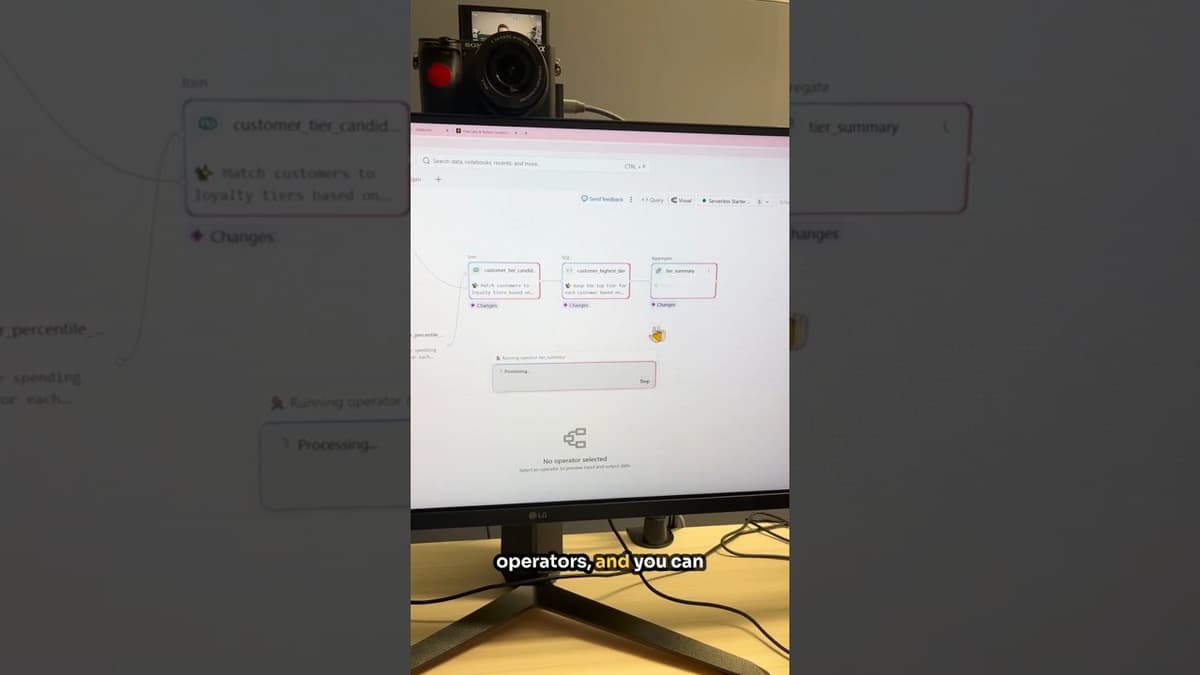
Video•Feb 19, 2026
Databricks Keeps Raising the Bar With This New Feature!
Databricks unveiled its LakeFlow pipeline editor, a visual tool that lets users design, inspect, and run data pipelines without writing extensive SQL code. The feature integrates a graph‑based view of each pipeline step and a preview pane that shows sample...
By Andreas Kretz (Learn Data Engineering)