
Recent Posts
Video•Feb 26, 2026
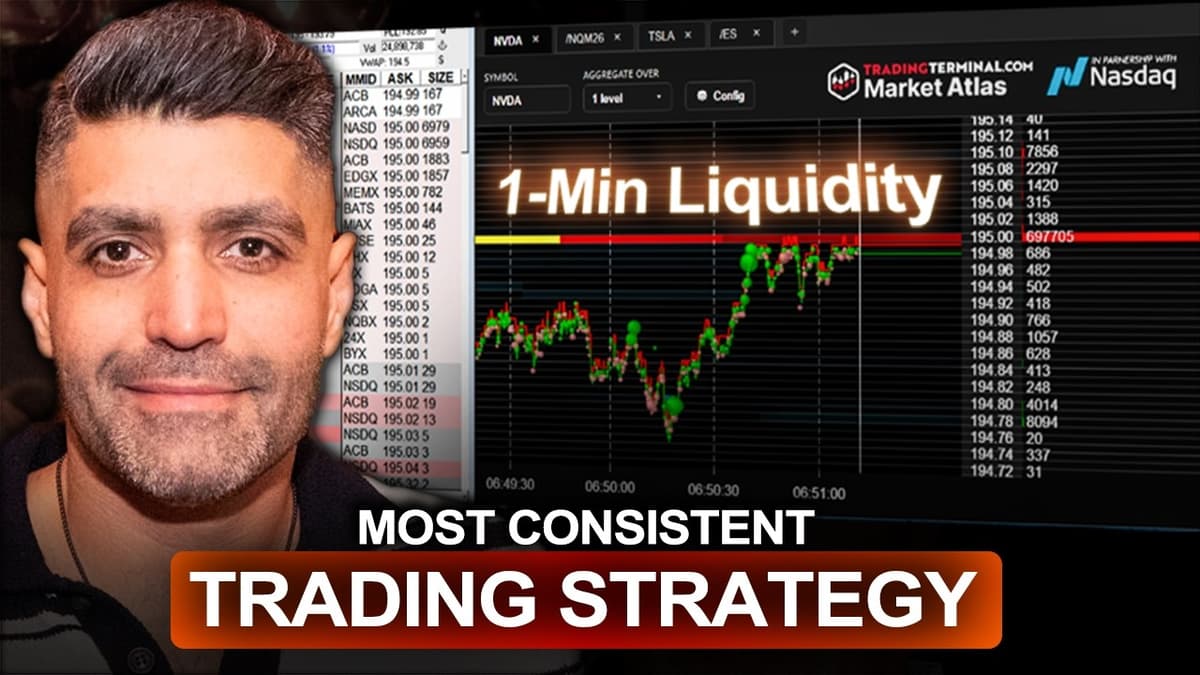
Order Flow Is The Most Important Trading Strategy 2026. Here's Why...
The video argues that order‑flow insight, delivered through the Market Atlas depth‑of‑market tool, is the single most powerful edge for day traders in 2026. By visualizing real‑time liquidity pools and large pending orders, traders can anticipate price direction before the market opens or during earnings windows, a claim the presenter backs with live screenshots of Tesla and Nvidia trades. Key insights include the importance of monitoring Level 2 data to spot bullish or bearish clusters, pairing that information with classic chart patterns such as opening‑range breakouts, ABCD formations, and VWAP alignment. The presenter demonstrates how a $412‑to‑$420 Tesla surge and a pre‑market Nvidia stack at the 204‑205 level were captured by aligning order‑book pressure with candlestick signals, turning volatility into profit. Notable examples feature a scalp on Tesla where a massive order at $420 justified a rapid long‑then‑add strategy, and an Nvidia earnings play where a 202‑203 order block signaled a bullish bias, prompting a long entry that rode the post‑market surge. The speaker also highlights a Microsoft short that broke even due to timely liquidity assessment, underscoring the tool’s risk‑mitigation value. The implication for traders is clear: mastering order‑flow via Market Atlas can convert raw volume into actionable signals, but it must be filtered through price‑action context and disciplined risk controls. Those who integrate depth data with candlesticks, VWAP, and moving averages can expect more consistent entry quality and tighter stop placement, reshaping day‑trading profitability.
By Andrew Aziz
Video•Feb 10, 2026
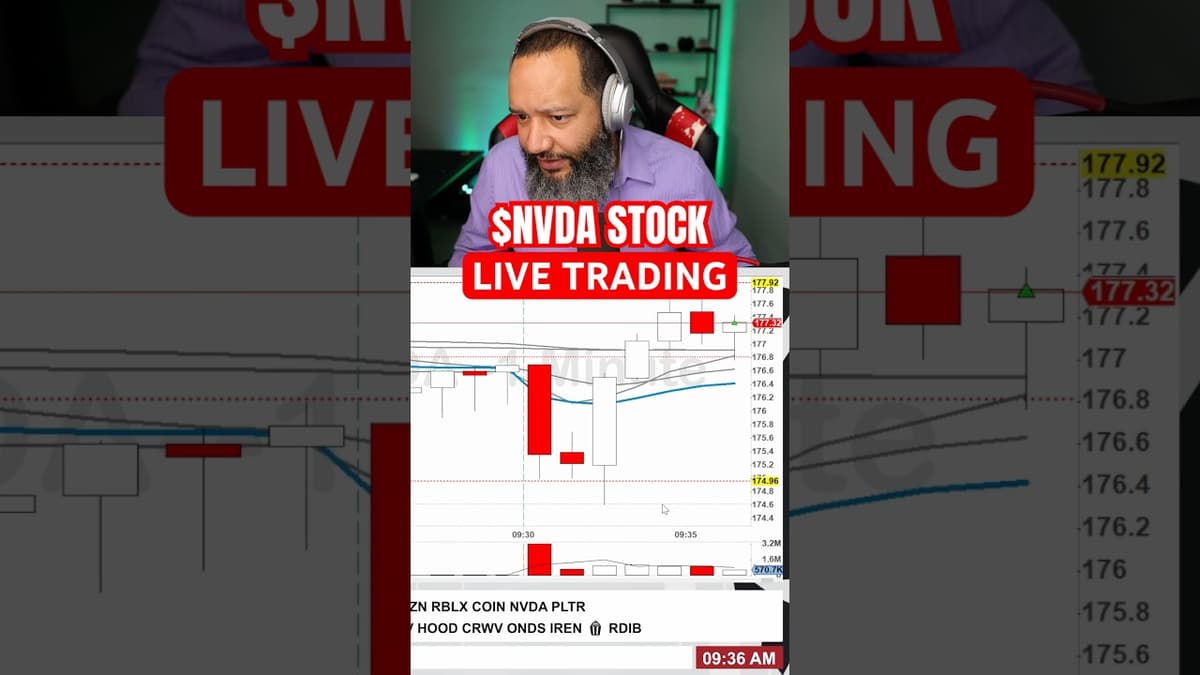
Watch Real Traders Day Trade LIVE on YouTube
A live day trader described entering a long position on a pullback, targeting a break toward the premarket high around 177.92–178.00 while using one-minute and five-minute setups. The trader set a stop just below VWAP at roughly 176.20 and planned...
By Andrew Aziz