
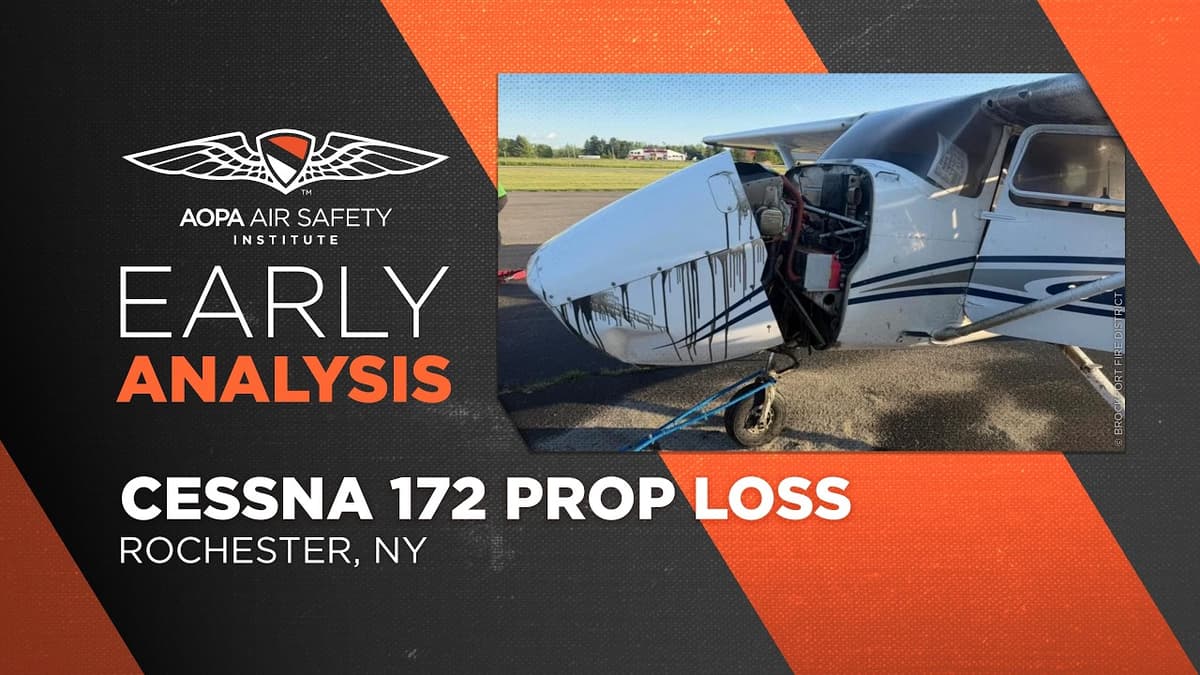
Early Analysis: Cessna 172 Prop Loss
The Air Safety Institute examined a May 28 incident in which a Cessna 172S, operating a flight‑training sortie from Rochester International Airport, suffered smoke, a suspected cockpit fire, oil‑filled windscreen and total engine failure, ultimately losing its propeller before landing safely at Ledgedale Airport. The crew—CFI Scott Murphy and a novice student—declared a Mayday within minutes of departure, reported fire, and managed a controlled glide. Analysis of FlightAware data and ATC audio showed the aircraft maintained best‑glide speed, benefitted from a tail‑wind shift, and likely gained additional glide range when the propeller separated, reducing drag by roughly 20% as documented in prior AOPA testing. Murphy’s calm, measured communications and his post‑flight interview highlighted rigorous “chair‑flying” emergency drills, deep system knowledge, and a supportive CFI community as key factors in the successful outcome. He noted the sudden pop and bang that preceded the prop loss, the rapid oil fouling of the windscreen, and the quiet cockpit that signaled the engine’s demise. The incident, classified as an incident rather than an accident, is under FAA investigation to determine the root cause of the propeller failure. For pilots, the case underscores the critical value of regular emergency procedure rehearsals, understanding aircraft performance without a wind‑milling prop, and leveraging ATC assistance during crises.
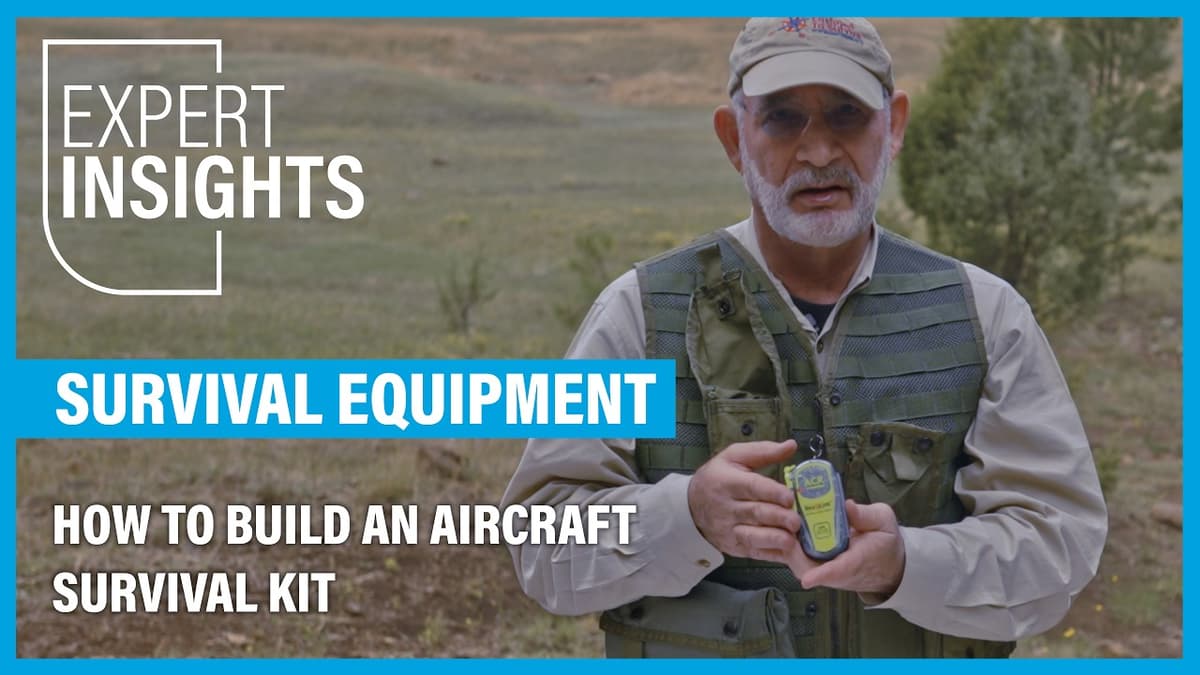
Survival Equipment: How to Build an Aircraft Survival Kit
The video walks viewers through assembling a personal aircraft survival kit, emphasizing that essential gear should be carried on the pilot rather than stowed in the aircraft’s luggage compartment. It starts with an Altoids‑tin sized container holding a fire starter, signal...

Plane Descends at 11,000 Feet per Minute
The video examines the fatal crash of a Cessna 421C that went down just outside Wimberly, Texas, on April 30, 2026. The aircraft, departing Riverfalls Airport for New Bronfell’s National Airport, entered instrument conditions and suffered a pitot‑tube heat failure, leading to erroneous...
Plane Crashes Just After Takeoff From Crystal Airport in Minnesota
On Saturday, April 25, 2026, a Beechcraft Bonanza departed Crystal Airport’s runway 32 in Minnesota and crashed shortly after takeoff. The aircraft entered a left turn, reported an issue to air‑traffic control, and was cleared to return, but never made it back...

Mental Performance: Battling Nerves
The video explores how the body’s physiological response to nerves—racing heart, quick breathing, sweaty palms—is indistinguishable from the response to excitement. By reframing the mental label from "nervous" to "excited," individuals can convert that surge of adrenaline into productive focus...

Mental Performance: Overcoming Failures and Mistakes
The video tackles mental performance by showing how professionals—particularly pilots—can overcome failures and mistakes. It argues that errors should be treated as data, not as personal indictments, and introduces practical tools like the “what now?” mantra to snap back into...
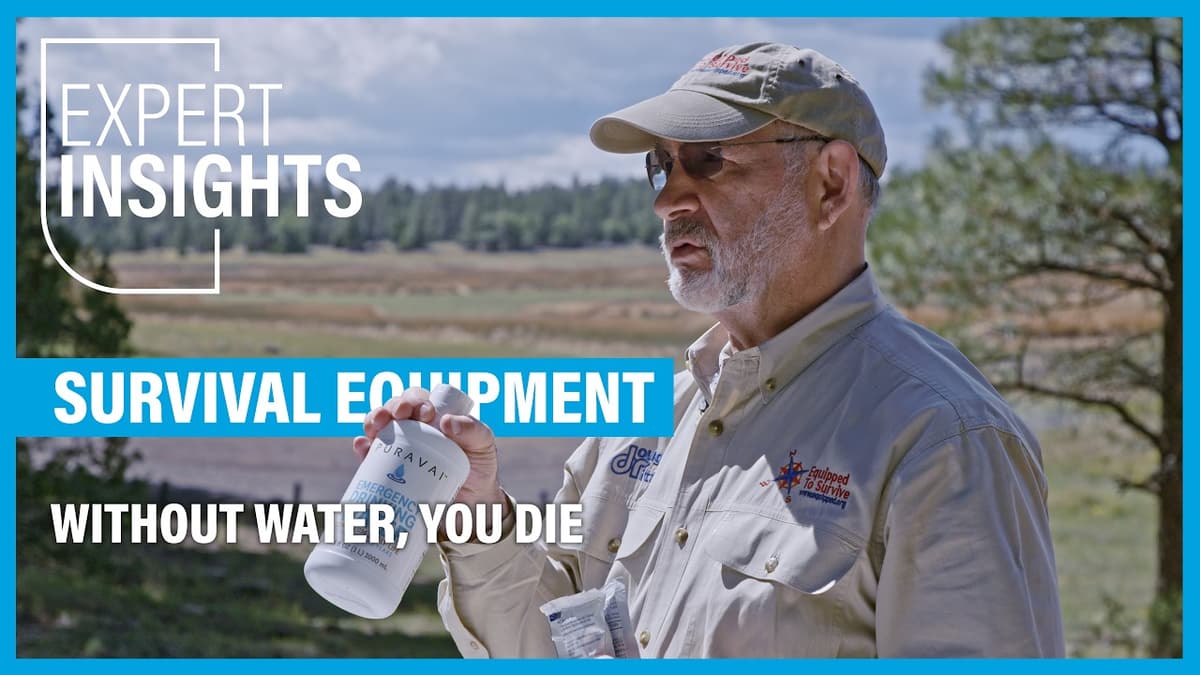
Survival Equipment: Without Water, You Die
The video stresses that water is the single most critical survival item for pilots and passengers after an unexpected landing. Conventional containers like gallon jugs are prone to rupture, so the presenter recommends lightweight, flexible pouches or ultra‑durable 20‑year survival...
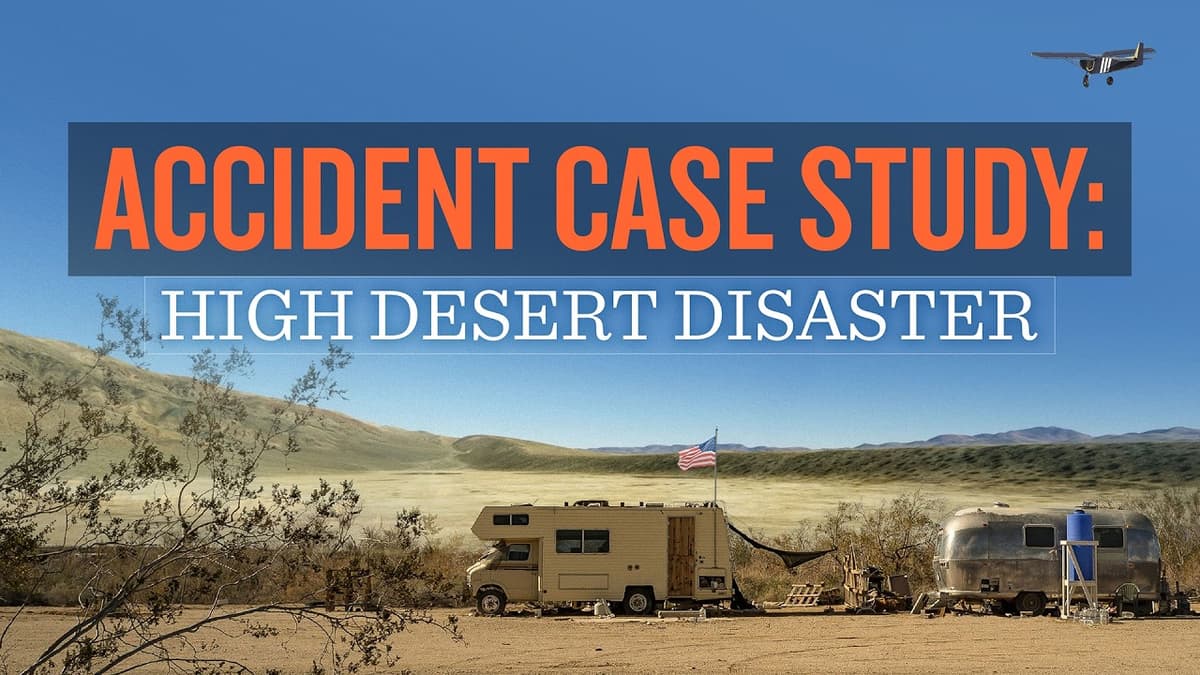
Accident Case Study: High Desert Disaster
The video examines a fatal backcountry crash in the Mojave’s high desert, where a former Navy SEAL piloted an experimental Zenith CH‑71 into Goler Heights Airstrip on November 12, 2021. Despite logging roughly 2,000 total flight hours, the pilot had minimal experience...
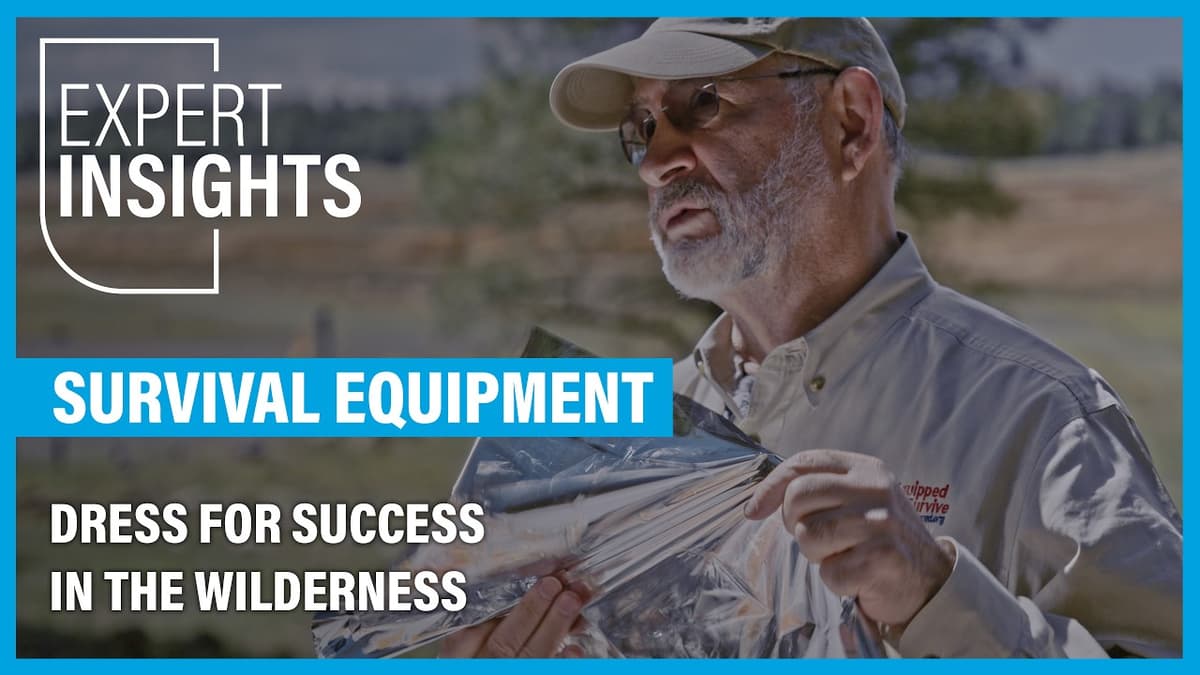
Survival Equipment: Dress for Success in the Wilderness
The video emphasizes that clothing functions as a primary shelter in backcountry travel, urging adventurers to prioritize the harshest environment they will encounter rather than the conditions at the trailhead or endpoint. By dressing for the coldest segment—such as high‑altitude...

Survival Equipment: Signal for Help With Confidence
The video explains why every backcountry traveler should carry independent signaling gear—personal locator beacons, satellite‑linked watches, and dedicated signal mirrors—to ensure rescue when conventional communications fail. It compares glass and polycarbonate mirrors, noting glass offers superior reflectivity while polycarbonate provides lighter,...
An Aircraft Trapped in Ice
The National Transportation Safety Board (NTSB) is investigating a fatal crash of a Cirrus aircraft that departed Lancaster Airport and later impacted terrain near Altuna under icing conditions. Data from the flight recorder and radar show the plane descended below its...

Let's Talk About the JFK Jr. Crash
The video from the Air Safety Institute revisits the 1999 crash that killed John F. Kennedy Jr., his wife Carolyn Bessette‑Kennedy, and sister‑in‑law Lauren Bessette, focusing on how visual meteorological conditions misled the pilot. Although official reports listed VMC, the night...

Risk Management: Your Brain Vs. Risk
The video reframes aviation risk management as a mental discipline rather than a static checklist, emphasizing that true safety stems from a continuous mindset that pilots apply before, during, and after each flight. It stresses that controls—weather briefings, route reviews, peer...

Expert Insights: Crash Considerations - How to (Successfully) Crash an Airplane
The video delivers a detailed briefing on how pilots can deliberately manage an emergency crash‑landing across diverse environments—desert, mountainous, forested, and water—by integrating terrain awareness, aircraft handling, and specialized training. It stresses planning a flight path over low‑density areas to guarantee...