Video•Mar 9, 2026
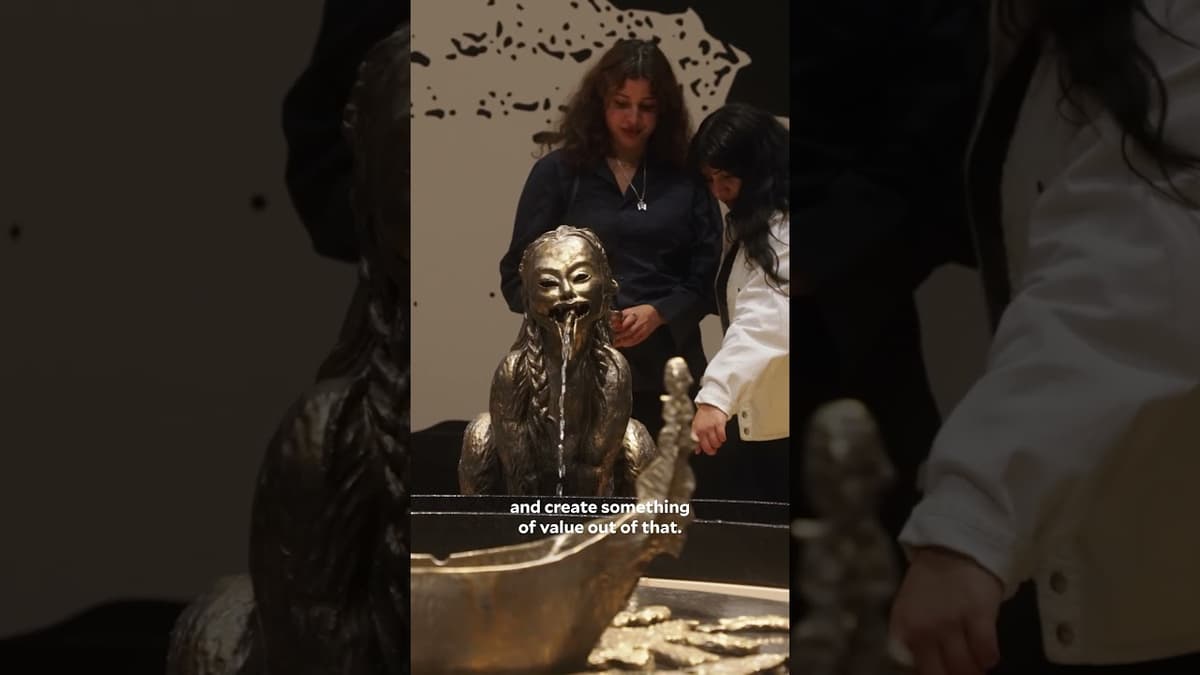
Artist Always Wanted to Play with Her Food #CandiceLin
Candice Lin recounts a childhood memory of spotting a chicken head in a Chinese restaurant and yearning to take it home, a desire that now fuels her artistic practice. As an adult, she channels that impulse into installations that repurpose food and other discarded objects. Lin’s work is defined by sensorial installations that probe the porosity of the body. She deliberately designs pieces where smell, sound, and tactile sensation precede visual revelation, allowing the artwork to fill the viewer’s body before it is seen. She recalls, “I’d be really excited and want to take it home… as an adult, that’s an artist,” and adds, “It fills your body as a viewer… and haunts you a little bit.” These statements illustrate her intent to make the experience linger. By misusing everyday consumables, Lin challenges conventional notions of value and utility, expanding the language of contemporary art and prompting audiences to reconsider the relationship between consumption, memory, and embodiment.
By Art21

Video•Mar 6, 2026
Artist's Mother Spits on Him Every 5 Years
The video centers on an eccentric ritual in which an artist recounts that his mother spits on him every five years, a practice he has turned into a symbolic act of renewal. He explains that the five‑year interval creates a mantra‑like...
By Art21
Video•Mar 4, 2026
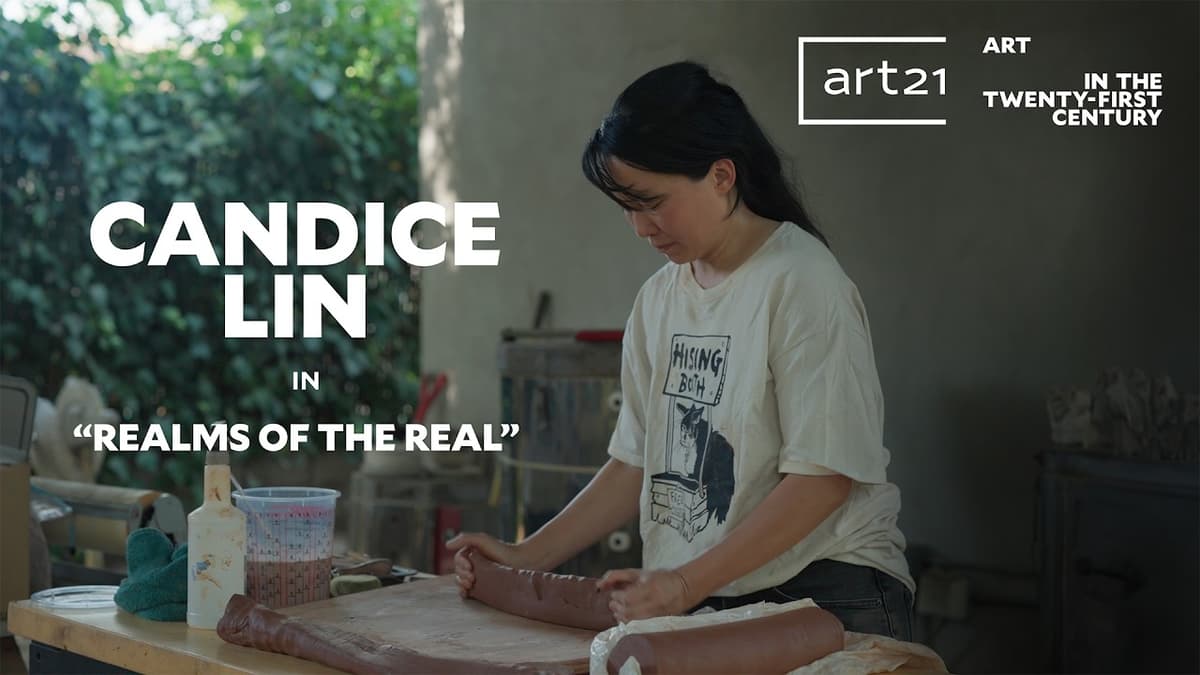
Candice Lin in “Realms of the Reals” – Season 12 | Art21
Candice Lin, visual artist and UCLA professor, uses sculptural installations to turn everyday and historically loaded materials into immersive, often non‑visual experiences that engage smell, sound and touch. Her work interrogates the colonial histories of pigments and ceramics—cochineal, yellow ochre, bone...
By Art21

Video•Mar 4, 2026
Artist Decides to Be Relentless. #MirandaJuly #Art21Archive
The video captures an artist reflecting on the psychological barrier that kept her from fully committing to projects, describing how early attempts felt exciting yet were cut short by fear of reaching 100 percent. She likens the hesitation to a car...
By Art21

Video•Mar 2, 2026
Artist Creates Portals Within Her Work #NjidekaAkunyiliCrosby
In a recent interview, Nigerian‑American artist Njideka Akunyili‑Crosby explains how she builds “portals” into her paintings, using layered collage to turn visual noise into a controlled, immersive experience. She describes the cacophony of overlapping images—family photographs, CD covers, television screens, posters—as...
By Art21

Video•Feb 25, 2026
Ragnar Kjartansson in “Realms of the Real” – Season 12 | Art21
The Art21 interview spotlights Icelandic visual artist Ragnar Kjartansson, exploring his belief that visual art is essentially a word for freedom—a concept inherited from early 20th‑century innovators like Marcel Duchamp. He frames his practice as a way of living, creating moments...
By Art21