
Recent Posts
Video•Feb 20, 2026
Why Supply Chain Now Sits at the Strategy Table
The video highlights a fundamental shift: supply‑chain responsibilities have moved from peripheral departments to the executive boardroom. CEOs are now insisting that operational functions—manufacturing, procurement, trade compliance—participate directly in strategic deliberations rather than being relegated to lower‑level execution. This change reflects a recognition that supply‑chain decisions impact cost structures, regulatory exposure, and market access. Trade compliance, once a back‑office concern, now informs choices about where and how products can be shipped, directly influencing profitability and risk. As one speaker noted, “people like trade compliance… used to be tucked under operations… now that is an important part of the strategic decision because it affects cost and regulations.” The example underscores how previously siloed functions are now integral to high‑level planning. The implication for businesses is clear: they must restructure reporting lines, embed supply‑chain expertise in C‑suite discussions, and invest in talent that can navigate complex regulatory landscapes. Companies that fail to elevate these functions risk strategic blind spots and competitive disadvantage.
By ASCM – Association for Supply Chain Management
Video•Feb 19, 2026
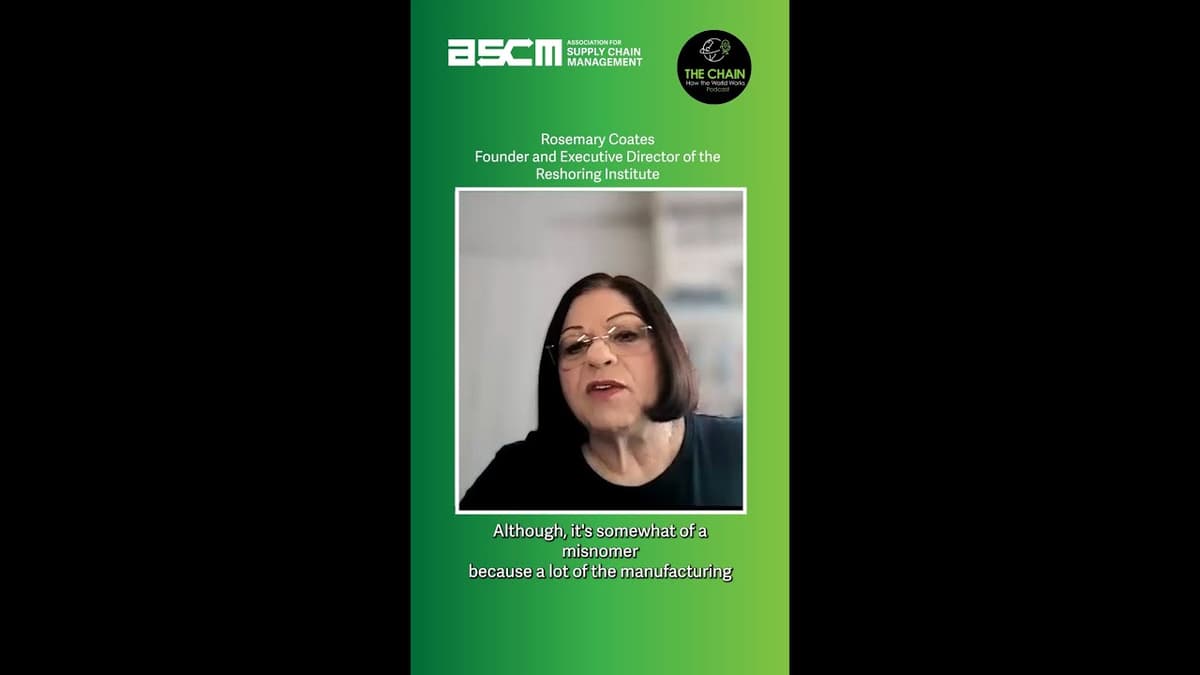
Shoring up on Supply Chain Terms
The video dissects three buzz‑words—reshoring, nearshoring and friendshoring—used to describe how companies are rethinking global production. While reshoring suggests bringing manufacturing back to the United States, the speaker argues the term is misleading because many low‑cost assembly lines, especially in...
By ASCM – Association for Supply Chain Management
Video•Feb 16, 2026
Tariffs, Uncertainty and the Pause on U.S. Manufacturing
The video examines how U.S. tariffs, originally framed as a temporary lever, have morphed into a semi‑permanent policy, creating a climate of uncertainty that is stalling manufacturing expansion. Despite expectations that tariffs would repatriate production and add jobs, the sector lost...
By ASCM – Association for Supply Chain Management
Video•Feb 9, 2026
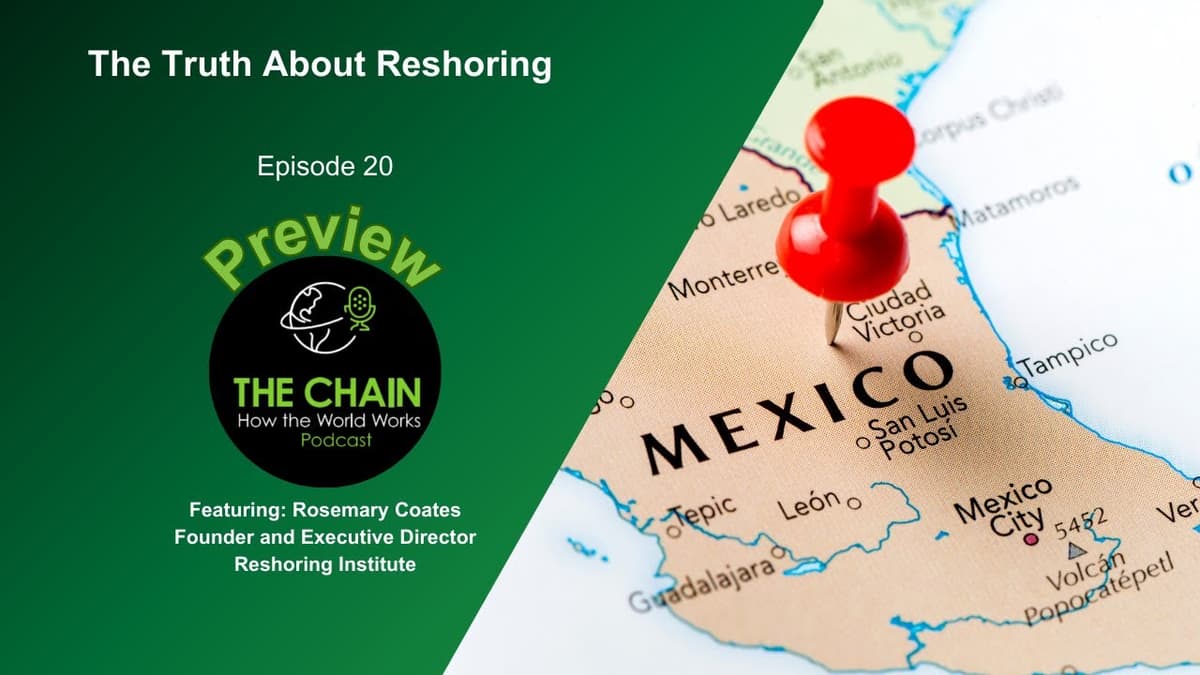
The Truth About Reshoring
The video clarifies the buzzwords reshoring, near‑shoring and friend‑shoring, explaining that reshoring—bringing manufacturing back to the United States—is often a misnomer because many of today’s low‑cost assembly operations never existed on American soil. It points out that the dominant trend is...
By ASCM – Association for Supply Chain Management