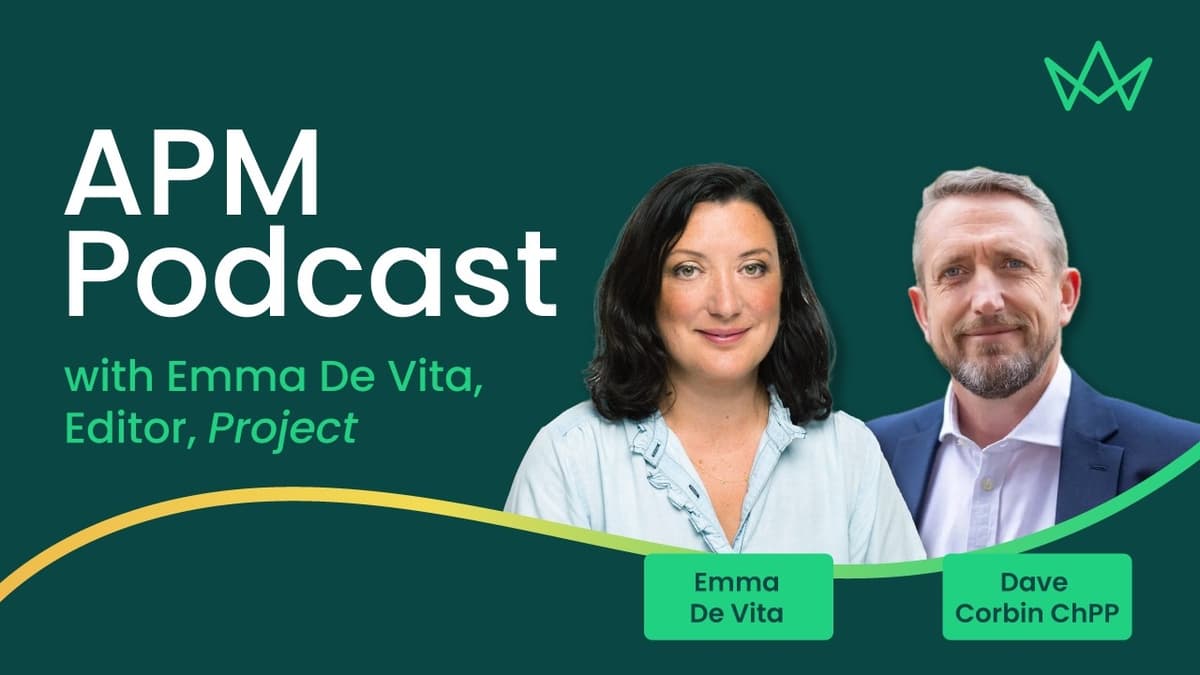
Building Your Experience to Gain an Executive Role
The APM podcast features Dave Corbyn, Gleeds’ newly created Chief Project Delivery Officer, discussing how he built a career from gas‑engineer apprentice to senior executive. He explains that his role unites service lines, client accounts, and global delivery teams to present a seamless, trusted partner for clients. Corbyn stresses three practical lessons: integrate people and processes rather than rely on rigid methodology; manage personal energy by alternating extroverted collaboration with focused, solitary work; and adopt a “good enough” mindset to avoid perfectionism that stalls progress. He also highlights the importance of formal qualifications—chartered engineering, APMP, and an MBA—to unlock strategic leadership opportunities. Memorable remarks include, “I would never ask someone to do something I wouldn’t do myself,” and “Energetic Dave needs both crowds and quiet time.” He describes emotional check‑ins after meetings to gauge team buy‑in, and he admits that influencing stems from transparent plans and willingness to be challenged. For aspiring project leaders, Corbyn’s journey underscores that career acceleration hinges on cross‑functional experience, continuous credentialing, and a balanced leadership style that blends charisma with disciplined focus. Companies that cultivate such hybrid talent can expect stronger client relationships and more resilient project outcomes.
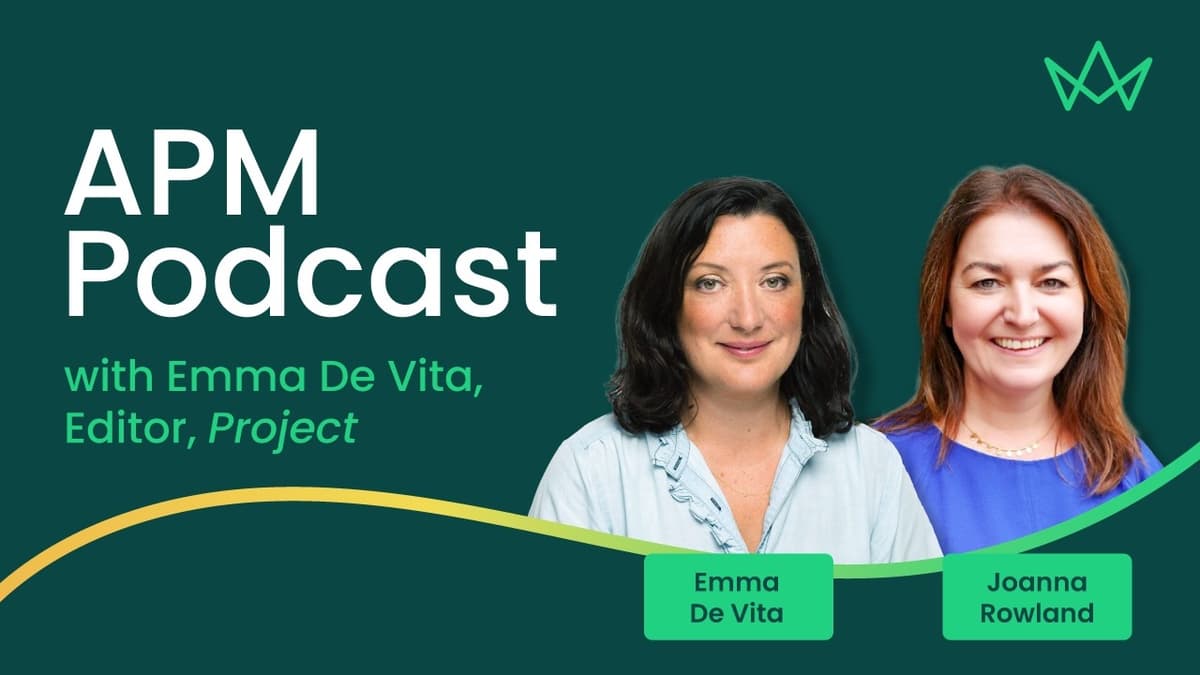
From Project Professional to CEO, with the RSPCA's Joanna Rowland
The APM podcast features Joanna Rowland, who left a senior civil‑service career to become chief executive of the RSPCA in December 2025. The conversation explores how a project‑management background prepared her for leading one of the UK’s largest animal‑welfare charities. Rowland...
Why Psychological Safety Can Make or Break Your Project
The video explores psychological safety as a critical factor in project delivery, distinguishing it from mere niceness or lowered standards. It references Amy Edmondson’s definition—team members feel safe to take interpersonal risks—and narrows it to three actionable principles: early voice,...
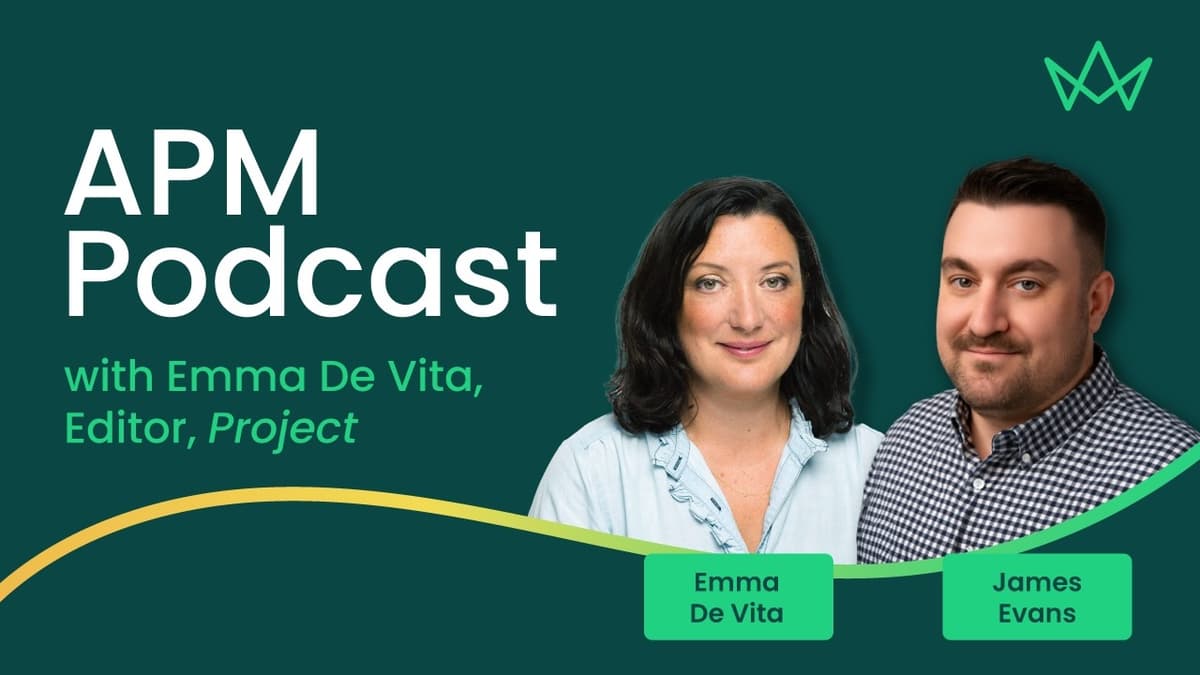
Why Psychological Safety Is Not a Nice-to-Have
The APM podcast spotlights psychological safety as a non‑negotiable pillar for project success, moving it from a “nice‑to‑have” perk to a strategic imperative. Host Emma Devit and NHS Wales program manager James Evans explore why safe environments matter in complex,...
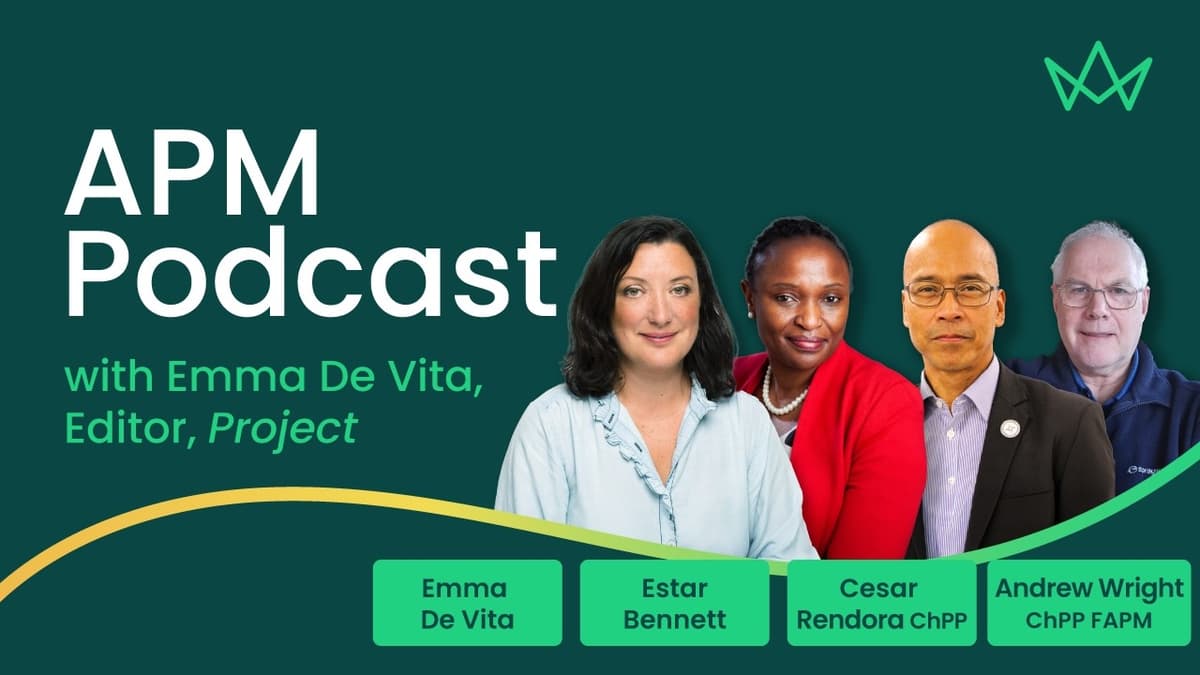
Using a Systems Thinking Approach to Select Successful Projects
The APM podcast episode introduces systems thinking as a strategic lens for selecting and delivering successful projects. Host Emma Dvita interviews three seasoned professionals—Andrew Wright, Esther Bennett, and Caesar Randura—who explain how the approach moves beyond linear, siloed planning to...

Is Data Literacy a Soft Skill?
The APM podcast introduces the newly published APM Data Literacy Skills Framework, a practical toolkit that outlines five core competencies for project professionals: managing project information, foundational data concepts, interpreting and influencing with data, data visualization and storytelling, and decision‑making...

How BAE System Builds Project Confidence Through APM
The video highlights BAE Systems’ strategic alliance with the Association for Project Management (APM) as a cornerstone of its new Aelia earth‑observation satellite initiative. By embedding APM practices across the organization, BAE aims to professionalize project delivery and boost confidence...

How Stantec Are Powering Sustainable Change with APM
The video showcases how Stantec, a global sustainable‑engineering firm, is integrating the Association for Project Management (APM) framework to drive its water‑power and dam projects, including ambitious pump‑storage hydro schemes that could supply electricity to more than a million households. Key...

Arts and Science: How Project Management Skills Transfer Across Sectors
Project management blends art and science, a theme explored in a recent podcast where Emma De Vita interviews Josie Harries and Anna Ustynyuk. The hosts discuss how foundational project management skills—planning, risk analysis, and stakeholder communication—remain consistent across vastly different...