
Video•Mar 7, 2026
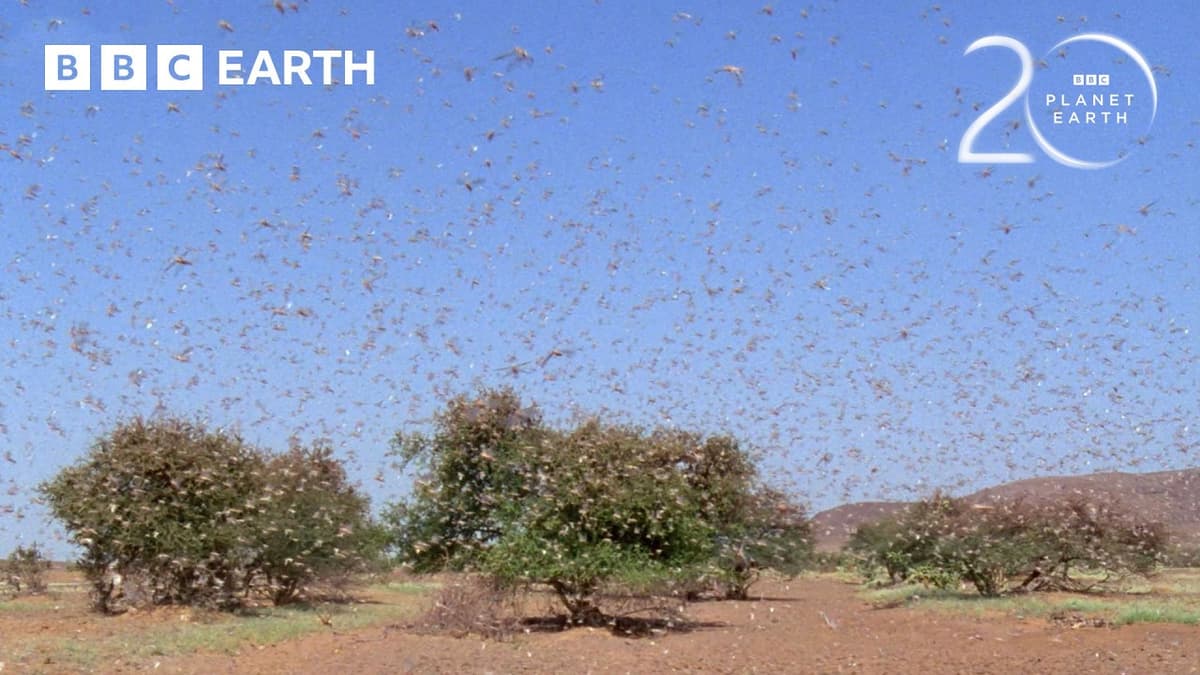
Nature's Most Destructive Swarm | 20 Years of Planet Earth | BBC Earth
The video examines the desert locust, a species whose life cycle can shift from decades‑long dormancy to explosive growth when environmental cues align. Eggs buried in the soil may remain viable for up to twenty years, hatching only when rains trigger a sudden surge of vegetation. When food becomes abundant, juvenile hoppers skip the typical four‑week maturation and develop into winged adults within days. Adult locusts release pheromones that coordinate mass movement, causing separate groups to merge into colossal swarms that ride prevailing winds toward low‑pressure zones where fresh growth appears. A single adult consumes roughly its own body weight each day, and a swarm can devour hundreds of tons of plant material in a matter of hours. These plagues can swell to billions of insects, stretching as far as forty miles across, leaving a barren trail of stripped vegetation. The phenomenon underscores a volatile threat to agriculture and food security across vulnerable regions. Understanding the locust’s rapid response mechanisms is crucial for early‑warning systems, targeted pesticide deployment, and climate‑adapted mitigation strategies.
By BBC Earth
Video•Mar 6, 2026
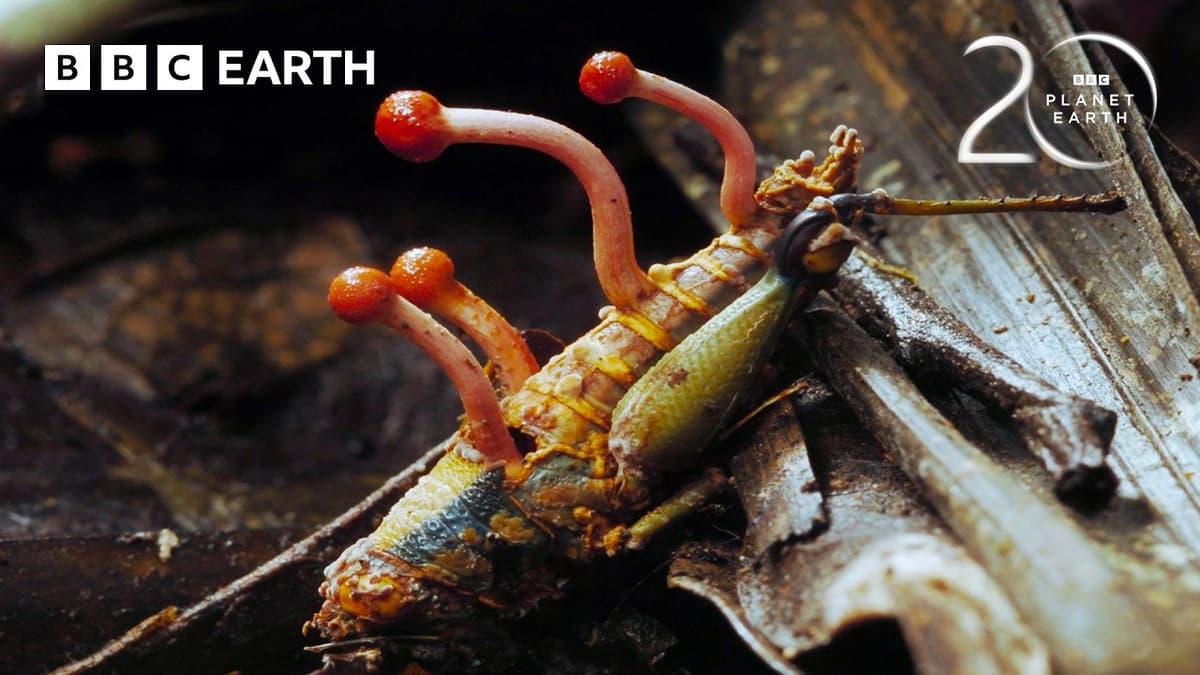
10 Animal Behaviours Filmed for the First Time Ever | BBC Earth
The BBC Earth short compiles ten animal behaviours captured on film for the first time, ranging from abyssal cephalopods to high‑altitude predators. By spotlighting moments rarely seen by humans, the video underscores how much of wildlife ecology remains undocumented. Among the...
By BBC Earth
Video•Mar 5, 2026
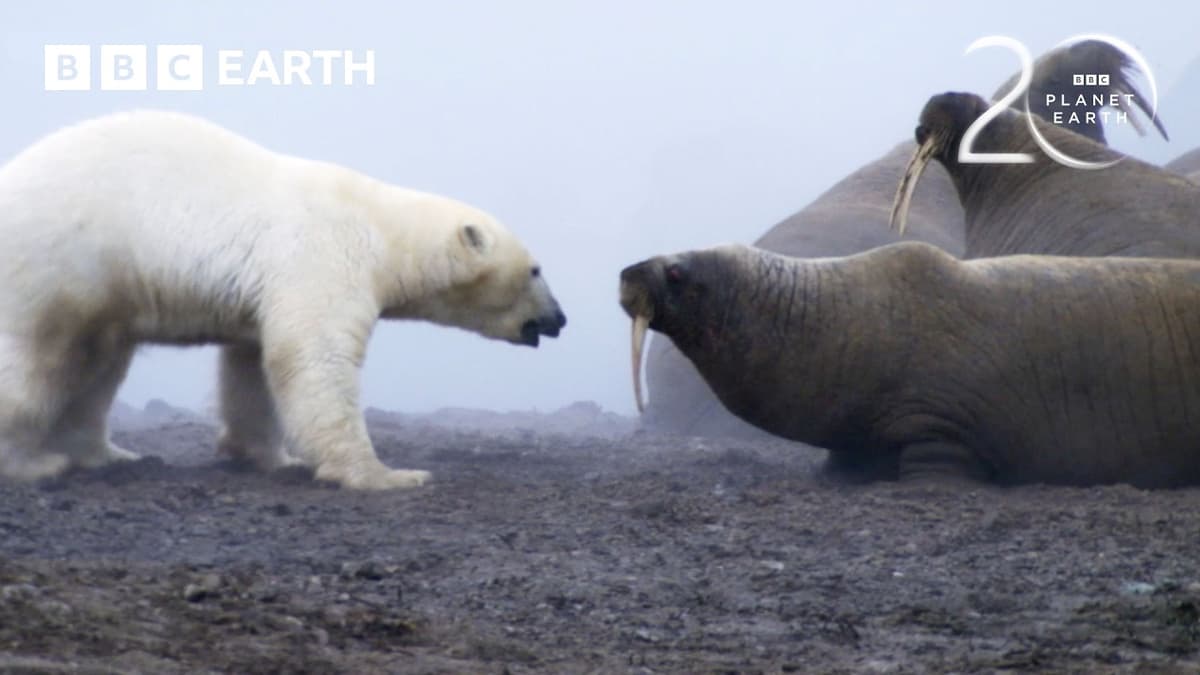
Polar Bear Takes on Walrus Herd | 20 Years of Planet Earth | BBC Earth
The BBC Earth clip captures a lone polar bear stalking a walrus herd on an Arctic island, illustrating a rare predator‑prey encounter between the planet’s largest land carnivore and the massive marine mammals. The bear exploits a sea‑fog veil to approach,...
By BBC Earth