Video•Feb 19, 2026
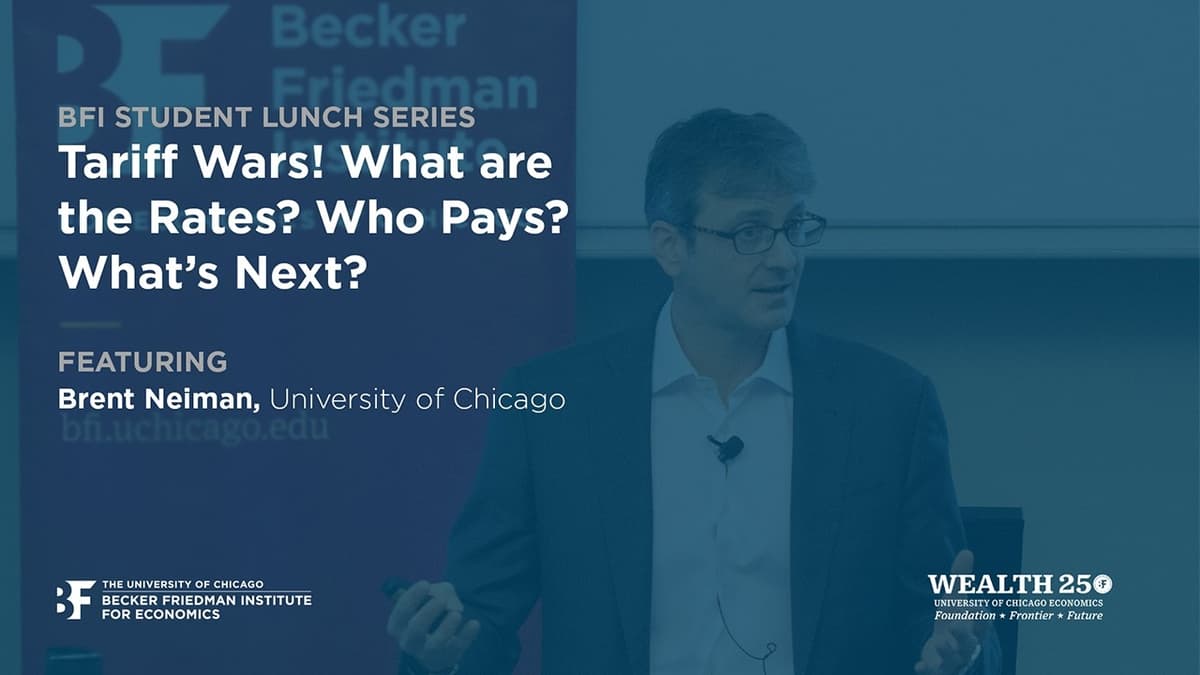
Tariff Wars! What Are the Rates? Who Pays? What’s Next?
The event featured Brent Nyman, a former Treasury deputy under‑secretary, presenting his latest research on U.S. import tariffs. He explained how statutory tariff rates—those set by law—jumped from near‑zero to about 28% after the 2024‑25 Trump‑era announcements, while the effective rate actually paid by importers settled around 13% by November 2025.
Nyman’s analysis distinguishes between the headline statutory rate and the realized average rate by examining the highest tariff observed across shipments and then weighting actual tariff payments by 2024 import values. He attributes the persistent gap to three forces: shipping‑lag exemptions that grandfather existing rates for goods already at sea, rapid shifts in USMCA compliance that allowed firms to claim tariff‑free status, and the use of fixed 2024 weights that obscure the economic impact of sector‑specific surcharges such as the near‑100% duty on Chinese electric vehicles.
Illustrative examples include the “on‑the‑water” rule, where a UK shipment en route in April still paid pre‑increase tariffs, and long‑haul Pacific routes that took three months to reflect new rates. He also highlighted a sharp post‑tariff increase in the proportion of shipments flagged as USMCA‑eligible, underscoring firms’ willingness to absorb compliance costs when tariffs rise.
The findings suggest that inflation forecasts based on statutory rates may double‑count tariff effects, and that policymakers need finer‑grained metrics to assess trade policy outcomes. Companies should monitor shipping timelines and trade‑agreement eligibility to mitigate unexpected cost spikes, while analysts must adjust models to reflect effective, not just statutory, tariff burdens.
By Becker Friedman Institute (UChicago)