
Video•Mar 9, 2026
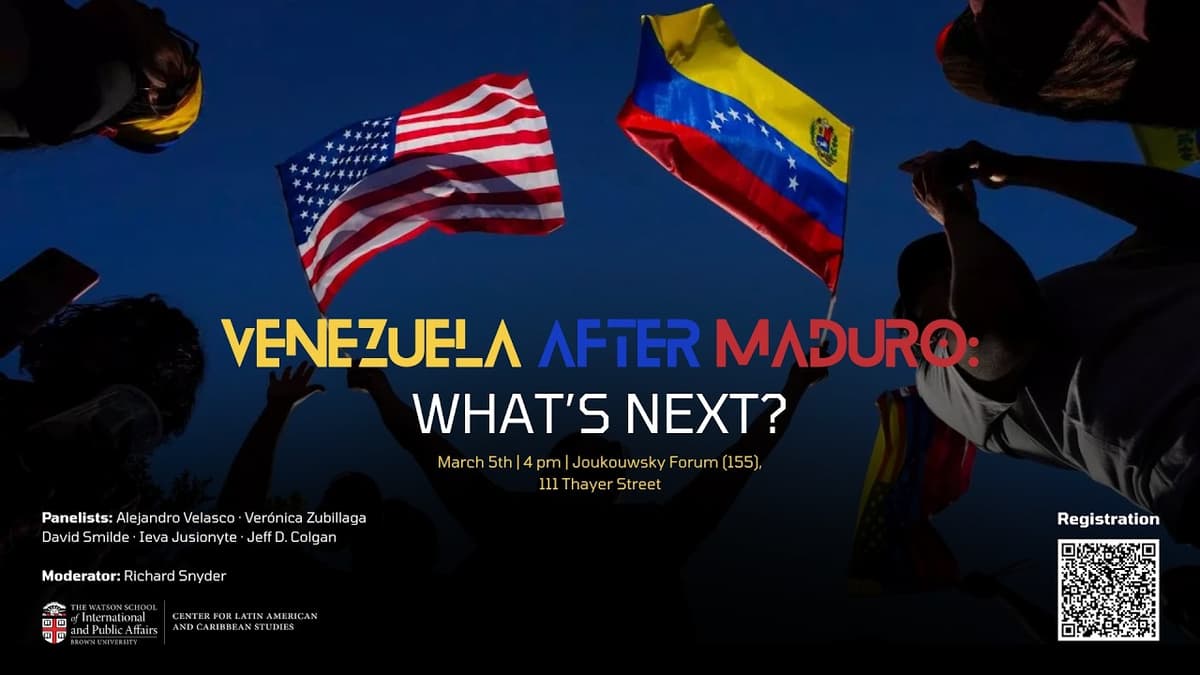
Venezuela After Maduro: What’s Next?
The Brown‑University panel titled “Venezuela after Maduro: What’s Next?” convened leading scholars and Venezuelan experts to assess the country’s political crossroads following the contested 2024 elections. Moderator Rich Snyder opened with questions for David Smiley, who highlighted the rise of opposition figure Ramario Cordina Machalo, whose shift from abstentionist tactics to an electoral strategy secured a symbolic victory, only to be undermined by a surprise U.S. endorsement of rival Deli Rodriguez. Panelists dissected Machalo’s hard‑line rhetoric, her reliance on influencer networks, and the rapid decline of her poll numbers after initial enthusiasm waned. They noted that while Machalo mobilized public anger, her refusal to broaden her platform—particularly on sanctions and oil privatization—left a sizable segment of voters disengaged. The discussion also covered the broader fragmentation of the opposition, the role of U.S. policy in shaping elite alignments, and the historical pattern of Venezuelan crises that have persisted for two decades. Quotes underscored the paradox of external support: “Trump spurned Machalo in favor of Rodriguez, a move that shocked both Venezuelan observers and opposition insiders,” noted Smiley. Another panelist warned that “democratic transitions are processes, not ruptures,” emphasizing the need for moderate figures within the authoritarian regime to engage in negotiations. The scholars collectively called for a unified opposition front capable of pragmatic compromise, rather than a singular, ideologically rigid leader. The implications are clear: without a cohesive strategy, Venezuela risks continued stalemate, further humanitarian decline, and heightened geopolitical tension. A coordinated opposition that can negotiate with moderate Chavismo elements may open a pathway to credible elections, economic stabilization, and reduced U.S. intervention, reshaping the regional balance of power.
By Brown Watson Institute
Video•Feb 23, 2026
How Authoritarianism Went From Defense to Offense on the World Stage
The Road Center podcast episode explores the authors’ new book, *Dictating the Agenda*, which argues that authoritarian regimes have moved from merely defending their sovereignty to actively shaping the global political agenda. By tracing the post‑Cold‑War liberal surge—particularly the color‑revolution...
By Brown Watson Institute

Video•Feb 18, 2026
Jason Jackson - Traders, Speculators and Captains of Industry in India
The event featured Jason Jackson discussing his new book *Traders, Speculators, and Captains of Industry*, which examines India’s turbulent journey through market liberalization, especially in the multibrand retail sector. Drawing on fieldwork, interviews, and archival research, Jackson interrogates why Indian...
By Brown Watson Institute
Video•Feb 13, 2026
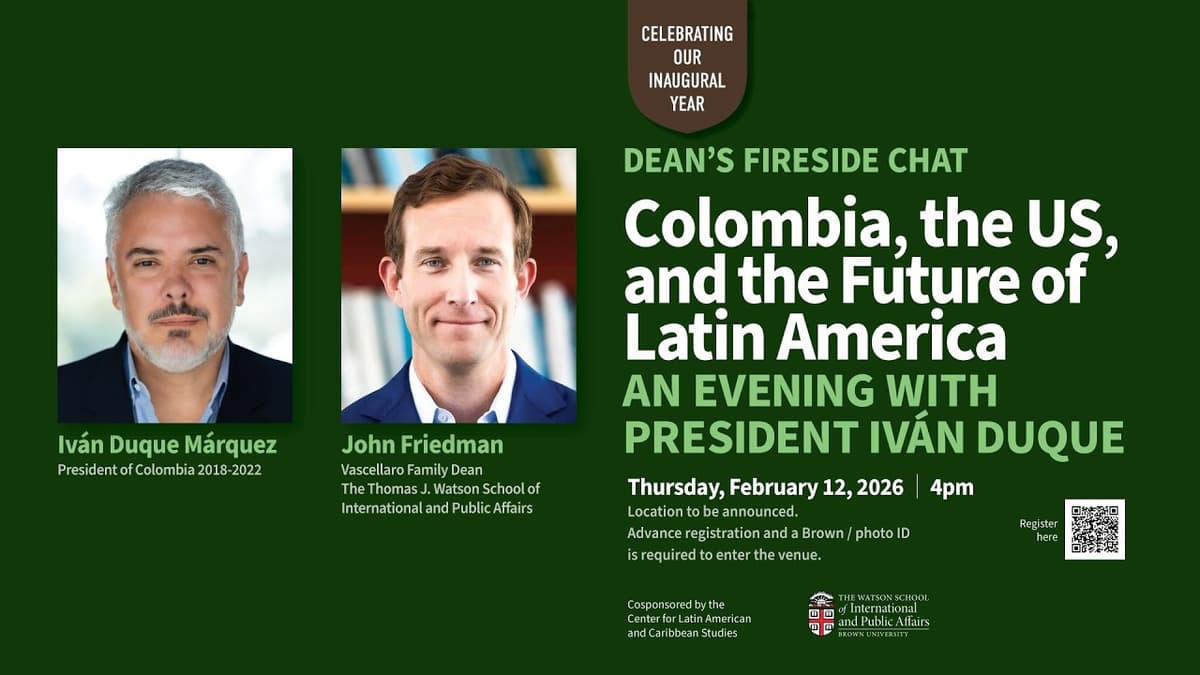
Colombia, the US, and the Future of Latin America: An Evening with President Iván Duque
The Brown University event featured former Colombian President Iván Duque reflecting on the recent U.S. operation that captured Venezuelan leader Nicolás Maduro. Duque framed the removal as a moral imperative, describing it as a precision humanitarian intervention rather than a conventional invasion,...
By Brown Watson Institute