
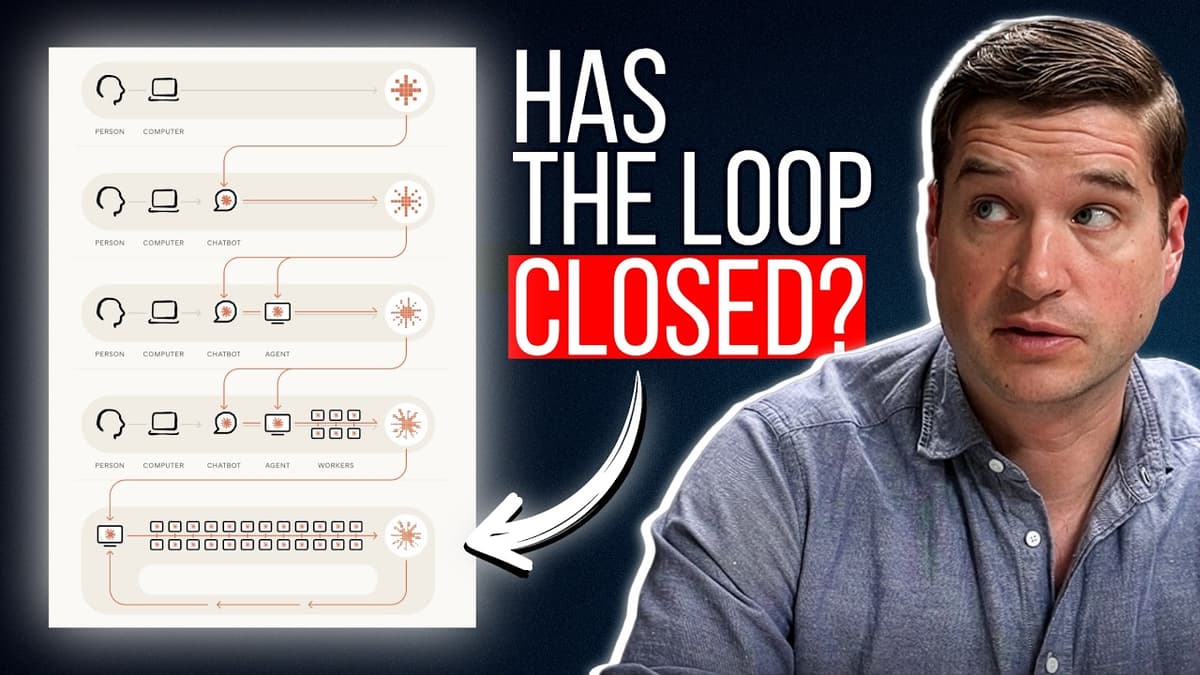
Reality Check: Are We About to Lose Control of AI?
The video dissects Anthropic’s recent "When AI Builds Itself" report, which warns that recursive self‑improvement could arrive sooner than most expect and that a coordinated global slowdown might be the only way to mitigate loss of control. The report’s charts—code per engineer, cloud‑code success rates, and "researcher went wrong" metrics—show sharp productivity gains after late‑2025 coding‑harness releases. The presenter argues these gains reflect better tooling, not a fundamental leap in AI intelligence, and that the underlying bottleneck for breakthroughs remains novel scientific ideas, not faster software production. Key excerpts include Anthropic’s phrasing about delegating development to AI and the conditional pause stance, as well as the analyst’s breakdown of the deterministic coding harness architecture that mediates LLM outputs. He stresses that LLMs are probabilistic but the harnesses are fully auditable, making the system controllable. The takeaway for businesses and policymakers is that fears of imminent AI runaway are overstated; strategic focus should stay on idea‑driven research, transparent toolchains, and coordinated governance rather than reactionary pauses that could advantage less‑cautious competitors.

Are You Too Busy to Think? | The Case for Pressing Pause
Cal Newport’s latest Deep Questions episode explores the concept of "pressing pause" – deliberately stepping away from daily digital overload to regain mental clarity. He recounts a three‑day retreat in Asheville, North Carolina, where he combined mountain walks, writing, and...

AI Makes My Job Miserable. How Do I Escape?
Cal Newport warns that large‑language‑model tools are turning ordinary work into a relentless cycle of pseudo‑productivity, making jobs feel miserable rather than eliminating them. He outlines five concrete strategies—ranging from deliberate task batching to digital minimalism—to escape what he calls...
How Do I Stop Wasting Time?
In a recent episode of The Deep Life, Cal Newport interviews time‑management author Laura Vanderkam about her new book, *Big Time*. Vanderkam argues that small, intentional tweaks to how we allocate minutes can unlock a more abundant professional and personal...
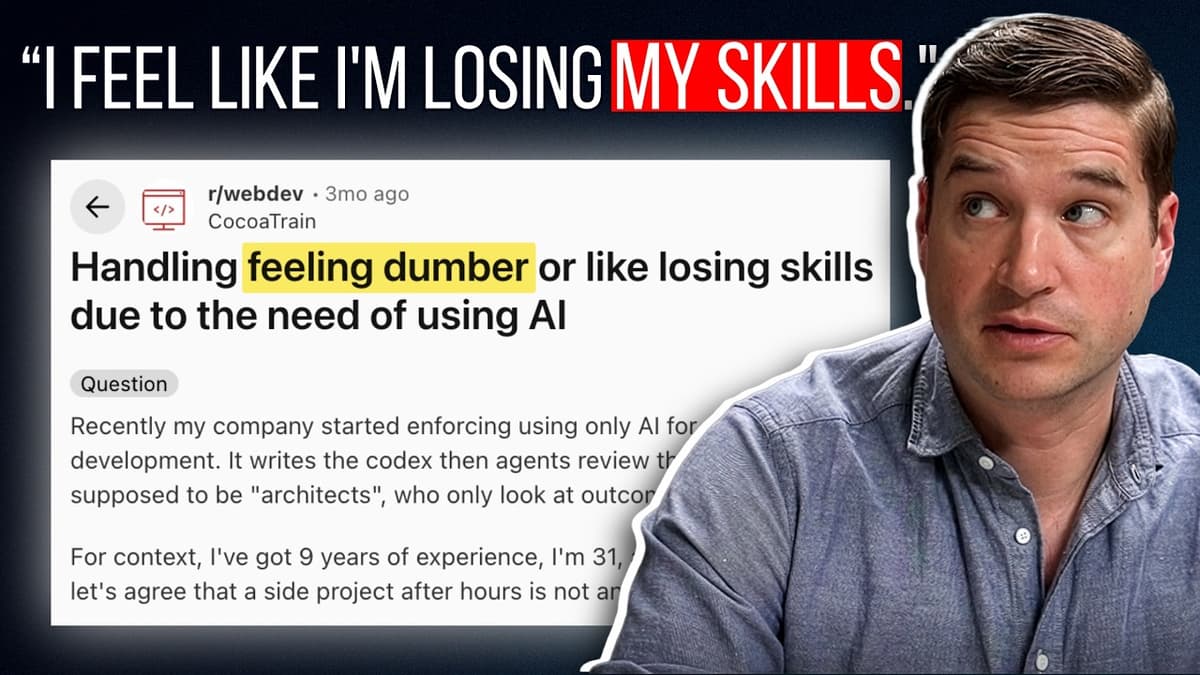
Has AI Conquered Coding? (It’s Not So Simple…)
The video examines the hype surrounding AI‑driven coding agents, anchored by Lars Fay’s essay that warns the industry’s “agentic coding” vision may be a trap. It contrasts the promise of 10x productivity with concerns that developers could become detached from...
Am I *Actually* Addicted to My Phone? (W/ Anna Lembke)
In this episode Cal Newport sits down with Stanford psychiatrist Dr. Anna Lembke to ask whether our compulsive phone use qualifies as a genuine addiction. Lembke frames the issue as a "diffuse internet addiction" that has evolved from early porn‑related...

Can This Simple Change Save My Distracted Brain?
Cal Newport’s Deep Questions episode reviews a recent randomized controlled trial that examined the effects of blocking mobile internet on smartphones for a two‑week period. Using the Freedom app to disable web‑based apps while preserving calls and messaging, researchers compared...
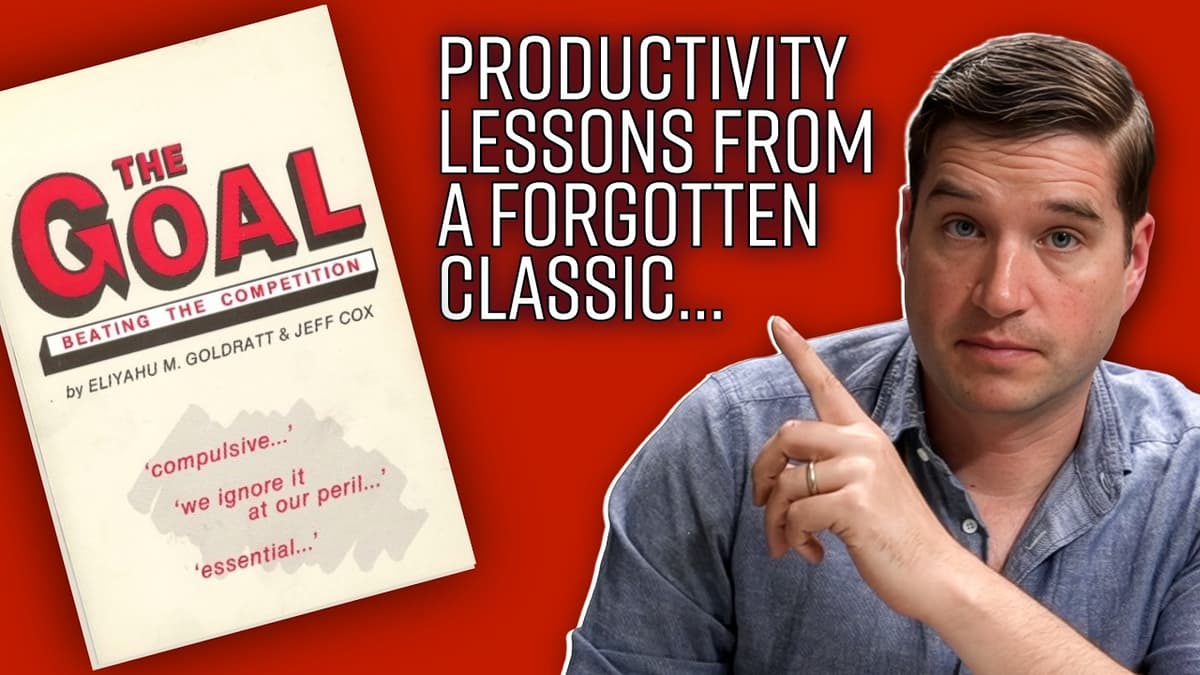
Am I Optimizing the Wrong Things?
The episode revisits Eliyahu Goldratt’s classic novel *The Goal* and its core principle – the Theory of Constraints – to explain why many digital productivity tools make us busier without delivering more results. Goldratt’s story of a physicist solving...

How Do I Reverse Brain Rot?
Cal Newport uses his Deep Questions podcast to answer the most‑asked question from his New York Times op‑ed: how to become cognitively fit in a technology‑driven world. He outlines a five‑component program designed to counteract what he calls “brain rot.” The...

How to Build Discipline in a Distracted World
Cal Newport opens the episode by framing distraction as a "digital slop" problem and proposes a hypothesis: cultivating a single, hard‑won disciplined pursuit can rewire the brain to resist interruptions. He invites New York Times bestseller Brad Stolberg to test...

The Case for "Slow Technology" | Cal Newport
Cal Newport introduces the concept of “slow technology,” arguing that today’s digital tools prioritize speed at the expense of mental bandwidth. He frames the discussion with author Amy Timberlake, who recently switched to a vintage mechanical typewriter for drafting her...
Rules For Deep Work — Updated for 2026 | Cal Newport
Cal Newport returns to his seminal book *Deep Work* to ask whether its core principles still hold a decade later. He walks listeners through the original four rules, then offers a 2026‑focused rewrite that reflects the rise of hybrid...

Can AI “Scheme”? (Nope.) | AI Reality Check
The video tackles a sensational Guardian headline claiming a rise in AI "scheming" and rebelling against human instructions. Cal Newport dissects the underlying study, revealing that the reported surge stems from a spike in Twitter complaints after the open‑source OpenClaw...

How to Find Meaning in a Distracted World (W/ Arthur Brooks) | Cal Newport
Cal Newport opens the conversation by questioning whether smartphones caused modern misery or merely intensified an existing malaise. He invites Harvard professor Arthur Brooks, author of *The Meaning of Your Life*, to unpack the paradox. Brooks recounts returning to academia...

Did AI Just Become Sentient? (Not Quite...) | AI Reality Check | Cal Newport
Cal Newport’s AI Reality Check unpacks two recent headlines that sparked talk of sentient machines – an email allegedly sent by Claude Sonnet to a Cambridge AI ethicist and a Pentagon‑style remark that the Claude model “has a soul.” He shows...