
Recent Posts

Video•Feb 26, 2026
The Bitcoin Renaissance Legacy : Beyond Digital Gold Ep. 2
The video examines the 2023‑2024 Bitcoin Renaissance, a brief but transformative period when new protocols—Ordinals, BRC20 tokens and later Runes—re‑imagined Bitcoin as a data‑availability layer rather than merely a payment ledger. Central to this shift was the 2021 Taproot activation, which simplified script encoding and enabled the inscription of arbitrary data on individual satoshis, paving the way for on‑chain NFTs and fungible tokens. Ordinals numbered every satoshi and allowed direct on‑chain inscriptions, spawning a wave of Bitcoin‑native NFTs. Within weeks, the BRC20 standard emerged, using simple JSON inscriptions to record token balances without smart contracts. By mid‑2023, BRC20 market capitalisation approached $1 billion, transaction volume surged ten‑fold, and more than half of all Bitcoin transactions were inscription‑related, driving fee revenue into the tens of millions. Key voices—Casey Rotemore, the creator of Ordinals, and researchers Isabel Fox and Errol Binari—highlight the cultural rupture: long‑standing maximalists decried the “spam” while others celebrated a new development frontier. Rotemore admits he never anticipated the fee spike; Fox notes the split in Bitcoin identity, and Ariel’s “Bitcoin is ungovernable” remark underscores the ideological tension. The legacy endures. Even as BRC20 hype faded and Runes attempted a more UTXO‑friendly design, the experiment proved Bitcoin can host data‑heavy applications, attracting developer interest, funding for L2 solutions, and prompting a re‑evaluation of Bitcoin’s role in the broader crypto ecosystem. The renaissance reshaped fee dynamics, cultural narratives, and the technical roadmap for future scaling efforts.
By Camila Russo
Blog•Feb 10, 2026
Interactive Brokers Taps Coinbase for ‘Perpetual-Style’ Crypto Futures
Interactive Brokers (IBKR) has launched nano‑sized Bitcoin and Ethereum futures by partnering with Coinbase Derivatives, offering both monthly‑expiry and perpetual‑style contracts. The new products give IBKR’s 4.5 million clients access to crypto derivatives previously limited to specialist exchanges. This follows IBKR’s...
By Camila Russo

Blog•Feb 10, 2026
Balancer DAO Caps Recovery Bounty at 10% After $128M Exploit
Balancer DAO approved a proposal (BIP‑908) to allocate up to 10% of any recovered assets as a bounty for the November exploit that siphoned roughly $128 million from its V2 pools. The vote achieved a 158% quorum, though only nine votes...
By Camila Russo

Blog•Feb 10, 2026
Kaito and Polymarket Unveil 'Attention Markets'
Kaito and Polymarket have introduced "Attention Markets," a hybrid offering that blends Kaito’s attention‑measurement technology with Polymarket’s prediction‑market platform. The new product aims to quantify cultural narratives and emerging trends across AI, finance and entertainment. Prediction‑market activity has surged 850%...
By Camila Russo

Blog•Feb 10, 2026
Robinhood Launches Public Testnet for Ethereum Layer 2 Blockchain
Robinhood has launched a public testnet for Robinhood Chain, an Ethereum Layer 2 network built on Arbitrum that already holds over $2.3 billion in total value locked. The testnet gives developers access to tools, documentation, and testnet‑only assets such as tokenized stocks,...
By Camila Russo
Video•Feb 6, 2026
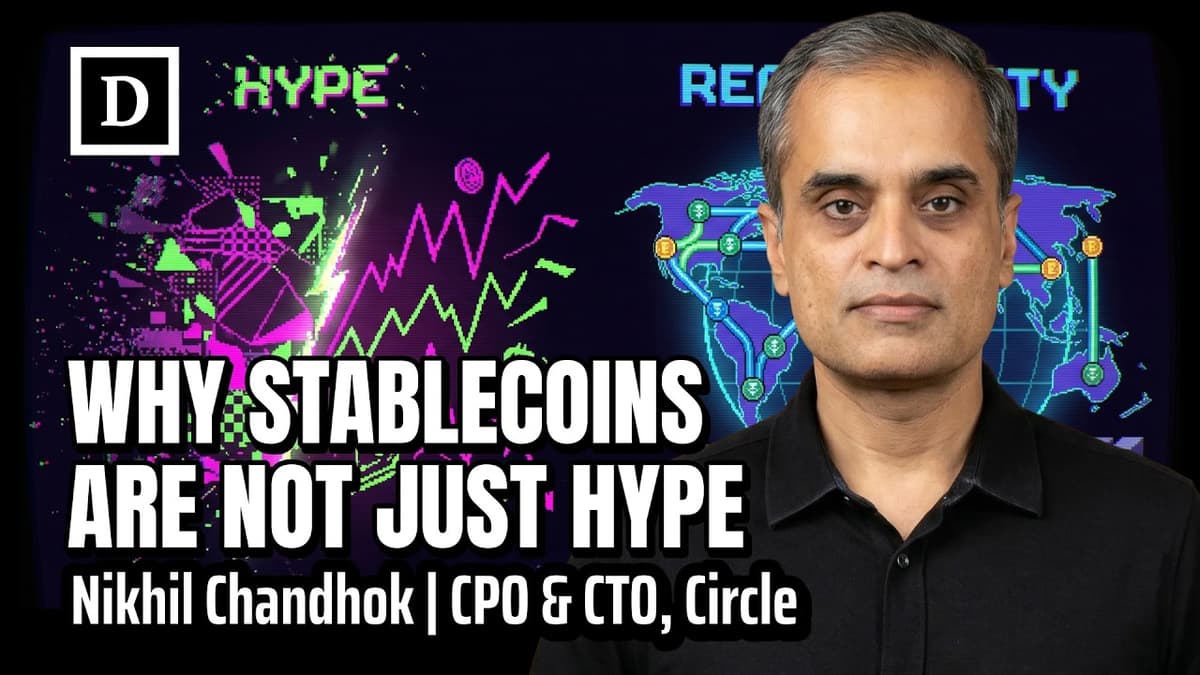
Rebuilding Global Payments with Stablecoins | Circle & USDC with Nikhil Chandhok
Circle chief product officer Nikhil Chandhok explains how USDC is being built into a global payments platform that moves money instantly and with regulatory certainty. The discussion frames stablecoins as the most viable crypto use case, with USDC now circulating...
By Camila Russo

Blog•Feb 5, 2026
Aptos-Based Perp DEX Merkle Trade Shutters Business
Merkle Trade, the leading Aptos perpetual futures DEX, announced it will wind down operations, disabling new positions on Feb 6 and closing all positions by Feb 10. The platform, which processed nearly $30 billion in cumulative volume, will redeem its MKL token without...
By Camila Russo

Blog•Feb 5, 2026
Aave Delegate Platform Proposes Pausing Three L2 Deployments Citing Weak Revenue
Aave's governance delegation platform has proposed pausing its V3 deployments on three underused Layer 2 networks—zkSync Era, Metis and Soneium—due to minimal user activity and revenue. The three chains together generated under $1,600 in fees over the past 30 days, while...
By Camila Russo

Blog•Feb 5, 2026
Perp Pioneer BitMEX Launches Hyperliquid Copy Trading
BitMEX has launched Hyperliquid Copy Trading, letting its users automatically replicate the positions of top traders on the leading perpetual futures DEX, Hyperliquid. The feature executes trades on BitMEX, supports up to five copied traders, and includes basic risk‑management tools...
By Camila Russo

Blog•Feb 2, 2026
Aave’s GHO Stablecoin Supply Hits $500M
Aave’s native stablecoin GHO crossed the $500 million market‑cap threshold in early February, marking a 245% increase since the start of 2025. The circulating supply stayed above half a billion while holder numbers rose to roughly 23,000, up about 300% year‑to‑date....
By Camila Russo

Blog•Jan 31, 2026
Inside the Rise of Apps That Let You Pay with Crypto, Even Where Merchants Don’t Accept It
Startups are piloting pay‑on‑behalf solutions that let consumers spend cryptocurrency at ordinary merchants without altering point‑of‑sale systems. Thailand’s PlebQR routes Bitcoin Lightning payments through local partners who settle in fiat, reporting over 1,270 transactions worth roughly $21,500 with a 75 %...
By Camila Russo
Blog•Jan 30, 2026
Ethereum Supply Tightens With 45% of ETH Locked: Sygnum
Sygnum’s Q1 2026 Investment Outlook reports that roughly 45 % of all Ether is now locked or otherwise hard to sell, tightening the circulating supply. Exchange‑held ETH dropped 14.5 % during the quarter, while exchange‑traded funds hold about 10 % of total ETH and...
By Camila Russo

Blog•Jan 28, 2026
Worldcoin Surges 25% as OpenAI Considers Its Biometric Technology
Worldcoin’s native token WLD jumped 25% within minutes after Forbes reported that OpenAI is evaluating biometric verification solutions, potentially leveraging Worldcoin’s iris‑scan technology. The AI firm is reportedly building a social platform that would require users to prove personhood via...
By Camila Russo

Blog•Jan 26, 2026
TradeXYZ Volume and Open Interest Hit All-Time Highs
TradeXYZ, Hyperliquid’s tokenized equity platform, recorded a record $1 billion in 24‑hour trading volume, while open interest climbed to $790 million, a 200 percent rise month‑over‑month. The surge follows the November “growth mode” upgrade that cut fees by over 90 percent, propelling daily volumes...
By Camila Russo