
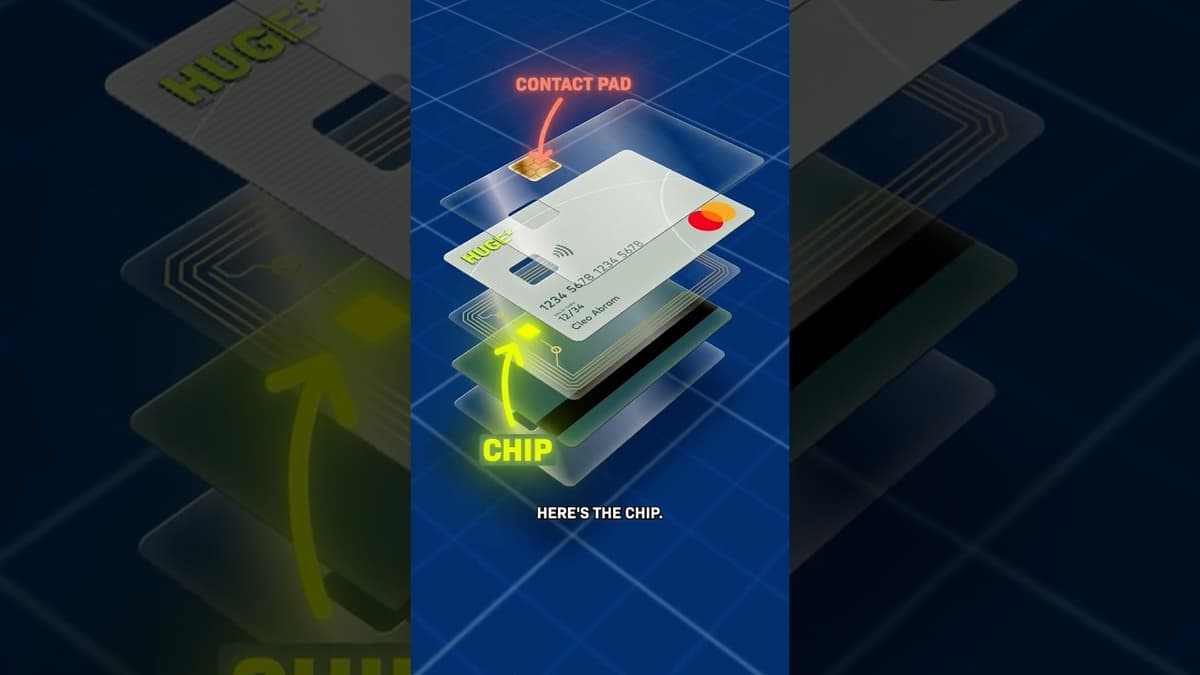
What Actually Happens when I Tap a Credit Card?
The video demystifies what happens the instant you tap a contactless credit card, tracing the signal from the hidden chip to the merchant’s terminal and beyond. When the card is tapped, the embedded chip emits a radio‑frequency signal containing the cardholder’s data encrypted with a unique, one‑time code. Mobile wallets work similarly, transmitting a token rather than the actual 16‑digit number. The data then traverses a payment network such as Mastercard, which applies AI‑driven fraud analytics—checking location, amount, and behavioral patterns—before seeking the issuing bank’s approval. As the narrator notes, “chips are more secure than the old‑school swipe,” and “Mastercard isn’t a credit card company; it’s a technology company.” These points illustrate how tokenization and real‑time risk scoring replace legacy magnetic‑stripe vulnerabilities. The entire sequence—encryption, routing, risk assessment, and authorization—occurs in under a second, enabling frictionless, global commerce while safeguarding consumers and merchants, a cornerstone for the expanding digital payments ecosystem.

The Real Science in Project Hail Mary
Project Hail Mary, now a Ryan Gosling‑led film, showcases science that leans heavily on current research rather than pure fantasy. The narrative follows a school‑teacher‑turned‑astronaut who must travel to another star system at a fraction of light speed, making a...