
Recent Posts

Video•Feb 21, 2026
This Isn't Event Sourcing
The video clarifies that not every state change qualifies as an event; creating a shipment is merely CRUD, while actions like order dispatched, shipment loaded, arrived, or delivered are true events. It argues that event sourcing can become over‑engineering if applied indiscriminately, emphasizing that the decision to adopt it must stem from domain characteristics rather than habit. The speaker highlights trade‑offs: each added component increases operational complexity, engineering effort, maintenance burden, infrastructure cost, and cognitive load. Without a solid grasp of these trade‑offs, teams cannot judge whether the benefits of an event‑driven architecture outweigh its overhead. A key quote underscores the business nature of architectural choices: “Architecture is not a technical decision. It’s a business decision.” The discussion references a prior thread, reinforcing that thoughtful evaluation, not blind adoption, is essential. For practitioners, the takeaway is clear: adopt event sourcing only where the domain naturally emits meaningful events, thereby avoiding unnecessary complexity and aligning technology investments with strategic business outcomes.
By CodeOpinion (Derek Comartin)
Video•Feb 19, 2026
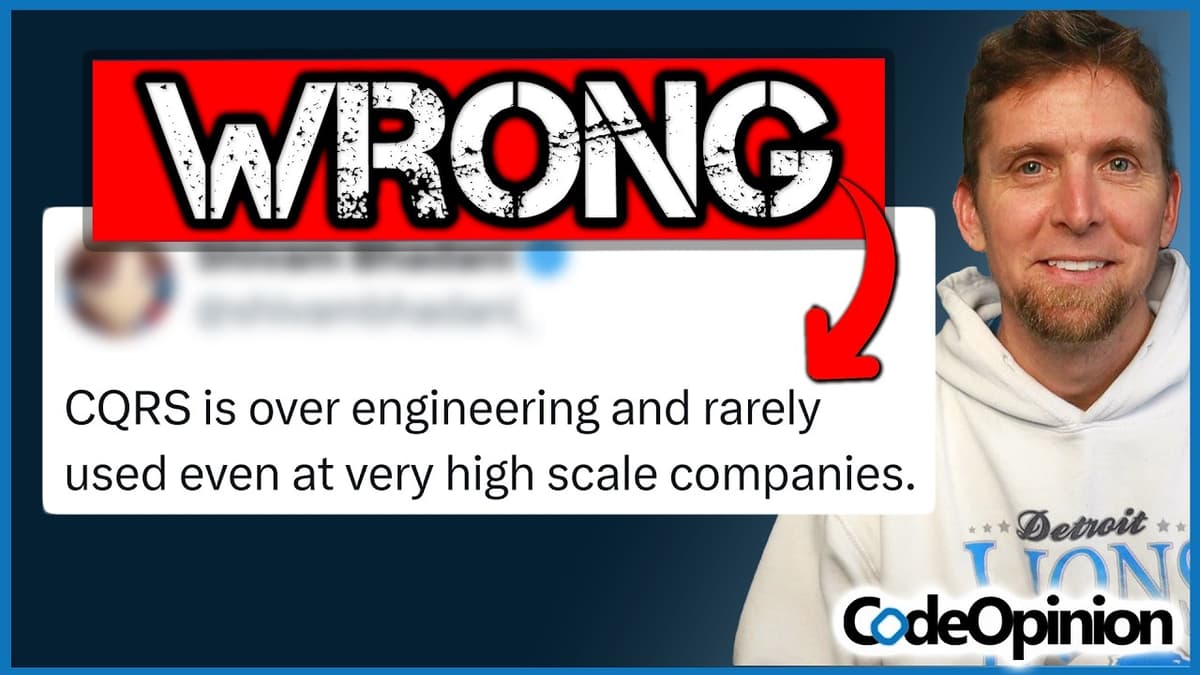
Read Replicas Are NOT CQRS (Stop Confusing This)
In the video, Derek Lamartin dismantles the blanket claim that the outbox pattern, CQRS, and event sourcing are inherently over‑engineered solutions. He argues that the real question is whether these patterns address a concrete business need, not whether they belong...
By CodeOpinion (Derek Comartin)