Video•Mar 10, 2026
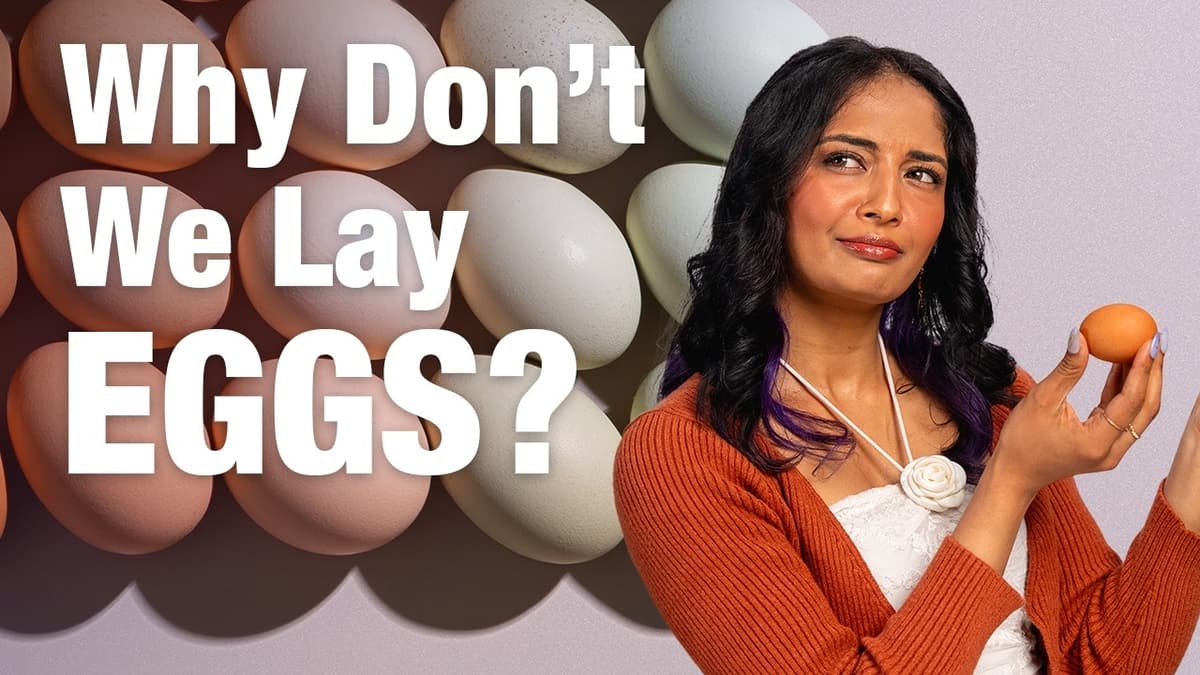
Why Mammals Gave Up On Laying Eggs
The video explores why mammals, including humans, stopped laying eggs and shifted to live birth. It traces the evolutionary history from ancient marine broadcast spawners to the first egg‑bearing reptiles, then to the emergence of mammalian lineages that abandoned external eggs in favor of internal gestation.
Key insights include the structural innovations of eggs—soft jelly layers in amphibians, calcium‑carbonate shells in reptiles and birds, and the albumen’s dual role as protein source and thermal regulator. The narrative contrasts the high‑quantity, low‑survival strategy of fish and sea urchins with the yolk‑rich, fewer‑egg approach of salmon, highlighting how mammals evolved viviparity to provide continuous warmth and nutrition, dramatically boosting offspring survival.
Notable examples feature the platypus and echidna as living monotremes that retain egg‑laying, marsupials that give birth to underdeveloped young for pouch‑based nursing, and placental mammals that nurture embryos via a placenta. The video also demonstrates bird egg strength—supporting up to 45 kg when pressure is evenly distributed—and explains how shells dissolve from the inside as chicks develop.
The shift to live birth reshaped mammalian life histories, favoring fewer, better‑protected young over sheer numbers. Understanding this transition informs evolutionary biology, reproductive medicine, and even speculative future reproductive technologies, underscoring that reproductive strategies remain dynamic and context‑dependent.