

Why AI Code Review Goes First (And Humans Go Second) (Feat: CodeRabbit)
The video argues that AI‑generated code has upended the traditional code‑review safety net, turning the review step into a new bottleneck. While developers now produce pull requests at five‑to‑ten‑fold higher velocity, human reviewers still read diffs line‑by‑line, causing delays and missed defects. Data from Faros AI shows peer‑review time up 441% and merges without review up 31%; a 2026 State of Code Developer survey finds 59% of engineers ship AI‑written code they don’t fully understand. The core issues are volume and the loss of a mental model when AI writes the first draft, forcing reviewers to evaluate code they never authored. The speaker quotes, “AI writes the first draft; you review code you didn’t write,” and demonstrates Code Rabbit, an AI reviewer that posts plain‑English summaries and inline comments. Integrated with IDEs and agents, it can automatically apply fixes, ensuring every comment is either resolved or explicitly rejected. By moving AI to the front of the review pipeline, teams filter out trivial bugs, style issues, and security flags before a human looks at the PR. This sequential AI‑first, human‑second approach lets engineers concentrate on architectural trade‑offs and product decisions, preserving speed while maintaining quality as development scales.
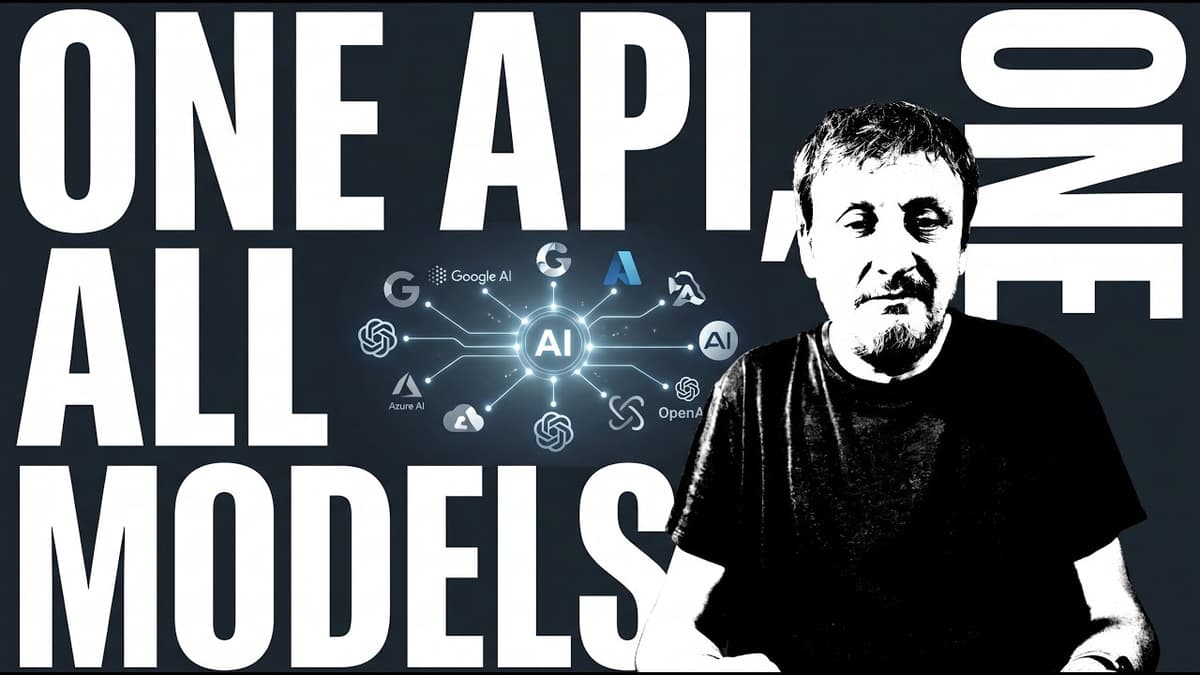
How I Access Every AI Model Without the Lock-In
The video explains how developers can avoid vendor lock‑in by routing all large‑language‑model (LLM) requests through Open Router, a service that presents a single OpenAI‑compatible API endpoint while aggregating dozens of providers such as OpenAI, Anthropic, Google Gemini, and emerging...

DevOps Q&A: April 2, 2026
In a casual DevOps Q&A on April 2, 2026, hosts recapped highlights from KubeCon and related collocated events, noting strong interest in Argo sessions that forced room changes and full-capacity halls. Presentations recommended for viewing include talks on GitHub secrets,...

Stop Designing UIs for AI - Let the LLM Decide What You See
The video argues that conventional user interfaces, built for static data structures, are ill‑suited for the fluid, unpredictable outputs of large language models. Instead of pre‑defining dashboards or markdown layouts, developers should let the LLM dictate how information is presented,...

Why Self-Hosting AI Models Is a Bad Idea
The video argues that self‑hosting large language models is economically untenable and legally risky, urging users to rely on provider APIs instead. It breaks down the hardware needed for a 2.5‑billion‑parameter model—four to sixteen Nvidia H100 GPUs, 595 GB storage, and 300‑400 GB...

ElevenLabs API Review: A Developer's Honest Take
The video is a developer‑focused review of ElevenLabs’ audio‑and‑video API, illustrating how the author automated the dubbing of his YouTube videos and why the API matters for software‑engineers who want to embed multimedia capabilities directly into code. He walks through his...
AI Agent Debugging Setup: OpenTelemetry + Jaeger in Kubernetes
The video demonstrates how OpenTelemetry combined with Jaeger can provide end‑to‑end visibility into AI agents running in Kubernetes, turning what appears to be a black‑box LLM interaction into an observable distributed trace. By instrumenting the agent, its prompts, tool calls,...

DevOps Q&A: Helm Charts, Cilium Service Mesh, AI Tooling, and GitOps Promotion
The live DevOps Q&A tackled a grab‑bag of topics—from Helm chart management and MCP package quirks to AI‑generated code, advertising strategies, and service‑mesh choices. Hosts fielded audience questions, sharing real‑world experiences and practical recommendations for teams navigating modern cloud‑native tooling. Key...