
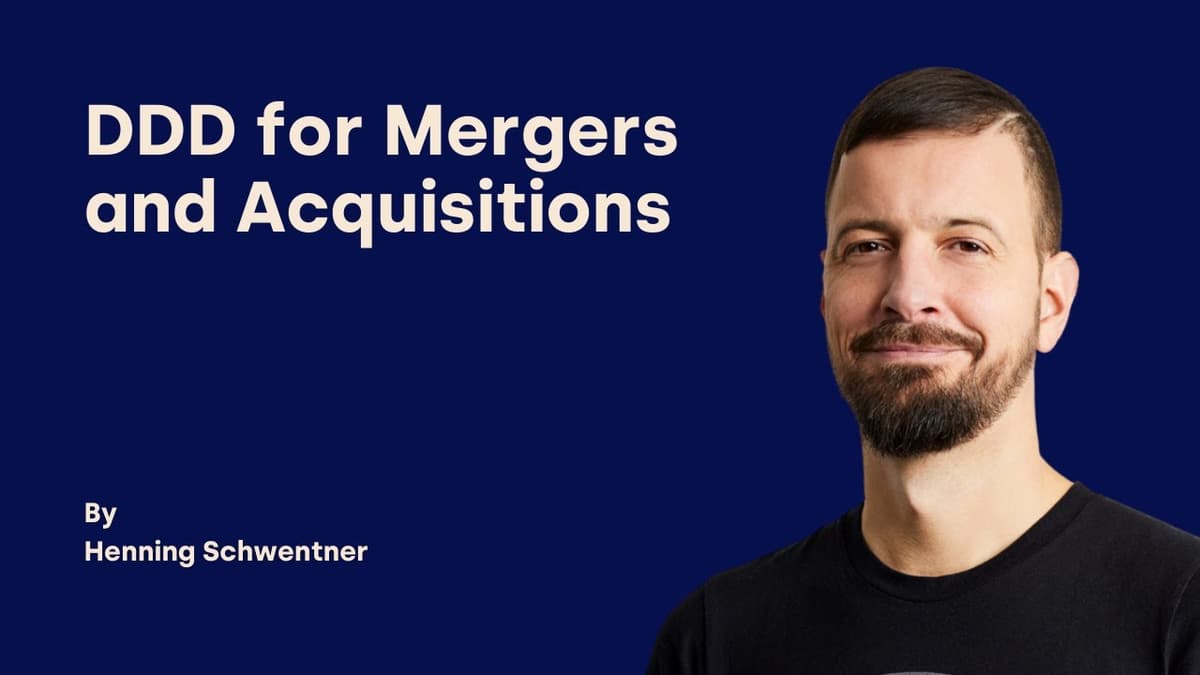
Henning Schwentner - DDD for Mergers and Acquisitions - DDD Europe 2025
Henning Schwentner opened his talk with a tongue‑in‑cheek love story, then pivoted to the real challenge: integrating two legacy leasing platforms after a merger. He framed the problem as a choice between keeping both monolithic systems in parallel or consolidating into a single solution, warning that either extreme can erode expected synergies. He introduced collaborative modeling—event storming, domain storytelling, and other lightweight workshops—as the means to surface hidden process variations between the acquiring firm (Alhorn) and the target (Cosmo). By applying three scope dimensions—granularity, point‑in‑time, and domain purity—teams can decide how detailed a model should be, whether to map current or future processes, and whether to focus on business logic or its digital implementation. Schwentner illustrated these concepts with a step‑by‑step comparison of the leasing workflow, moving from a high‑level "cloud" view down to the "kite" level where divergences appear, such as contract signing steps. He argued that outright system replacement is rarely viable; instead, modularizing and modernizing each monolith, then recombining the best bounded contexts, yields a more sustainable architecture. This approach, he called Domain‑Driven Transformation, tackles strategic (big‑ball‑of‑mud), tactical (poor domain expression), and organizational (team structure) ailments. The takeaway for executives and architects is clear: use collaborative, scoped modeling to diagnose integration gaps, then apply domain‑driven modularization rather than a blunt data migration. This reduces risk, preserves valuable legacy functionality, and accelerates value capture from M&A activity.

Leander Vanderbijl - Modernising in Healthcare: A Case Study in Decision Making - DDD Europe 2025
Leander Vanderbijl presented a detailed case study of how Mog, a patient‑relationship‑management platform used by GPs, migrated its legacy on‑premise application to a cloud‑native architecture at DDD Europe 2025. He highlighted the tangled legacy stack—PHP 5, Java, Delphi, SQLite and MSSQL—combined with...

How to Train Your Domain Model - Tobias Goeschel - DDD Europe 2025
At DDD Europe 2025, Tobias Goeschel explored whether modern large language models can move beyond code generation to actually replace business logic. He presented experiments that fine‑tuned LLMs with Domain‑Driven Design artifacts such as diagrams and ubiquitous language, testing their...
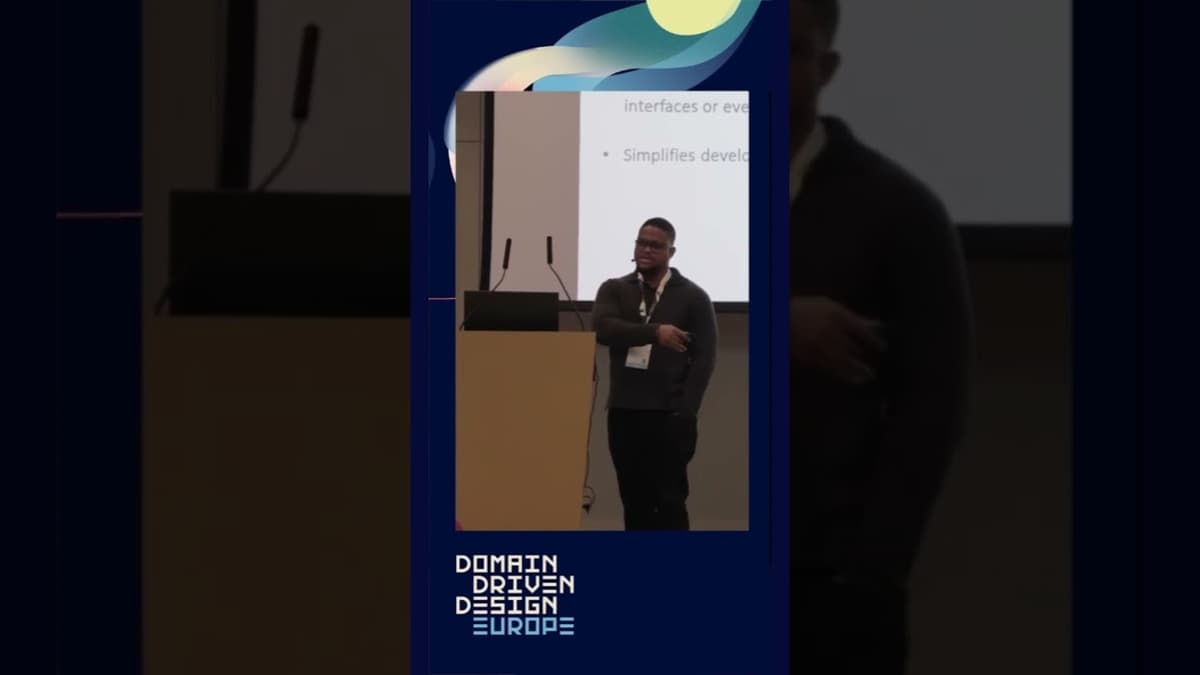
Omphile Matheolane at DDD Europe 2025
At DDD Europe 2025, Omphile Matheolane explained the modular monolith architecture, positioning it as a hybrid that retains monolithic deployment simplicity while embedding microservice‑style modularity. He highlighted that the system runs as a single deployable unit, yet its internal structure consists...
Omphile Matheolane Speaking at DDD Europe
Omphile Matheolane’s presentation at DDD Europe centered on applying domain‑driven design to large‑scale financial applications. He argued that the first step is to delineate clear bounded contexts—such as accounts and loans—so each domain owns its data and logic without over‑reaching...
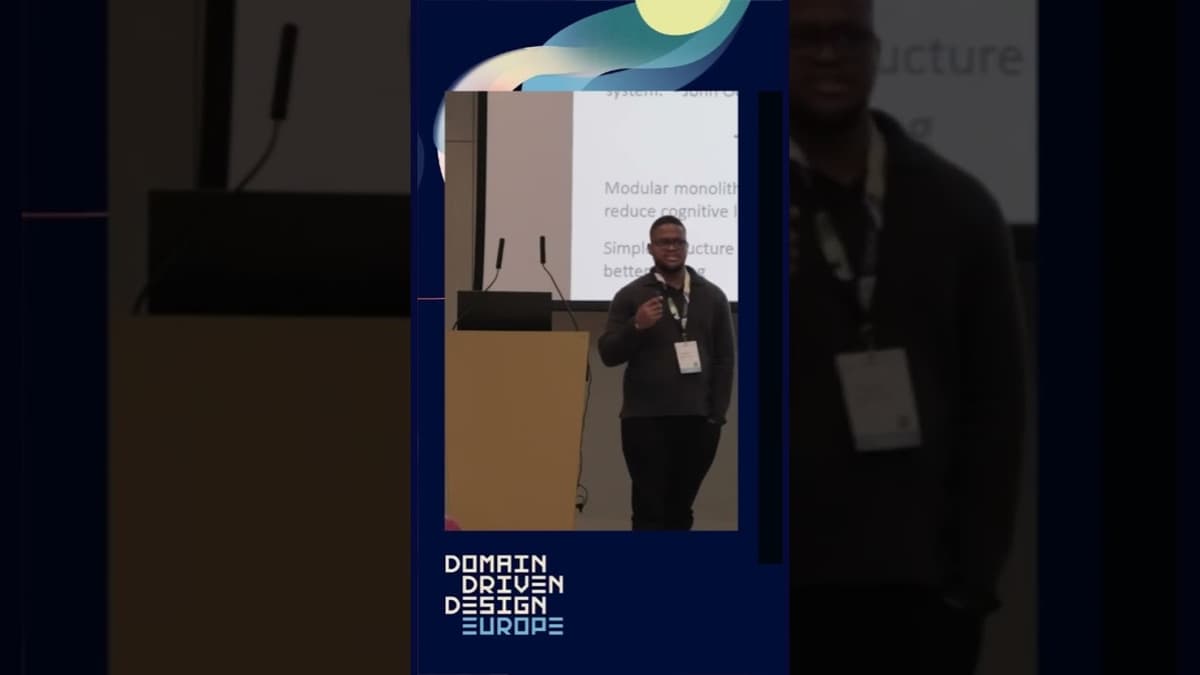
Omphile Matheolane Speaking at DDD Europe 2025
Speaking at DDD Europe 2025, Omphile Matheolane framed software architecture through the lens of essential versus accidental complexity, citing John Ozenhart’s A Philosophy of Software Design. He defined essential complexity as the inherent difficulty of solving a problem and accidental...

Modular Monoliths: The Architecture That Scales W Your Domain - Omphile Matheolane - DDD Europe 2025
At DDD Europe 2025, Omphile Matheolane argued that modular monoliths—structured, well-partitioned single applications guided by Domain-Driven Design—offer a practical, scalable alternative to hastily adopted microservices. He outlined the common downsides of microservices (debugging complexity, high operational overhead, and distributed coupling)...
Łukasz Reszke Speaking at DDD Europe
In his DDD Europe talk, Łukasz Reszke warns that poorly designed if statements can become a silent source of technical debt, undermining the reliability of any software system. He illustrates how the temptation to “just add another if” offers an immediate...
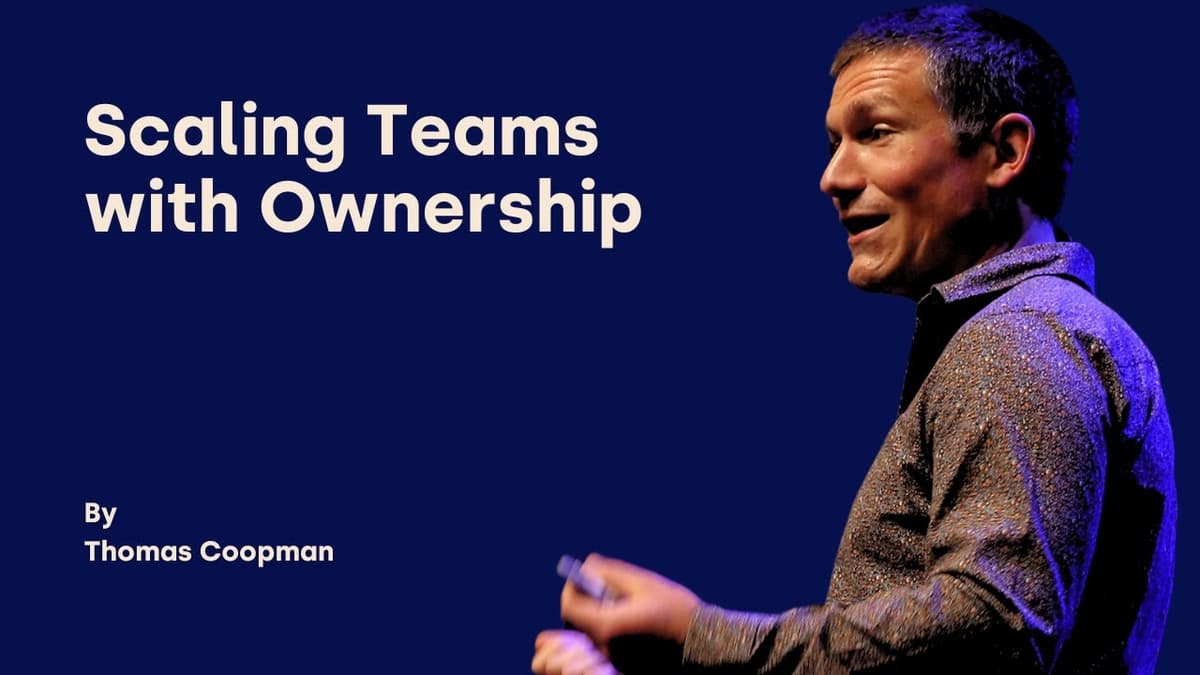
Scaling Teams with Ownership - Thomas Coopman - DDD Europe 2025
Thomas Coopman described his experience helping Protime scale its engineering organization, where an initial move to feature teams expanded from three to 12 teams and produced more than 40 deployable services. That rapid scaling eroded clear ownership: teams frequently touched...
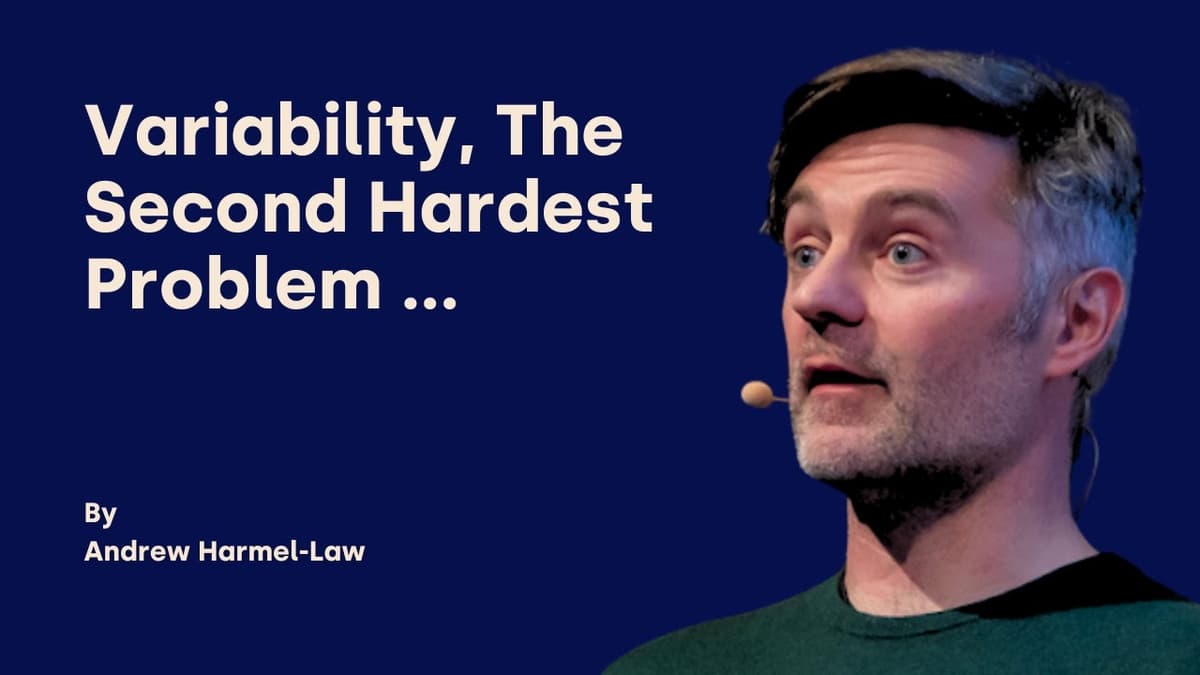
Variability, The Second Hardest Problem ... - Andrew Harmel Law - DDD Europe 2025
Andrew Harmel‑Law’s DDD Europe 2025 keynote spotlights variability as the second‑hardest problem in software architecture, after people. He explains how variability fuels both unpredictability and the immense power of software, shaping delivery pipelines and system design. The talk walks through...