
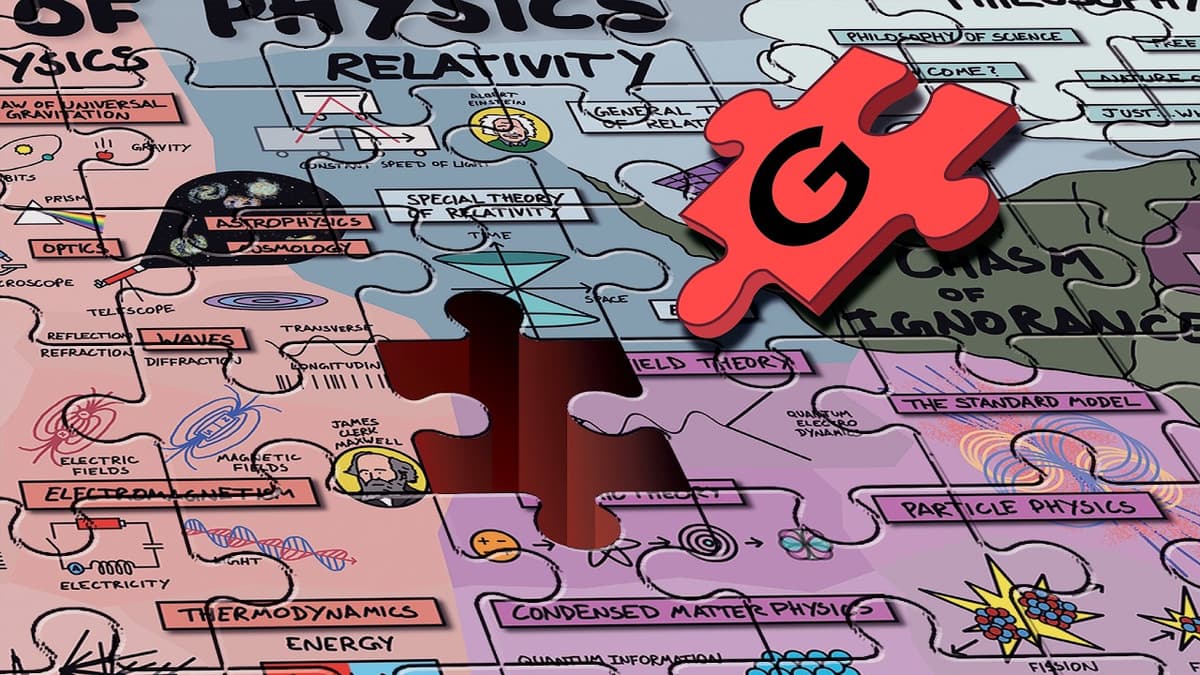
Will We EVER Complete Physics?
The video asks whether humanity will ever achieve a complete theory of physics, outlining the eight fundamental ingredients—space, time, matter, energy, and the four forces—that any ultimate framework must explain. It highlights the central gap: a quantum theory of gravity that would reconcile general relativity’s smooth spacetime with the discrete nature of quantum mechanics. Key insights include the stubborn mysteries of dark matter and dark energy, which together dominate the cosmos yet elude the Standard Model, and the fact that leading candidates like string theory and loop quantum gravity lack testable predictions. Experimental approaches such as building a solar‑system‑scale particle accelerator to detect gravitons or constructing ultra‑cold, ton‑scale detectors are deemed impractical with current technology. The creator cites concrete examples: the proposed LISA space‑based gravitational‑wave observatory, slated for the 2030s, could capture primordial waves from the early universe, while B‑mode polarization in the cosmic microwave background offers another indirect probe. He also notes that even a successful quantum‑gravity theory would not unlock information trapped inside black‑hole horizons or reveal conditions before the observable Big Bang. Ultimately, the video concludes that a fully complete physics may remain forever out of reach, but the pursuit itself drives innovation and deepens our appreciation of the universe’s complexity, reminding viewers that asking profound questions is a uniquely valuable human endeavor.
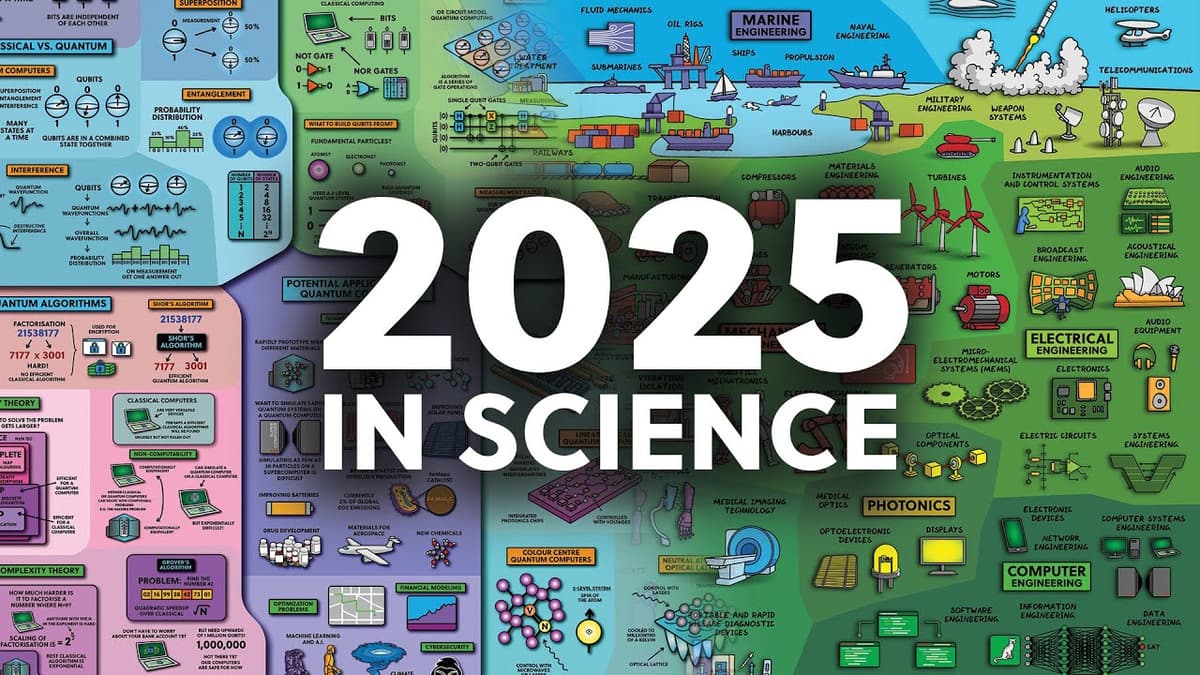
Top Science Advances of 2025 - Roundup Stream
The livestream serves as a rapid, Wikipedia‑sourced roundup of the year’s most notable scientific breakthroughs, spanning astronomy, physics, chemistry, and engineering. Hosted on New Year’s Eve, the presenter walks through dozens of discoveries, offering brief commentary where possible. Among the highlights,...