

Why Dark Matter Forms the Cosmic Web #shorts
The video explains why dark matter, unlike ordinary matter, assembles into the vast, diffuse structures known as the cosmic web. As the universe expands, space itself stretches, causing photons to red‑shift and dark‑matter particles to lose kinetic energy, a process that cools them just enough to clump on large scales. Because this cooling is modest, dark matter does not collapse into dense objects like stars or black holes. Instead, it forms extended halos around galaxies and connects them through filamentary strands that weave the cosmic web. Computer simulations from the 1980s and 1990s already predicted such a network, but direct telescopic observation only became possible in the late 2010s. The narrator likens dark‑matter energy loss to the red‑shift of light, emphasizing that the same cosmic expansion that stretches wavelengths also damps dark‑matter motion. The delayed observational confirmation—decades after the simulations—provides a striking, visual validation of theoretical models. These findings add a compelling piece of evidence to the dark‑matter paradigm, reinforcing its role in shaping large‑scale structure and guiding future surveys that aim to map the universe’s hidden scaffolding.

Does Ryan Gosling Believe in Aliens? #shorts
The short video uses Ryan Gosling’s upcoming film *Project Hail Mary* as a springboard to discuss the scientific plausibility of extraterrestrial life. It shifts the conversation from UFO folklore to the astrophysical hypothesis of panspermia – the idea that microbial life...

Why Is Equilux Not on Equinox? #shorts
The video explains why the popular notion that the equinox delivers exactly equal daylight and darkness is a misconception, distinguishing the astronomical event from the phenomenon known as equilux. An equinox occurs when the Sun crosses the celestial equator, aligning Earth’s...
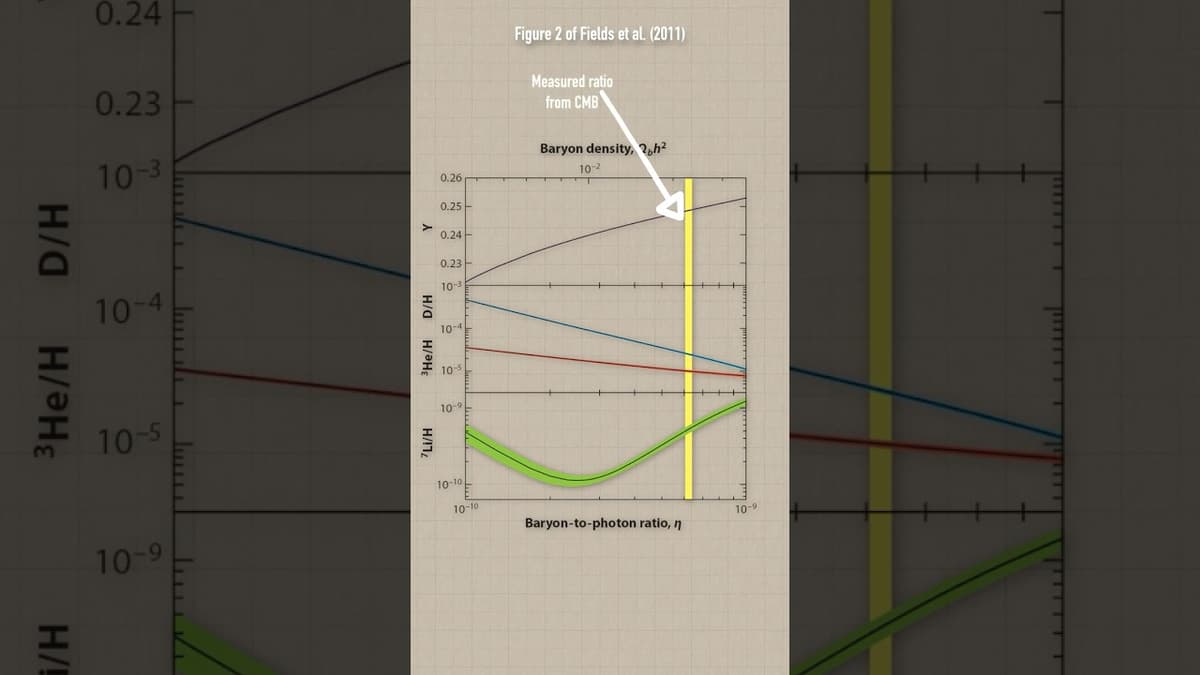
The First 3 Minutes of the Universe's Life
The video explains how the first three minutes after the Big Bang set the stage for all later chemistry. During this epoch, weak‑force interactions continually swapped neutrons and protons until the universe cooled enough for those reactions to freeze out,...
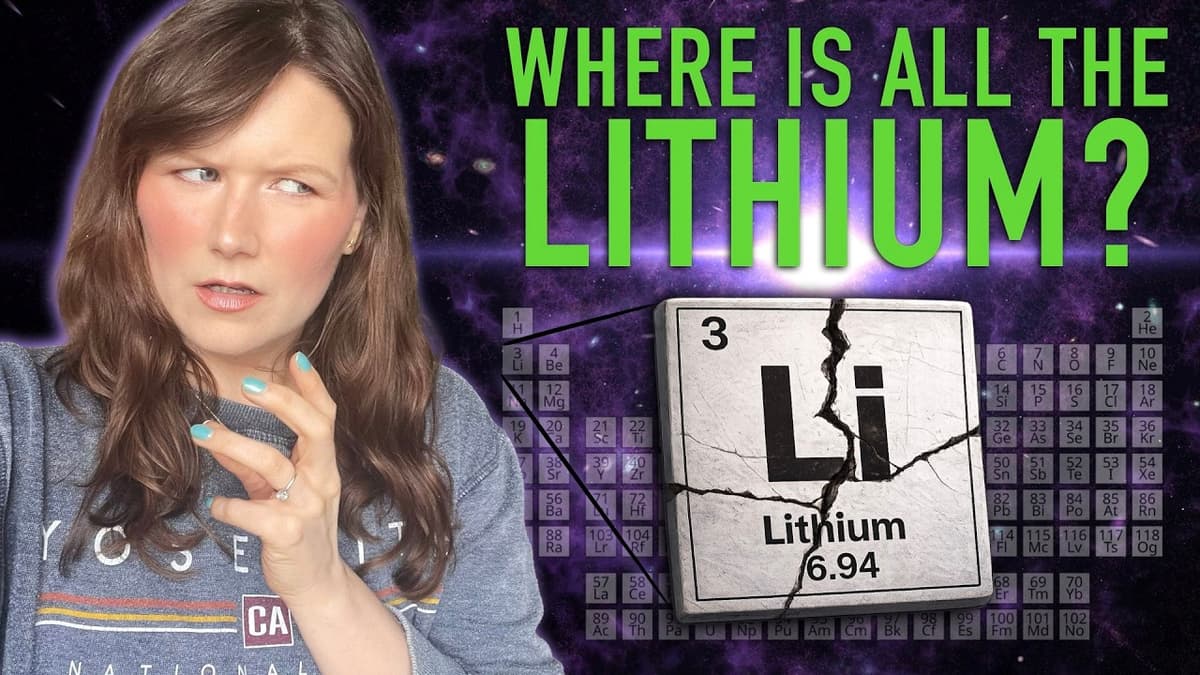
The Big Bang Has a Big Problem
The video tackles the long‑standing "lithium problem" – a discrepancy between the amount of lithium that Big Bang nucleosynthesis predicts and the far lower abundance actually measured in the cosmos. While the theory accurately forecasts hydrogen, deuterium and helium, it...