
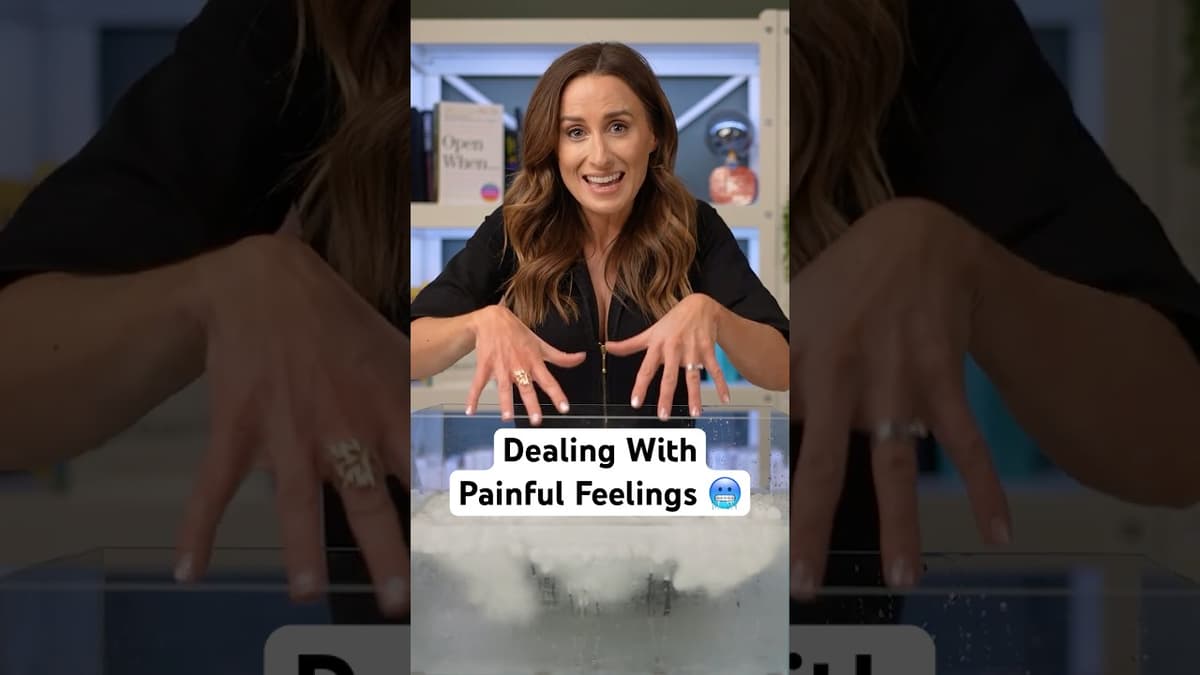
Dealing With Painful Feelings
In the short video, a psychologist explains how the mind reacts to overwhelming emotional distress—whether depression, low mood, or trauma—by entering a state of numbness. The speaker describes numbness as an automatic protective mechanism: as pain becomes unbearable, the brain and body blunt the sensation, reducing the urgent drive to escape while leaving the external situation unchanged. He warns that numbness dulls all affect, not just the painful one, and when it begins to thaw the first emotions that return can feel even harsher, a phenomenon he frames as “feeling worse before feeling better.” Understanding this cycle is crucial for patients and therapists, as it clarifies that numbness is not progress but a temporary shield, and that tolerating the resurfacing discomfort is a key step toward genuine emotional recovery.

Are You Shy? Or Is It Social Anxiety?
In a brisk 60‑second video, clinical psychologist Dr. Julie explains how to differentiate ordinary shyness from clinical social anxiety, two conditions often conflated in everyday conversation. She notes that shyness manifests as mild awkwardness, blushing, and discomfort in the spotlight, but...

Are You Depressed Or Sad?
Dr. Julie, a clinical psychologist, opens the video by distinguishing everyday sadness from clinical depression, emphasizing that sadness is a normal, temporary emotional response to life’s challenges and often dissipates with distraction or time. She explains that depression is more than...