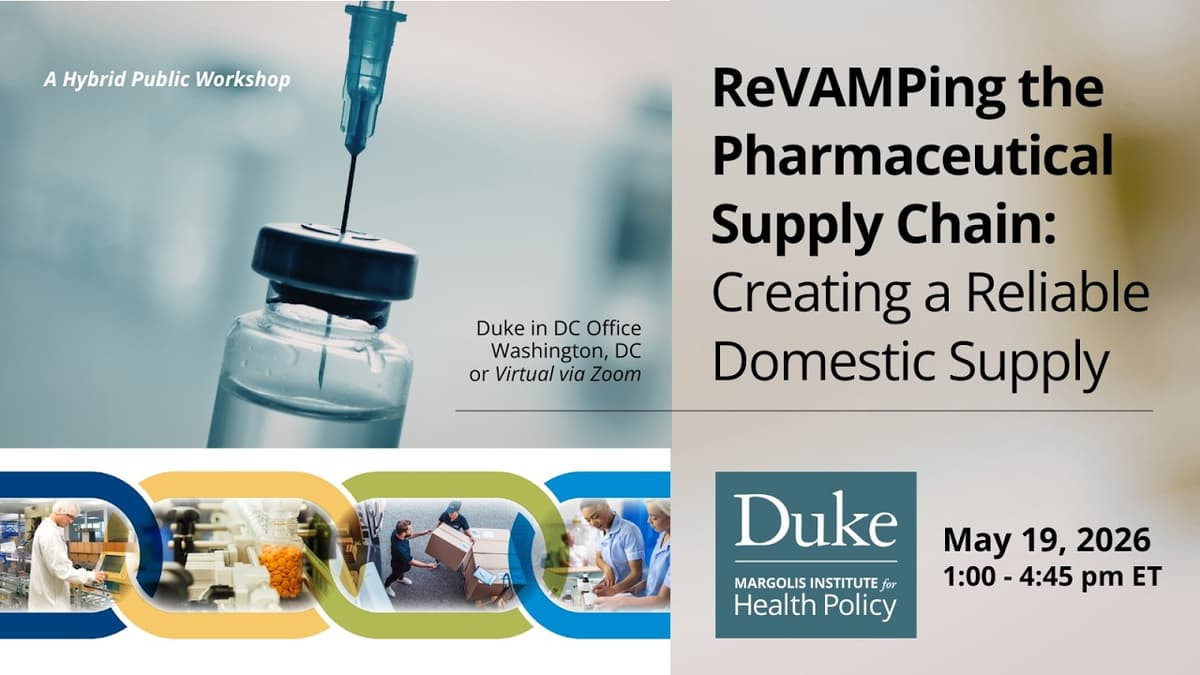
ReVAMPing the Pharmaceutical Supply Chain: Creating a Reliable Domestic Supply
The Revamp Consortium convened leaders from government, industry, and academia to address chronic drug shortages and the broader fragility of the U.S. pharmaceutical supply chain. Speakers highlighted the need to move from a reactive, fire‑drill mindset toward preventive strategies that ensure a reliable domestic source of essential generic medicines while keeping costs low and patients at the center of policy. Key insights included the identification of four tenets guiding the effort: availability, affordability, advanced manufacturing, and patient focus. Federal agencies outlined concrete steps—FDA’s two‑phase “pre‑check” program to fast‑track facility reviews and reduce the 50% denial rate tied to manufacturing issues, and HHS’s incentive pilot to prioritize U.S. API production and streamline inspection coordination. Notable examples underscored the urgency: Brian Fehee likened the new pre‑check to TSA PreCheck, aiming to catch problems early, while Arlene Joiner described the creation of the IBMSC unit during COVID to safeguard critical APIs and key starting materials that are currently sourced from a handful of overseas suppliers. The implications are significant: accelerated domestic manufacturing could blunt future shortages, lower drug prices, and bolster national health security. Legislative attention from the Senate Aging Committee and forthcoming CMS payment reforms signal a coordinated push to embed these changes into law, promising higher‑paying jobs and a more resilient supply chain for patients.
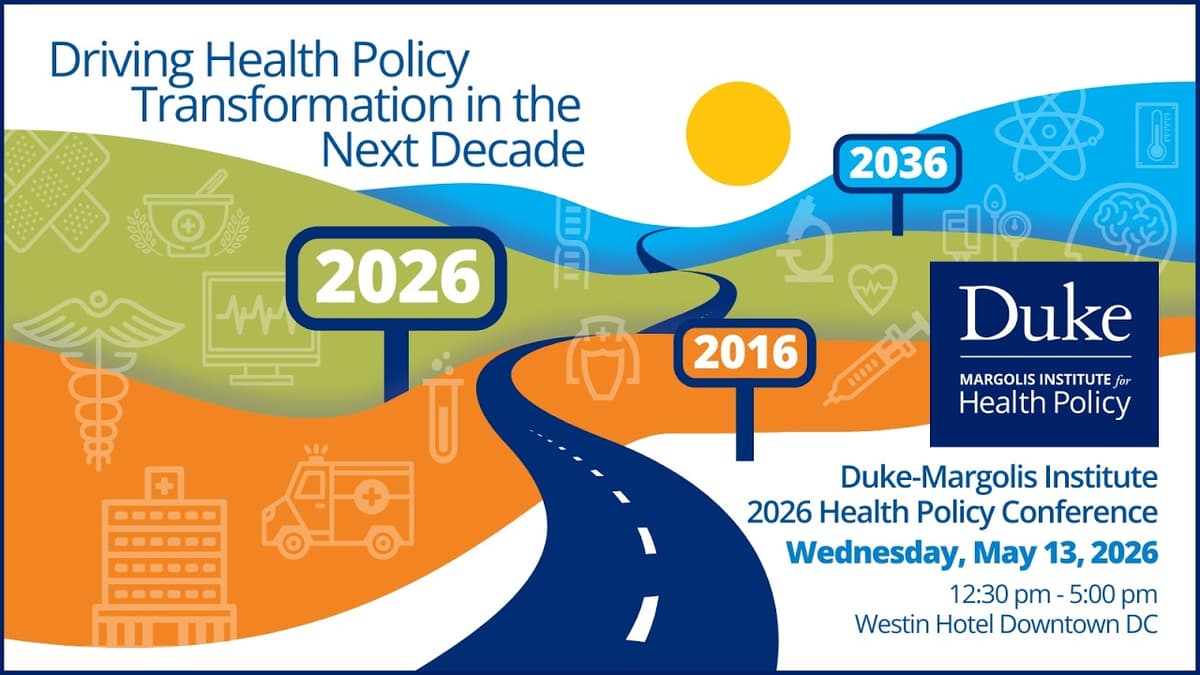
2026 Health Policy Conference: Driving Health Policy Transformation in the Next Decade
The 10th‑anniversary Duke Health Policy Institute conference set the stage for a decade‑long health‑policy agenda, spotlighting a bipartisan legislative push to overhaul the United States’ clinical‑trial framework. Organizers framed the effort as a response to “Room’s Law”—the declining productivity of...
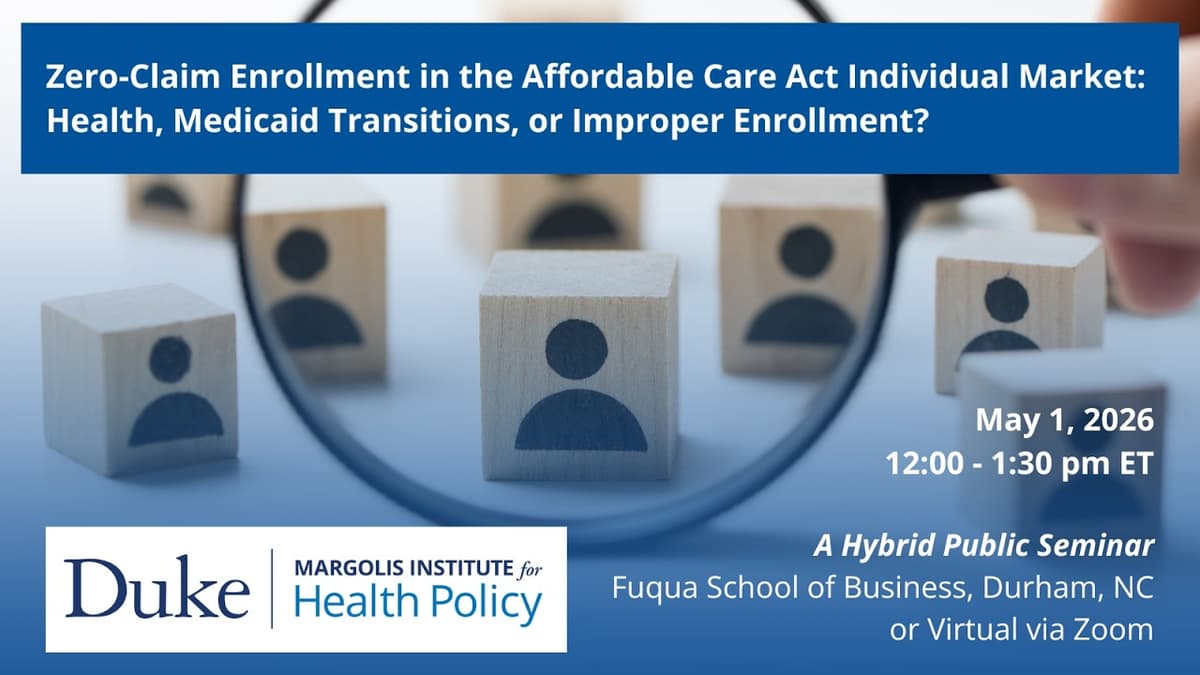
Zero-Claim Enrollment in the Affordable Care Act Individual Market
The seminar focused on a puzzling rise in zero‑claim rates among individuals enrolled through the Affordable Care Act exchanges after 2021. Researchers from CMS, ASPE and academia examined why millions of people were paying premiums for plans that never generated...
U.S. Food and Drug Administration Webinar on the RCT-DUPLICATE Initiative
The FDA’s RCT‑DUPLICATE webinar presented a systematic effort to assess when real‑world evidence (RWE) can stand in for randomized clinical trials (RCTs). The initiative benchmarks observational database studies against completed trials, then extends the methodology to predict outcomes of...
Increasing Access to Nonprescription Drugs
The Duke Margolis Institute for Health Policy and the U.S. Food and Drug Administration convened a stakeholder meeting to discuss expanding access to non‑prescription (OTC) medicines through a new drug‑application framework. FDA officials outlined three pathways—direct‑to‑OTC submissions, prescription‑to‑OTC switches, and applications...

Scaling Innovative Clinical Trial Approaches: Challenges, Progress, and Opportunities
The FDA’s Center for Clinical Trial Innovation (C3TI), together with the Duke‑Margolis Institute, convened a hybrid workshop to assess progress in clinical‑trial innovation. The event showcased the C3TI Demonstration Program, which is funded by a $5.19 million FDA/HHS award, and examined...

Session 3.1 - RISE Together: Data Sharing Across the Rare Disease Ecosystem
The RISE Together Session 3.1 convened experts to explore data‑sharing strategies across the rare‑disease ecosystem, using amyotrophic lateral sclerosis (ALS) as a pilot. Panelists Colin Hovinga of the Critical Path Institute and Natanya Kerper of the Cystic Fibrosis Foundation highlighted...

From Deployment to Oversight: Strengthening AI Risk Management and Patient Safety in Health Care
The webinar, hosted by Duke Health’s AI Evaluation and Governance Program and the Duke Merkelist Institute, examined how health systems can move from merely deploying clinical AI to establishing robust oversight that safeguards patient safety. Speakers highlighted that while AI...

Capital Impact Council: Advancing Private Investment That Improves Health Care & Health
The video introduces the Capital Impact Council (CIC), a Duke‑Margolis Institute initiative launched in 2024 to bring private‑capital investors together around a common goal: generate financial returns while demonstrably improving health‑care delivery, access, affordability and outcomes. Central to the council’s work...
Accelerating Accountable Care Through Rapid Learning
Accelerating accountable care through rapid learning was the focus of a recent webinar co‑hosted by West Health and Duke Margolis. Speakers highlighted the urgency created by shifting payment and delivery models and introduced the West Health Accelerator as a partnership that...