
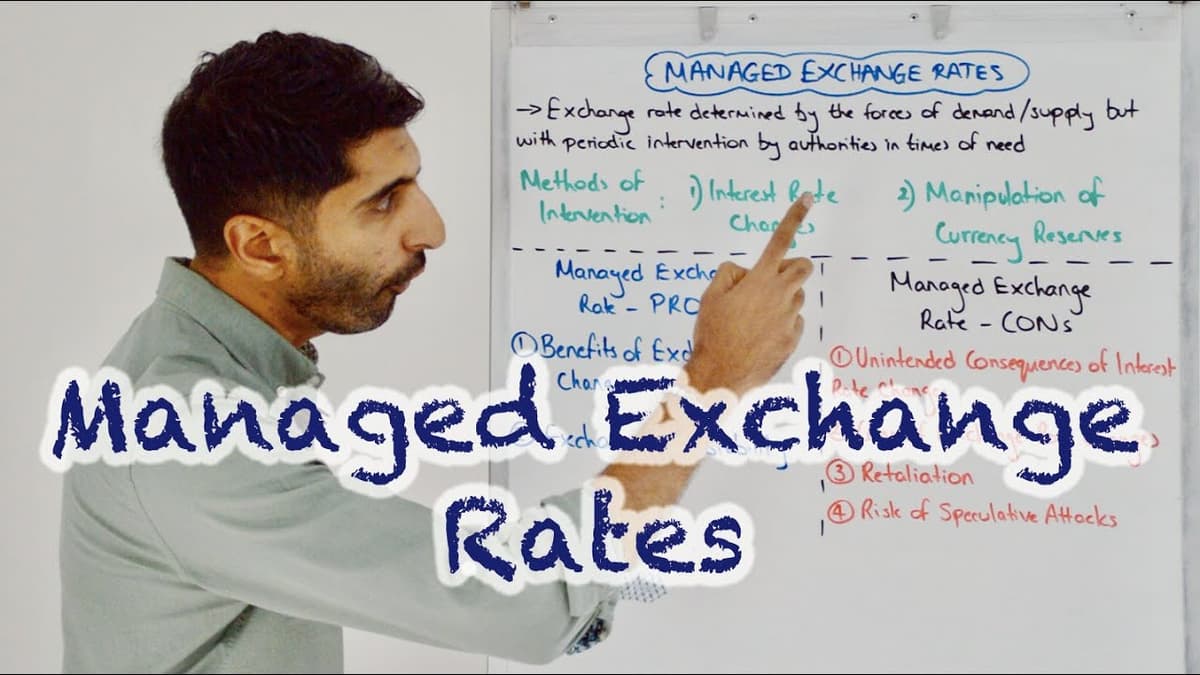
Managed Exchange Rates
The video explains that a managed exchange rate is a hybrid system, allowing a currency to float under market forces but permitting periodic official interventions through interest‑rate adjustments or reserve operations. Proponents argue that such flexibility lets authorities deliberately weaken the currency to improve the trade and current‑account balances, stimulate aggregate demand and lower unemployment, or strengthen it to curb inflation. The tools cited are lowering rates or selling domestic currency to depreciate, and raising rates or buying domestic currency to appreciate. The presenter warns that these moves carry side effects: rate cuts can be inflationary, hikes can be recessionary, and persistent devaluation may provoke retaliation or trade wars. Moreover, heavy intervention depletes reserves, inviting speculative attacks that can precipitate a currency crisis. For policymakers, the trade‑off is clear—managed rates can smooth economic cycles but risk macro‑instability, loss of credibility, and external backlash. Investors and firms must monitor intervention signals, as they affect export competitiveness, import costs, and overall financial market volatility.

Floating Exchange Rate and Current Account (Trade) Imbalances
The video explains how floating exchange‑rate regimes theoretically eliminate persistent current‑account deficits or surpluses by allowing exchange‑rate adjustments to restore balance. It outlines the mechanics: a deficit creates excess supply of domestic currency, shifting the supply curve right and depreciating the...

Purchasing Power Parity (PPP) Exchange Rates
The video explains purchasing power parity (PPP) exchange rates, defining them as the rate at which one currency can purchase the same basket of goods and services abroad as it can domestically. It contrasts PPP rates with nominal rates that...