
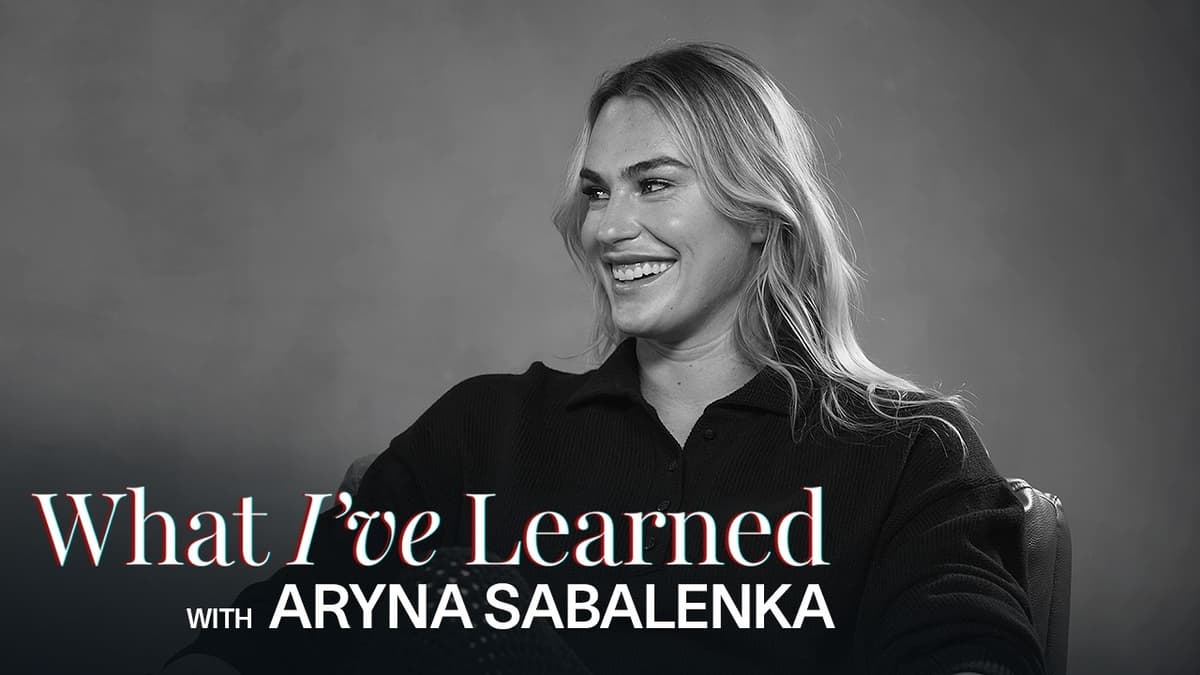
Aryna Sabalenka on Coco Gauff, Smashing Rackets & Perfecting Her Serve | What I’ve Learned | Esquire
In a candid Esquire interview, world‑number‑one Aryna Sabalenka opens up about the mental habits that underpin her four Grand Slam titles, from handling defeat to fine‑tuning her serve. She stresses the importance of pausing after a loss before facing the media, allowing emotions to settle so she can speak clearly and protect her reputation. The champion breaks down her on‑court routine: a relaxed toss, a clear target, and a smooth motion that lets tension flow through the racket, producing serves that regularly exceed 120 mph. She also credits training with male players for raising her physical intensity and cites her family and close‑knit team as the foundation of her off‑court stability. Sabalenka’s memorable lines—"Just let all of that tension and emotion go out through that racket" and "Never hold grief inside; it destroys you"—illustrate a philosophy that blends aggression with emotional intelligence. She describes a balanced lifestyle that includes occasional celebrations, disciplined preseason preparation, and a strong social‑media presence that humanizes the athlete. For peers and sponsors, her approach offers a blueprint: combine relentless physical preparation with a supportive network, manage emotions strategically, and maintain authenticity both on and off the court. Those who emulate these habits can enhance performance longevity and marketability.

How #ArsenioHall Saved #ComingToAmerica.
The video features Arsenio Hall recounting a pivotal moment on the set of Coming to America, when a physical altercation between star Eddie Murphy and director John Landis threatened to halt production. Hall was called in to persuade Murphy to...

Will Reeve on Grief, Resilience, and Carrying His Parents’ Legacy | What I’ve Learned | Esquire
In an Esquire 'What I’ve Learned' interview, ABC correspondent Will Reeve reflects on carrying his parents’ legacy—especially his late father Christopher Reeve’s transformation into an advocate after his paralysis—and how that upbringing shaped his journalism. He cites empathy, giving voice...