
April 2026 Open Commission Meeting
The FCC’s April 2026 Open Commission Meeting addressed six agenda items, most notably a Report and Order to modernize spectrum sharing for geostationary and non‑geostationary satellite broadband, and a further Notice of Proposed Rulemaking to tighten Know‑Your‑Customer (KYC) requirements aimed at stopping illegal robocalls. The satellite proposal replaces the decades‑old Equivalent Power Flux Density (EPFD) limits with performance‑based protection criteria across the 10.7‑12.7 GHz, 17.3‑18.6 GHz and 19.7‑22 GHz bands. The FCC estimates the change could boost satellite broadband capacity by up to eight times, generating billions of dollars in economic benefit. The KYC notice would require carriers to collect and verify detailed customer identification, impose higher forfeiture penalties, and explore whether stricter KYC can deter criminal misuse of the network. Commissioner Anna Gomez highlighted the “good‑faith negotiation” principle as the cornerstone of the new sharing framework, while Commissioner Olivia Trusty linked the rule change to closing the digital divide and reinforcing U.S. space leadership. Chairman Brendan Carr stressed that the updates will “supercharge competition” among satellite, wireless and cable providers, delivering faster service to underserved communities. If adopted, the spectrum reforms position the United States to lead future ITU discussions and accelerate commercial low‑Earth‑orbit deployments, while the KYC enhancements promise stronger consumer protection and a new tool for national‑security agencies. Carriers, however, will face compliance costs and operational adjustments as they integrate the expanded verification processes.
Intergovernmental Affairs Quarterly Webinar Briefing
The Federal Communications Commission held its Intergovernmental Affairs Quarterly webinar, marking a transition in leadership as Deputy Chief Emmett Carlton announced his retirement after three decades of service. New points of contact—including attorneys Donna Cyrus and Aliza Katz, outreach liaisons...
March 2026 Open Commission Meeting
The March 2026 FCC Open Commission Meeting centered on two major Notices of Proposed Rulemaking. The first seeks to improve customer service and consumer protection by curbing the offshoring of call‑center operations, while the second targets illegal robocalls through tighter...

Communications Security, Reliability, and Interoperability Council IX Meeting
The Communications Security, Reliability, and Interoperability Council held its seventh and final CISRIC IX meeting, wrapping up a six‑month work cycle. Attendees reviewed three critical reports: best practices for AI/ML in public‑safety communications, recommendations to safeguard Public Safety Answering...
30th Anniversary of the 96 Act Webinar – What Did We Learn?
The FCC marked the 30th anniversary of the Telecommunications Act of 1996 with a webinar that gathered former commissioners, policymakers, and industry experts to reflect on the law’s origins, implementation, and lasting impact. Chair Brendan Carr opened with personal anecdotes...
30 Years of the 1996 Telecommunications Act
The video commemorates three decades since the 1996 Telecommunications Act, weaving personal recollections—from a high‑school student with a beeper to a former FCC legal adviser—into a broader narrative about how the law reshaped America’s communications landscape. The Act’s core achievement was...
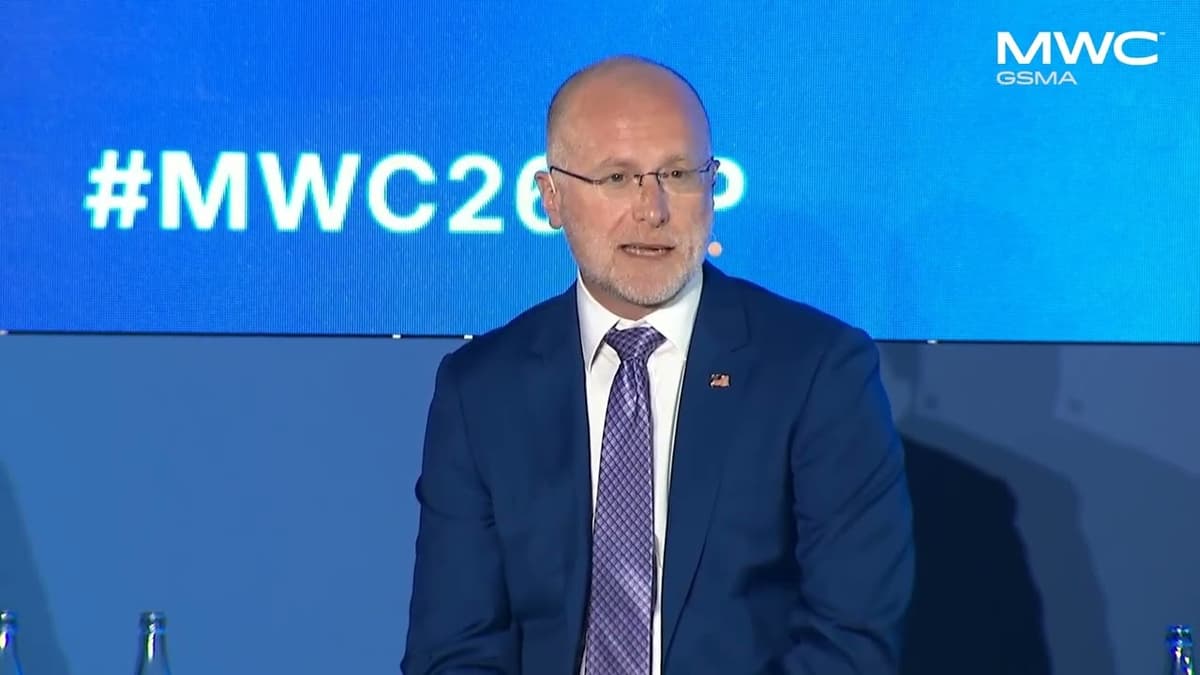
Chairman Carr at Mobile World Congress 2026
Chairman Jill Carr used his Mobile World Congress slot to outline the FCC’s aggressive 2026 agenda, emphasizing spectrum expansion, deregulation, and satellite‑terrestrial convergence. She highlighted the 800 MHz pipeline unlocked by the 2022 tax‑cut legislation and the upcoming upper C‑band auction as cornerstones...
Consumer Protection and Accessibility Advisory Committee Meeting
The Federal Communications Commission convened its Consumer Protection and Accessibility Advisory Committee (CPAAC) to review progress on two priority fronts: curbing illegal robocalls and advancing accessible communication services. Commissioner Olivia Trusty opened the session, emphasizing the agency’s mandate to...
Consumer Protection and Accessibility Advisory Committee Meeting
The Federal Communications Commission’s Consumer Protection and Accessibility Advisory Committee (CPAAC) will convene an in‑person meeting on Tuesday, February 24, 2026 at 9:00 a.m. EST in Washington, D.C. The agenda includes briefings from the Advancements in Accessible Communications Technologies Working Group and the...
World Radiocommunication Conference Advisory Committee - Fourth Meeting
The fourth meeting of the World Radiocommunication Conference Advisory Committee focused on gearing up for WRC‑27, with U.S. officials emphasizing the need to export America’s spectrum policy abroad and secure leadership in emerging satellite and wireless services. Chair remarks highlighted...
World Radiocommunication Conference Advisory Committee - Fourth Meeting
The fourth World Radiocommunication Advisory Committee (WAC) meeting centered on gearing up for the upcoming World Radiocommunication Conference 27 (WRC‑27). Chairperson Carr highlighted the FCC’s accelerated spectrum reforms—streamlining licensing, cutting red tape, and promoting direct‑to‑sell technologies—to showcase U.S. leadership...
February 2026 Open Commission Meeting
The Federal Communications Commission’s February 2026 open meeting focused on a notice of proposed rulemaking to overhaul the Lifeline program, a federal subsidy that provides low‑income households with discounted phone and internet service. The agenda outlined tighter eligibility criteria—classifying...
February 2026 Open Commission Meeting
The Federal Communications Commission’s February 2026 open meeting centered on a notice of proposed rulemaking to overhaul the Lifeline program, a federal subsidy that provides low‑income households with discounted phone and internet service. The Wireline Competition Bureau outlined reforms that...
FCC Chairman Carr's Press Conference - February Open Meeting
FCC Chairman Julius Carr used the February open‑meeting press conference to announce two major regulatory thrusts. First, he highlighted aggressive steps to clean up the Lifeline program after an Inspector General report revealed roughly $5 million paid for phone and internet service...