
Genesis Mission | Advancing Science Through AI
The Department of Energy’s Genesis Mission is a cross-sector platform uniting academia, industry and 70 national labs to accelerate science and technology by embedding artificial intelligence into research workflows. Fermilab is playing a key role by applying AI to the massive, complex data streams it hosts—notably datasets from the Large Hadron Collider—and leveraging its expertise in neural networks developed for high-energy physics. With new computing power at Fermilab, researchers can run advanced AI models on these datasets to extract insights faster and drive new inventions and developments. The effort aims to scale AI-driven discovery across DOE science programs.
A Milestone for Science: Cryostat Installation Begins
The video announces the start of cryostat installation for the Deep Underground Neutrino Experiment (DUNE), a massive neutrino detector being built a mile beneath South Dakota’s Sanford Underground Research Facility. The project involves lowering more than 1,300 uniquely shaped steel...
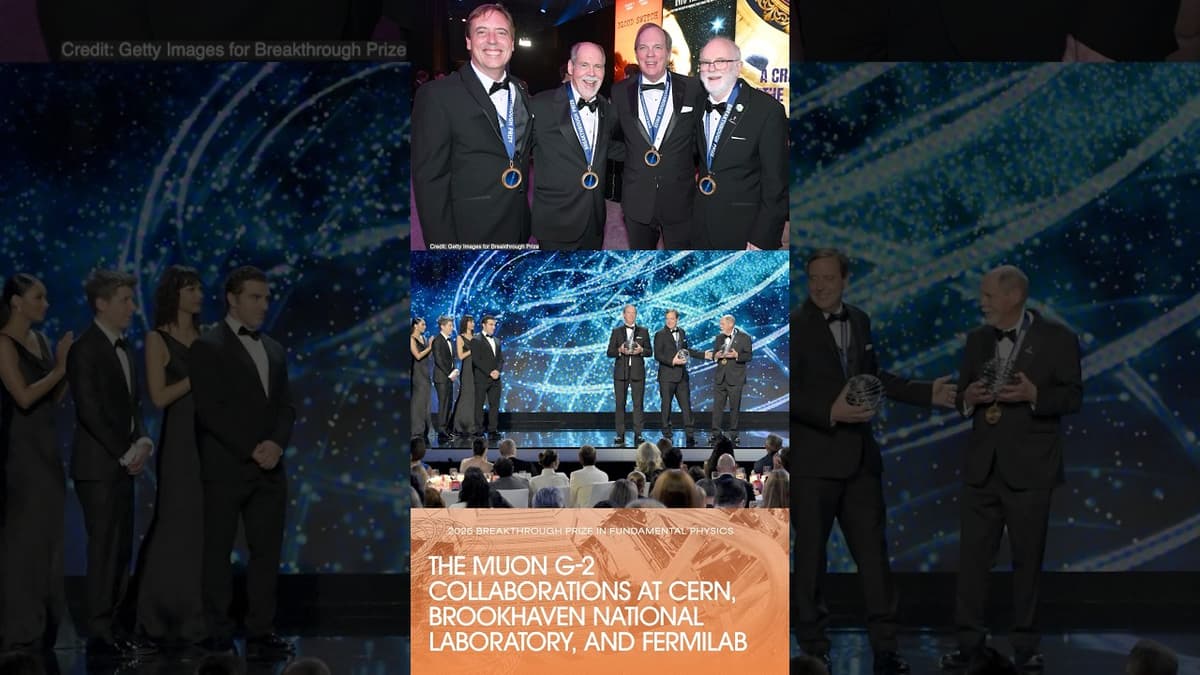
Muon G-2 Wins Breakthrough Prize in Fundamental Physics
The 2023 Breakthrough Prize in Fundamental Physics was awarded to the Muon g‑2 collaboration, recognizing its precise measurement of the muon’s magnetic moment. The honor highlights the experiment’s role in testing the Standard Model and searching for new particles or...
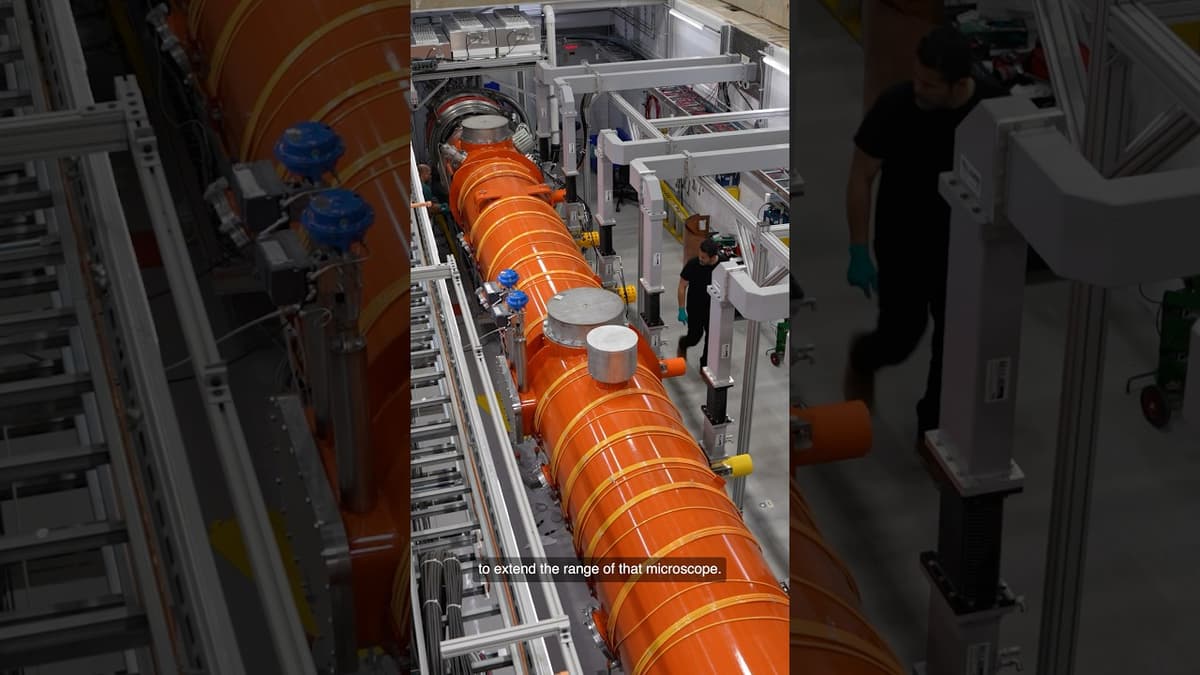
LCLS-II High Energy | Innovating for an X-Ray Laser Upgrade
The video outlines the LCLS‑II High‑Energy upgrade, a next‑generation X‑ray laser that relies on a superconducting radio‑frequency (SRF) accelerator to boost electron energies and sharpen the microscope‑like beam. Fermilab partnered with Jefferson Lab, each contributing half of the cryomodules that...
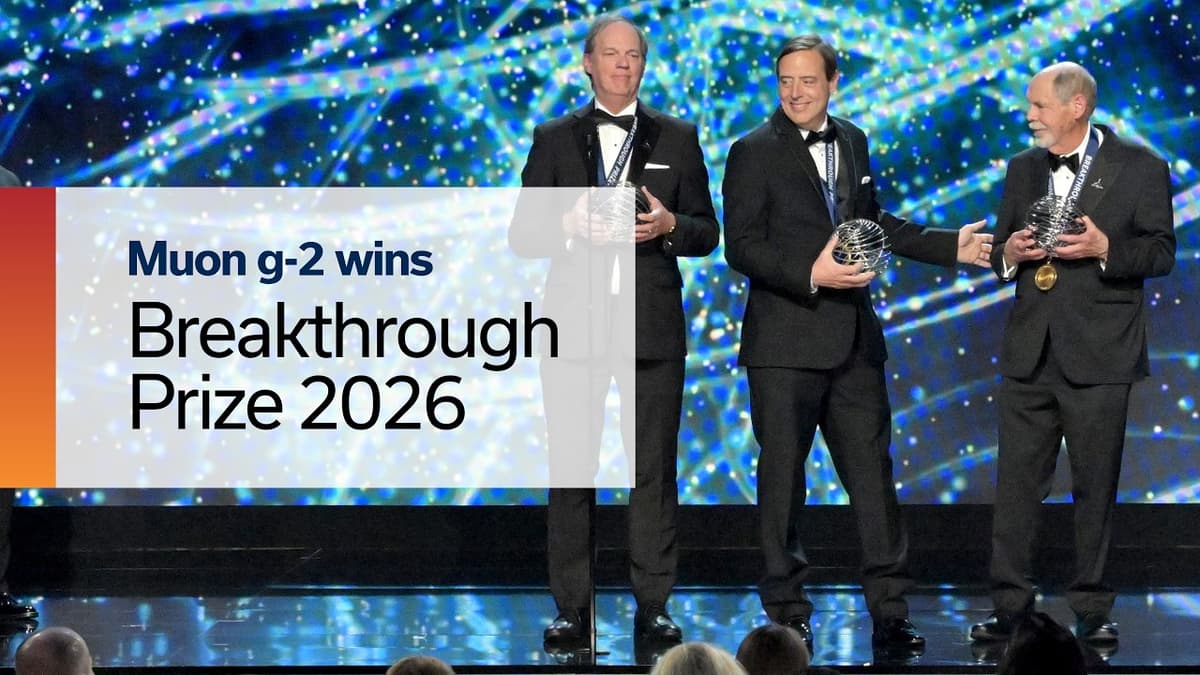
Muon G-2 Wins Breakthrough Prize in Fundamental Physics
The Breakthrough Prize in Fundamental Physics was awarded to the Muon g‑2 collaboration for its ultra‑precise measurement of the muon’s magnetic moment, a cornerstone test of the Standard Model. The experiment, now operating at Fermilab, repurposed the former antiproton...
Quantum Science | What Is a Dilution Fridge?
The video explains what a dilution refrigerator is and why it matters for quantum computing, highlighting Firmenab’s world‑renowned cryogenics platform. These machines reach millikelvin temperatures by mixing helium‑3 and helium‑4, operate continuously for one to twelve months, and are vulnerable to...
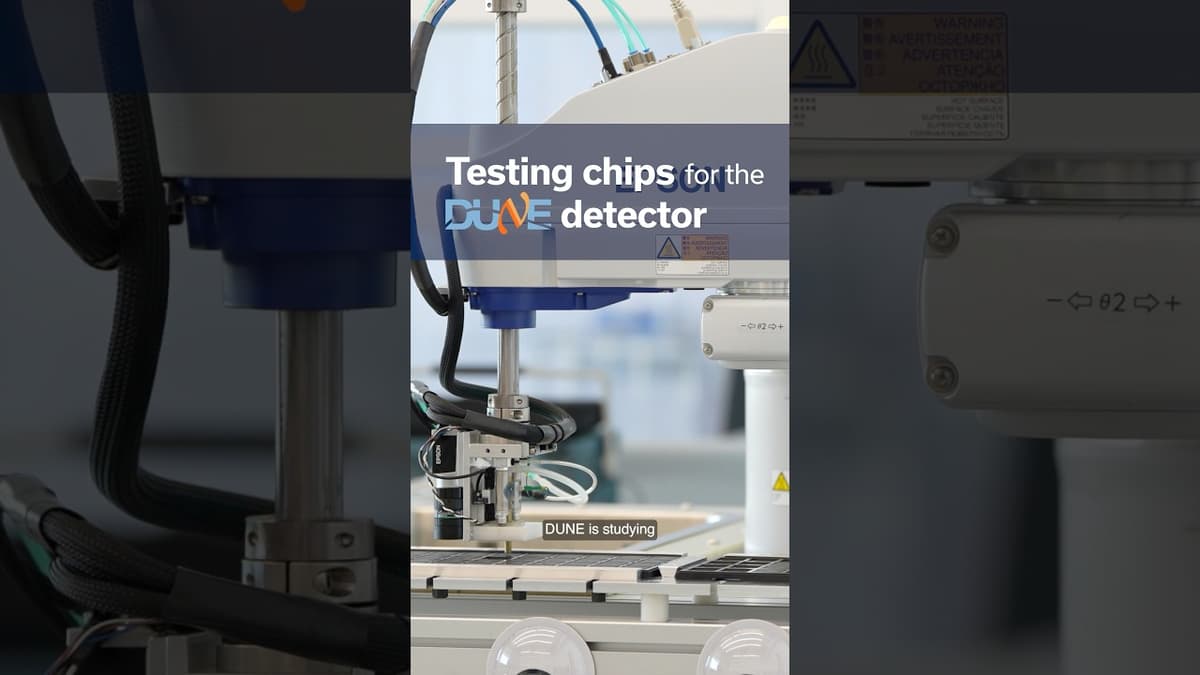
Testing Chips for the DUNE Detector
The video explains the robotic test stand (RTS) that validates the custom ASIC chips destined for the Deep Underground Neutrino Experiment (DUNE) detector, which will capture three‑dimensional images of neutrino interactions. Because the electronics will be sealed inside a cryostat at...

What Is a Dilution Fridge?
The video introduces dilution refrigerators—special cryogenic systems that reach temperatures as low as 10 millikelvin, colder than outer space—and highlights Fermilab’s world‑renowned expertise in building and operating them for quantum‑technology research. The apparatus cools in stages: ~50 K, then 3 K, 1 K, 0.1 K, finally...

CMS Experiment | Scintillator Tiles for the HiLumi LHC Era
The CMS experiment at CERN is undergoing a major upgrade to accommodate the High‑Luminosity Large Hadron Collider (HL‑LHC), which will increase collision rates ten‑fold and demand a new, high‑granularity calorimeter (HGCal). To meet the HL‑LHC’s precision goals, the detector will incorporate...