
How To Use Foundersuite.com To Raise Angel and Venture Capital - Foundersuite Onboarding 2026
The webinar, led by Foundersuite founder Nathan Beckard, walks new users through the platform’s core purpose – helping startups raise angel and venture capital by centralizing fundraising workflows. Beckard demonstrates the suite’s five main modules: a CRM pipeline, an investor database of roughly 144,000 contacts, pitch‑deck hosting, email sequencing, and a data‑room for due diligence. He shows how to create a pipeline, enrich it with industry tags, and let the system surface new investors weekly. A standout feature is the AI‑driven “get intro” tool, which maps mutual connections and signals, claiming warm introductions are thirty times more effective than cold outreach. He also highlights a GPT wizard that summarizes investor profiles and a forthcoming co‑investment matrix built from 80,000 historic deals. By consolidating data, automating outreach, and enabling team collaboration, Foundersuite promises faster, higher‑conversion fundraising, giving early‑stage founders a scalable alternative to manual investor hunting.
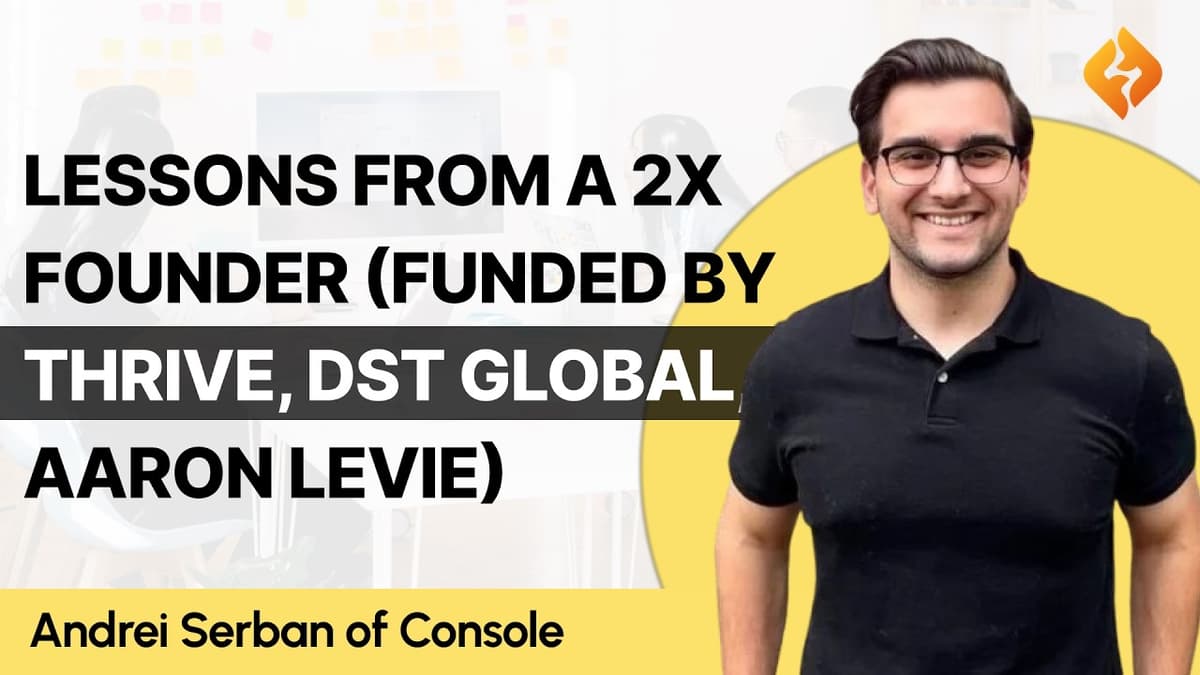
Fundraising And Exit Lessons From A 2x Founder: Andrei Serban of Console
The episode follows 2x founder Andrei Serban as he reflects on the sale of his security‑testing startup BuzzBuzz and the launch of his next venture, Console. He outlines how the acquisition unfolded, why he chose to exit early, and how...
How Gymtrack Raised Its First $750K (Step-by-Step)
Gymtrack’s founders recount how they secured their first $750,000, detailing a step‑by‑step fundraising playbook that began with a modest grant and culminated in a 500 Startups accelerator investment. The team deliberately set a low initial target—about $250,000—leveraging a $50‑$100 k grant that matched...

Don’t Start a Venture Studio Until You Answer THIS
The video advises aspiring venture‑studio founders to start by examining what they truly love doing, because a studio is a multi‑decade commitment and misalignment leads to early exit. It stresses that the studio’s design should embed the founder’s preferred activities—whether...
The Most Underrated Venture Studio Strategy
The video spotlights two unconventional venture‑studio playbooks that challenge the stereotype that studios only spin out high‑growth, VC‑backed tech firms. The first example, NLC Health, began by raising money for its initial portfolio companies rather than the studio itself, licensing...
Why 60% of VCs Reject Venture Studio Startups
The video explains why roughly 60% of venture capital firms balk at investing in companies emerging from venture studios. The primary objection centers on the cap table: studios typically retain a sizable equity slice, which compresses the founder’s stake and...

You’ve Used Studio-Built Startups… You Just Didn’t Know
The video explains how modern startup studios borrow the collaborative, cohort‑based approach of Hollywood film studios. Bill Gross’s Ideal Lab was the first to formalize this model, assembling talent to develop several ventures simultaneously rather than a single project, and...
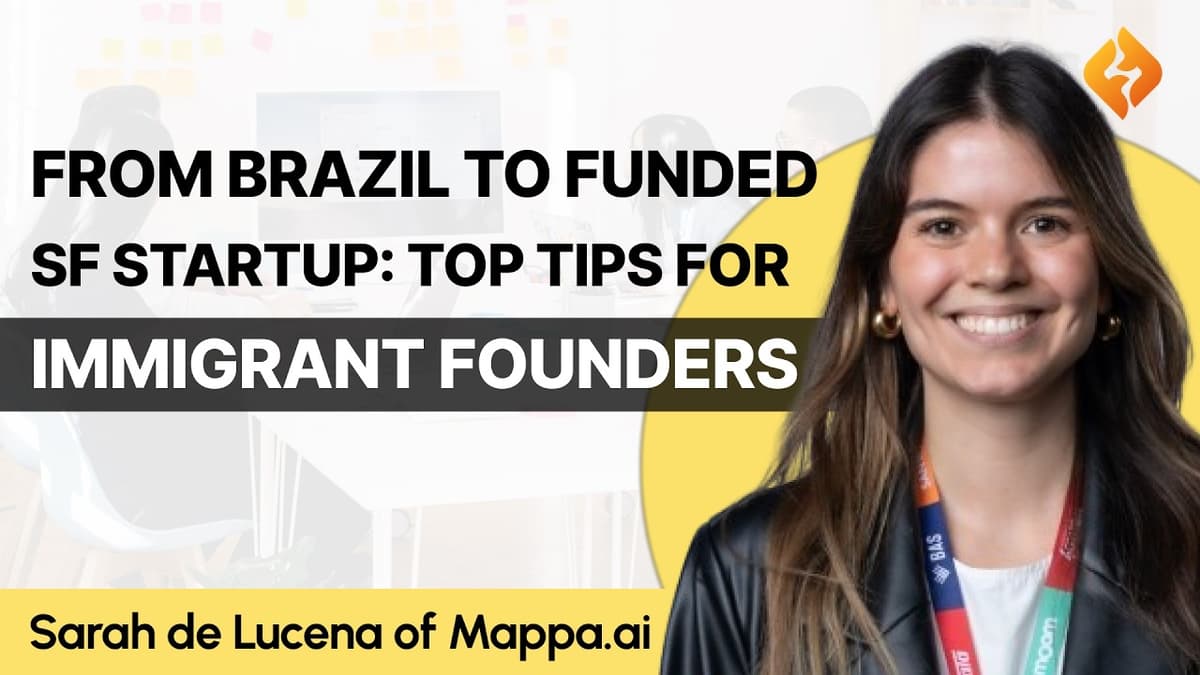
Her Journey From A Village In Brazil To Running A VC Backed Startup In SF: Sarah Lucena of Mappa AI
The How Raiser podcast featured Sarah Lucena, founder of MAPA.ai, a San‑Francisco startup that analyzes voice recordings to extract behavioral biomarkers and match candidates with jobs. MAPA’s platform translates speech patterns—verb density, tense usage, pitch, pauses—into a compatibility score, allowing hiring...

How Much Equity Do Venture Studios Take?
The video examines how much equity venture studios typically demand and why those percentages matter for founders and later investors. Studios’ equity claims range widely—from 10% up to 80%—and the higher end can scare off follow‑on venture capital, which prefers a...
Venture Studios Explained in 60 Seconds (Better Than VCs?)
The video demystifies venture studios, positioning them as companies that build other companies by simultaneously acting as entrepreneurs, operators, and investors. It outlines three core functions: an entrepreneurial role that sources and validates ideas, an operator role that installs playbooks, hires...

You Can’t Win at Things You Don’t Love
The speaker argues that genuine passion, not formal business schooling, is the essential ingredient for building lasting companies. He critiques the traditional VC model that pairs technical talent with business partners and the rise of incubators that churn out soulless...
Why This VC Wouldn’t Invest in MrBeast
The video features a venture capitalist explaining why his firm would not invest in MrBeast, despite the creator’s massive audience. He emphasizes that the firm’s mandate is to back entrepreneurs who build scalable businesses, not merely entertainers who enjoy making...

The Problem With Investing in Capital-Hungry Startups
The discussion centers on the inherent difficulty of seed‑stage investing in capital‑intensive startups. Venture partners explain that they typically set aside follow‑on capital equal to the amount initially deployed, recognizing that many high‑profile ventures, such as AI labs, consume massive...

Why Most Seed Funds Are Too Small or Too Big
The video argues that seed‑stage venture capital performs best when the fund sits in the $100‑200 million range, a “sweet spot” that balances capital availability with the ability to take meaningful equity stakes. The speaker explains that larger funds must spread...

Why Venture Capitalists Make Millions Even If Funds Fail
The video dissects the paradox that venture‑capital partners routinely earn multi‑million‑dollar incomes even when their funds under‑perform or collapse. It argues that the core of this phenomenon lies in the fee architecture—steady management fees and carried‑interest structures—that decouple personal compensation...