
Recent Posts
Video•Feb 27, 2026
Using Design Competitions to Improve the Quality of Housing: A Roundtable Discussion
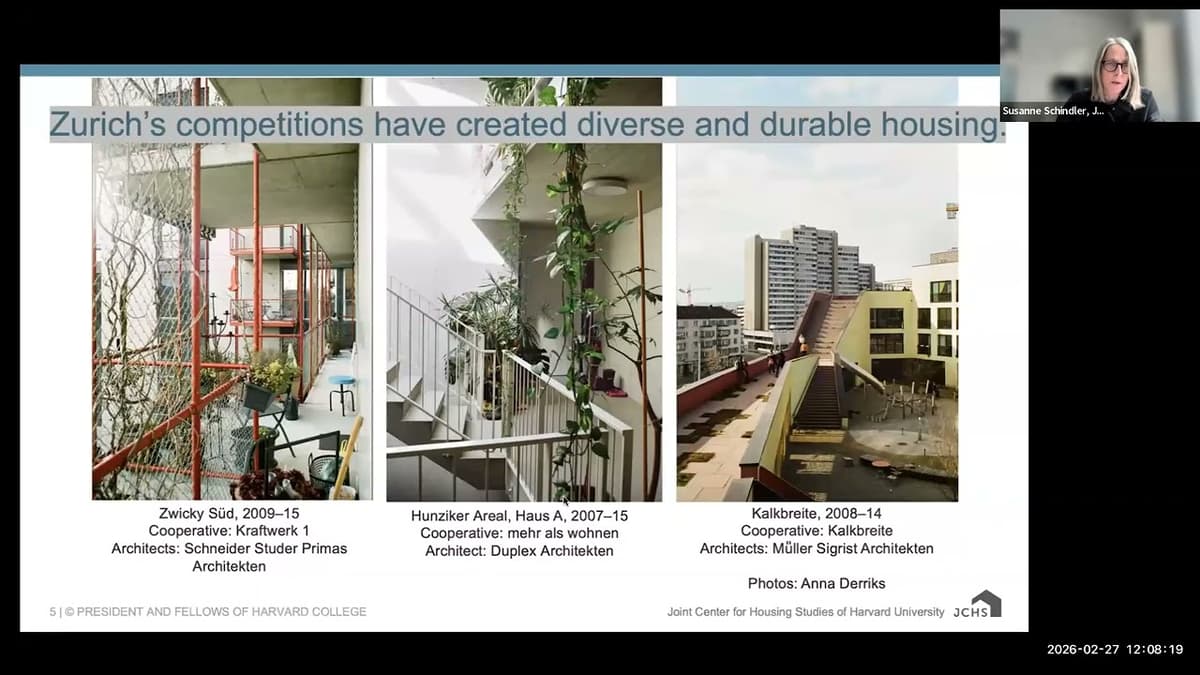
The roundtable, hosted by the Joint Center, examined how design competitions can improve the quality of housing built on publicly owned land. Speakers highlighted the Zurich model, where a two‑stage competition—first for the land lease concept and then an open architectural contest—produced mixed‑use, long‑lasting projects such as the Khal Brighter development, and demonstrated how separating developer selection from design selection yields better outcomes, fairness for emerging firms, and transparent public processes. Suzanne Schindler argued that traditional U.S. request‑for‑proposal (RFP) processes prioritize developer financial strength over design merit, stifling innovation. She contrasted this with European practices, noting that Zurich’s competitions cost roughly 1% of total development value yet generate diverse housing typologies, accessory units, and community amenities. In the United States, recent competitions in New York, Los Angeles, and Chicago have often been “idea‑only” exercises that fail to translate into built projects, as seen in Chicago’s invited competition where winning designs were never commissioned. Concrete examples underscored the discussion: the Khal Brighter project emerged from a dual competition that aligned feasibility studies, public outreach, and an anonymous jury, while Chicago’s 40‑architect contest produced compelling designs but no developer uptake. Schindler emphasized that professional administration—feasibility analysis, clear briefs, jury documentation, and modest funding—are essential to make competitions viable and trustworthy. The implications are clear: municipalities seeking to accelerate affordable housing on public land should consider adopting a separated‑competition framework, allocate modest budgets (about 1% of project costs), and ensure transparent jury processes. Doing so could raise design standards, open opportunities for emerging firms, and rebuild public confidence in housing procurement.
By Harvard Joint Center for Housing Studies
Video•Feb 20, 2026
Understanding the Rapid Rise in Rural Home Prices
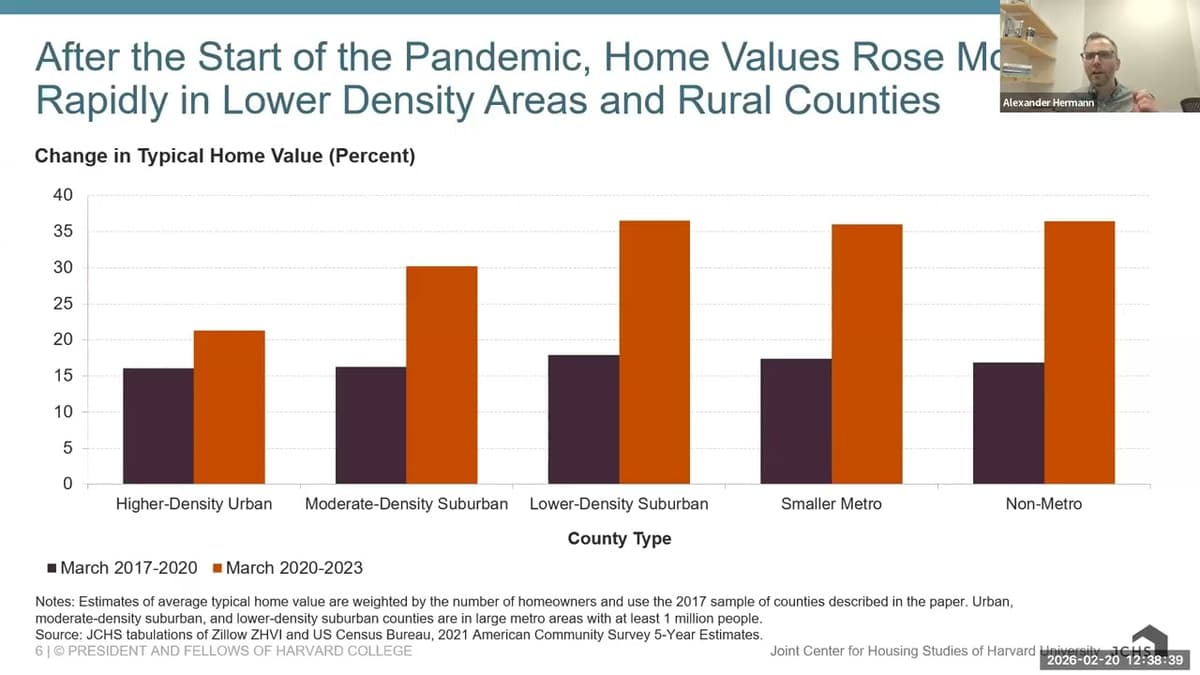
The Joint Center’s recent webinar dissected the unprecedented surge in rural home prices that unfolded during and after the COVID‑19 pandemic. Researchers Alex Hermann and Peyton Whitney presented findings from a new working paper, highlighting how remote‑work‑enabled migration reshaped housing...
By Harvard Joint Center for Housing Studies